Lab Manager’s Guide: Integrating CID Instruments into Your Workflow


Scott Trimble

January 6, 2026 at 6:00 pm | Updated January 6, 2026 at 6:00 pm | 6 min read
Running a modern plant science lab means balancing data quality, staff efficiency, and instrument reliability. For lab managers, integrating CID instruments into your workflow is often about removing friction from daily measurement tasks while improving consistency across projects.
CID Bio-Science instruments are designed to work together across physiology, morphology, and spectral analysis, making it easier to build a streamlined workflow that scales from greenhouse trials to long term field studies.
This guide walks through how lab managers can integrate CID instruments into a cohesive workflow, from planning and training to data collection and analysis, using real use cases from photosynthesis, leaf area, canopy structure, root dynamics, and leaf spectroscopy.
Subscribe to the CID Bio-Science Weekly article series.
By submitting this form, you are consenting to receive marketing emails from: . You can revoke your consent to receive emails at any time by using the SafeUnsubscribe® link, found at the bottom of every email. Emails are serviced by Constant Contact
Planning a Workflow Around Research Objectives
Before assigning instruments or training staff, it helps to map workflow design to research goals. CID instruments cover multiple layers of plant measurement, so integration works best when measurements are planned as a system rather than isolated tasks.
Common research objectives include:
-
Linking leaf structure to gas exchange
-
Monitoring canopy development over time
-
Quantifying root growth without destructive sampling
-
Detecting plant stress and nutrient status early
-
Comparing treatments across locations and seasons
Because CID instruments are portable and non destructive, lab managers can plan workflows that move seamlessly from lab bench to field plot without retooling methods or retraining teams.
Integrating Photosynthesis Measurements with the CI-340
Establishing Gas Exchange as a Core Metric
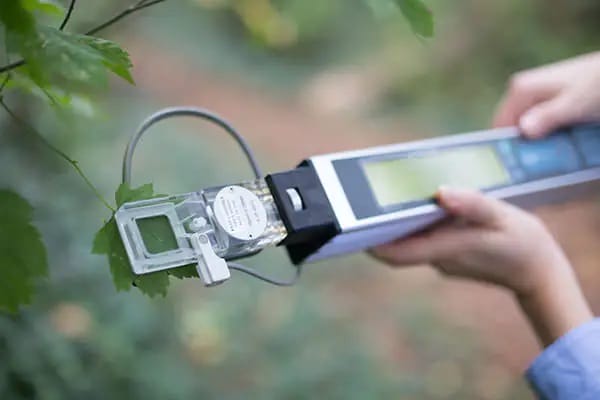
The CI-340 Handheld Photosynthesis System often becomes the anchor instrument in physiology focused workflows. It measures photosynthesis, respiration, transpiration, stomatal conductance, PAR, and internal CO2 in a single handheld unit.
From a lab management perspective, the CI-340 integrates well because:
-
It supports both open and closed system measurements
-
Multiple leaf chambers accommodate diverse species
-
Control modules allow standardized environmental conditions
This flexibility reduces scheduling conflicts. One instrument can support multiple projects without constant reconfiguration.
Pairing Physiology with Structural Data
To maximize value, many labs pair CI-340 measurements with leaf area data collected on the same plants. This allows normalization of gas exchange rates and deeper interpretation of physiological differences. Planning these measurements together saves time and avoids duplicated sampling.
Streamlining Leaf Area Measurement with CI-202 and CI-203
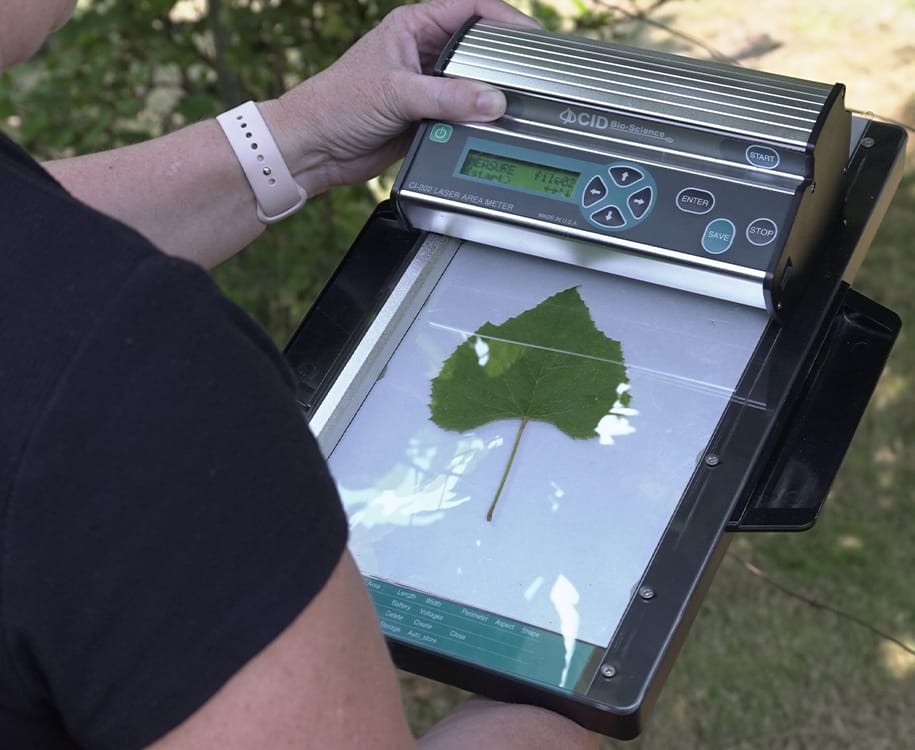
Choosing the Right Tool for the Task
CID offers two complementary laser leaf area meters, and lab managers often deploy both depending on throughput and location.
The CI-202 Portable Laser Leaf Area Meter works well for:
-
Routine field measurements
-
Moderate sample volumes
-
Simple training scenarios
The CI-203 Handheld Laser Leaf Area Meter excels when:
-
High throughput is required
-
One handed operation improves speed
-
The optional conveyor attachment is used in lab settings
Both instruments flatten curled leaves during scanning and require no user calibration, which reduces operator error and training time.
Workflow Tip for Lab Managers
Assign standardized leaf area protocols across teams. Because CI-202 and CI-203 output consistent metrics such as area, width, length, perimeter, and shape factors, data from different operators can be merged easily during analysis.
Scaling Canopy Analysis with the CI-110 Plant Canopy Imager
From Individual Leaves to Whole Canopies
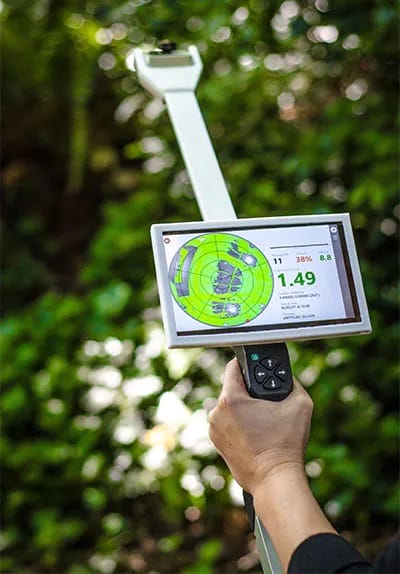
As projects scale from plant level to plot level, the CI-110 Plant Canopy Imager becomes central to workflow integration. It combines hemispherical canopy photography with PAR sensing to calculate leaf area index and canopy structure metrics in real time.
For lab managers, the CI-110 offers several workflow advantages:
-
No above canopy reference measurements required
-
Self leveling camera reduces operator variability
-
Measurements can be taken under any sky condition
This simplifies scheduling and allows staff to collect data opportunistically without waiting for ideal weather.
Integrating CI-110 Data with Other Measurements
CI-110 data pairs naturally with CI-340 and leaf area measurements. Lab managers can coordinate canopy level measurements early in the day, followed by targeted leaf level physiology measurements on representative plants.
Adding Root Dynamics with CI-600 and CI-602 Root Imagers
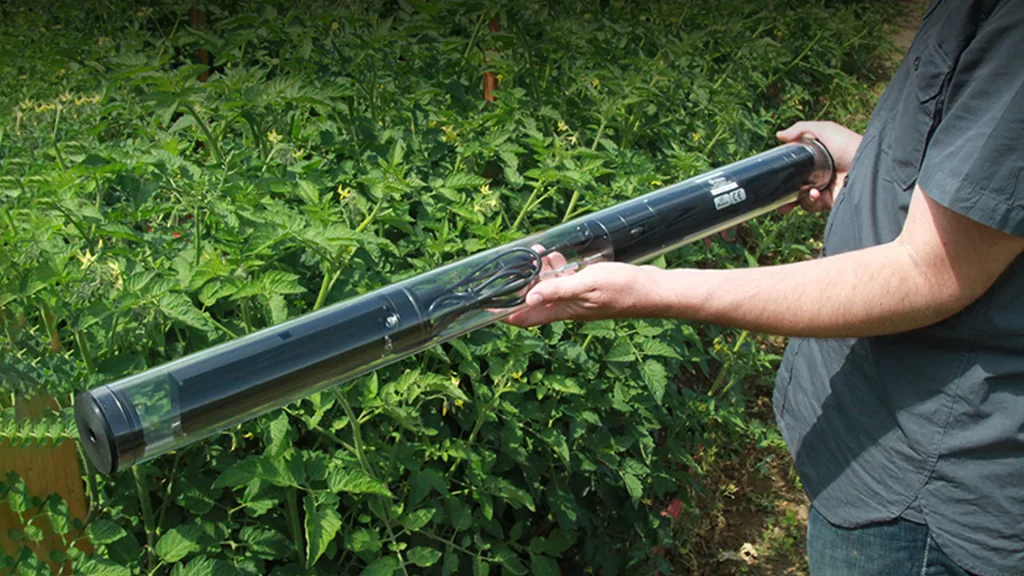
Non Destructive Root Monitoring
Roots are often the missing piece in plant research workflows. The CI-600 In-Situ Root Imager and CI-602 Narrow Gauge Root Imager allow repeated root observation without disturbing the soil profile.
These instruments fit well into long term experiments where lab managers need:
-
Seasonal root growth tracking
-
Treatment comparisons over time
-
Minimal site disturbance
Workflow Benefits for Long Term Studies
Because images are collected through minirhizotron tubes, the same plants can be monitored repeatedly. This reduces replanting costs and simplifies experimental design. Root imaging sessions can be scheduled alongside canopy or physiology measurements to create a complete plant profile.
Enhancing Insight with CI-710s SpectraVue Leaf Spectrometer
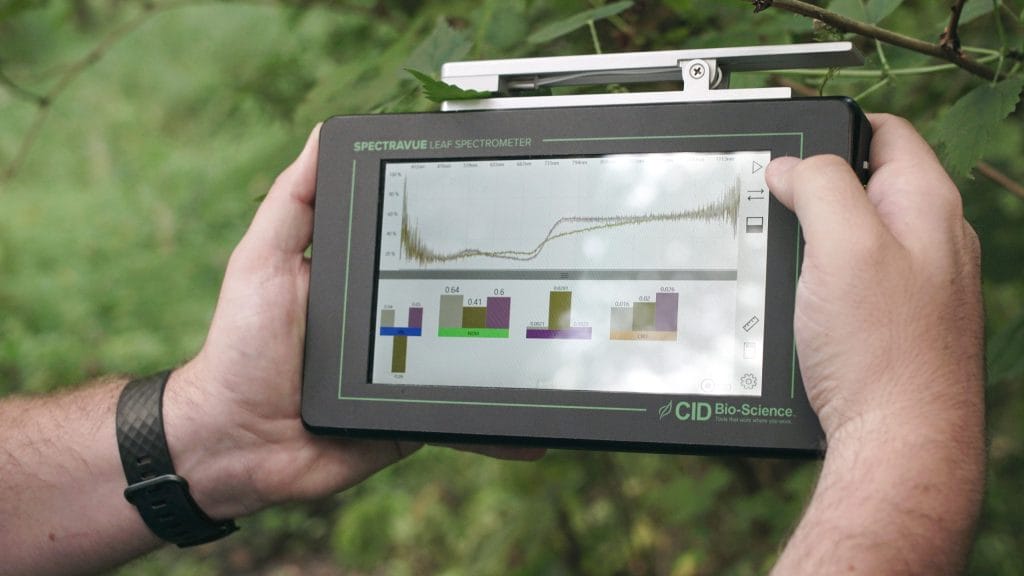
Rapid Stress and Pigment Analysis
The CI-710s SpectraVue Leaf Spectrometer adds a powerful analytical layer to integrated workflows. It measures reflectance, transmittance, and absorbance across visible and near infrared wavelengths.
Lab managers often integrate SpectraVue into workflows to:
-
Detect nutrient deficiencies early
-
Monitor stress responses before visual symptoms appear
-
Support chemometric modeling and index development
Complementing Other CID Instruments
Spectral data becomes more valuable when paired with physiological and structural measurements. For example, changes detected with SpectraVue can be cross referenced with CI-340 gas exchange data or CI-202 leaf morphology metrics, creating a richer dataset without increasing sampling complexity.
Training and Data Management Considerations
Simplifying Staff Training
CID instruments are designed with intuitive interfaces and minimal calibration requirements. For lab managers, this reduces onboarding time and lowers the risk of inconsistent data collection.
Best practices include:
-
Assigning instrument specific champions within the team
-
Using consistent naming conventions for data files
-
Scheduling refresher training before major field campaigns
Managing Data Across Instruments
Most CID instruments export data digitally for further analysis. Establishing a centralized data repository ensures that leaf area, photosynthesis, canopy, root, and spectral datasets remain linked throughout the project lifecycle.
Related Products
Most Popular Articles
- Transpiration in Plants: Its Importance and Applications
- Leaf Area – How & Why Measuring Leaf Area…
- How to Analyze Photosynthesis in Plants: Methods and Tools
- Plant Respiration: Its Importance and Applications
- The Forest Canopy: Structure, Roles & Measurement
- Stomatal Conductance: Functions, Measurement, and…
- Forest & Plant Canopy Analysis – Tools…
- Root Respiration: Importance and Applications
- The Importance of Leaf Area Index (LAI) in…
- 50 Best Universities for Plant Science