Importance and Measurement of Leaf Area Index in Vertical Greening Systems

Dr. Vijayalaxmi Kinhal


May 5, 2026 at 6:03 pm | Updated May 5, 2026 at 6:03 pm | 9 min read
- Leaf Area Index (LAI) can be used to quantify the benefits of vertical greening systems, such as thermal cooling, energy savings, air pollution control, and noise pollution control.
- LAI for vertical greening systems needs to be measured along the vertical plane.
- Three methods, including direct and indirect estimation, are used to measure LAI.
- The choice of LAI estimation methods depends on the type of vertical greening system.
The Leaf Area Index, which quantifies the leaf area in a canopy, is a widely used plant parameter in research and practical applications in agriculture and forestry. Its use as an indicator of plant health, productivity, and system performance can be extended to Vertical Greening Systems, which are used to improve urban environmental conditions. This article covers the necessary changes in methodology and calculations for using leaf area index in vertical greening systems, as explained by De Bock et al. (2023).
Types of Vertical Greening Systems
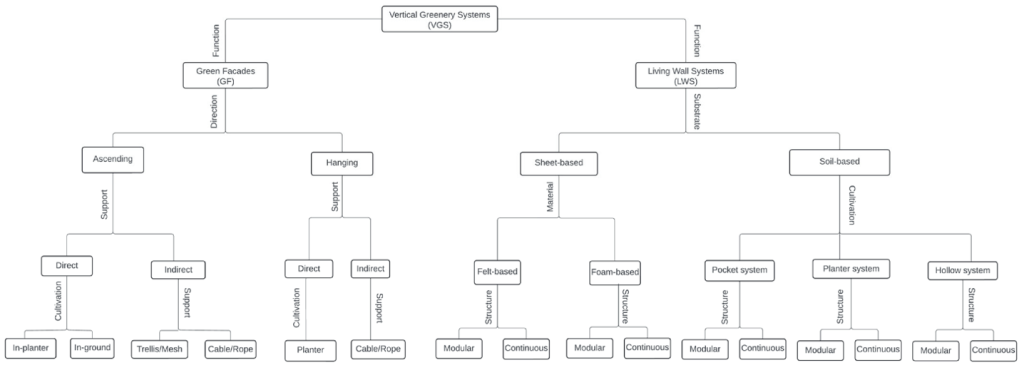
Figure 1: Classification of VGS, Manouchehri et al. 2024. (Image credits: https://doi.org/10.3390/su16083249)
Subscribe to receive our monthly round-up of articles.
Vertical Greening Systems (VGS) support vegetation growth on vertical surfaces in urban areas, such as building facades, windows, corridors, walls, balconies, and columns. Numerous types and variations of VGS exist, but they can be grouped primarily into two major types: green facades and living facades (as shown in Figure 1).
Green facades: The plants are rooted in soil, and grow up or hang down, with or without climbing support. When plants grow without support, they use their roots or disks for support, which are called Traditional Skin Facades (TSF). When climbing aids are used, the system is called Double-Skin Green Facades (DSGF), and an air gap is created between vegetation and the building.
Living systems: The growing medium used to grow plants is mounted on the wall, creating a Living Wall System (LWS).
These three variations, depicted in Figure 2, are important to applications of the Leaf Area Index.
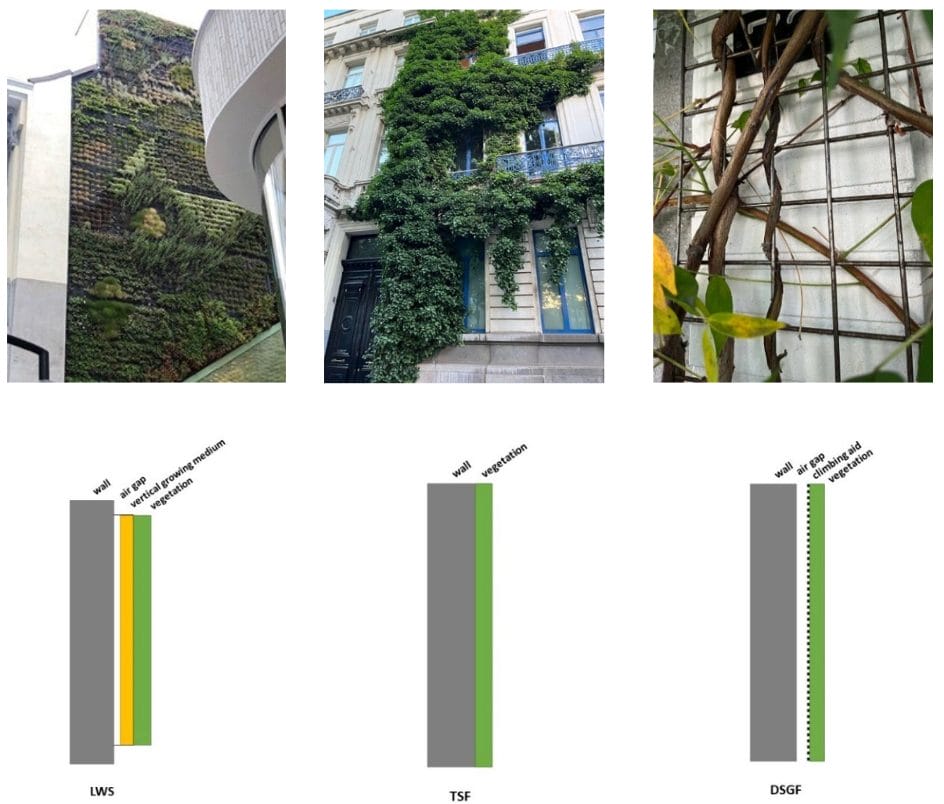
Figure 2: “Overview of different types of VGS and their cross sections: a) Living Wall Systems (LWS), b) traditional skin façade (TSF), and c) double-skin green facade (DSGF),” DeBock et al. (2023). (Image credits: https://doi.org/10.1016/j.buildenv.2022.109926)
Benefits Of VGS
On average,57.7% of the global population lives in urban areas, with higher percentages in some countries. Urban areas have high densities of skyrise buildings, paved surfaces, heavy traffic, low ventilation in urban canyons, and increased heat from traffic and air conditioners. Due to these conditions, urban areas face several unique environmental problems, such as increased urban heat events, Urban Heat Island Effect, increased energy use, heightened air pollution, noise pollution, loss of green spaces, and loss of biodiversity, which can be mitigated by VGS.
Adding more greenery to urban areas can improve environmental conditions for people and nature. The lack of open space in cities makes VGS a viable option for supplementing parks and trees. Vertical spaces are valuable in this context. Also, the area provided by walls and facades in urban areas can be 20 times that of horizontal roofs.
Reduced heat, air pollution, and noise pollution, increased greenery, and improved aesthetic value enhance residents’ physical and mental health.
Several of these VGS benefits can be explained and evaluated using the plant parameter Leaf Area Index.
Benefits of VGS Linked to LAI
Leaf Area is a vital plant parameter, as it is connected to several plant-level processes such as photosynthesis, respiration, and transpiration, and it influences evapotranspiration, rainfall interception, and biogeochemical cycles at larger scales, up to ecosystem levels. Therefore, LAI is widely used in plant research. In agriculture and forestry research and applications, it is used to estimate vegetation growth, health, and productivity.
LAI is dynamic and varies with internal and external factors. In VGS, these can include plant species, habit, and canopy position. External factors include environment, temperature, light, season, orientation, resource availability, and pests and diseases.
Though LAI is widely used in research, agriculture, and forest management, its applications in VGs have been limited to date. However, LAI can explain several of the benefits that VGS provides, such as cooling, reductions in noise and air pollution, and it is also an indicator of canopy health.
Cooling and Energy Use
Like trees, VGS create green spaces that can cool urban areas by increasing evapotranspiration, shading buildings, modifying surfaces to increase albedo (sunlight reflection), and providing an air gap between vegetation and buildings. Using greenery reduces energy use for cooling or heating.
LAI can be used to estimate shading and evapotranspiration, both of which are vital for cooling and energy savings. Cooling depends on LAI. An inverse correlation exists between LAI and temperature. As LAI increases, the building temperature falls due to a low shading coefficient. The shading coefficient is measured as the ratio of the solar radiation below the plants to that below the wall. A lower shading coefficient means the plants are more efficiently cutting solar radiation to shade and cool the walls.
Reducing Indoor and Outdoor Air Pollution
VSGs can also reduce air pollutants such as ozone, nitrogen dioxide, sulfur dioxide, and particulate matter (PM2.5 and PM10), and filter microbes to purify air. The reduction of air pollutants depends on the plant species used in VGS. Outdoor VGs can also improve indoor air quality by removing PM and volatile organic compounds (VOCs).
Plants play an important role in the deposition and dispersion of air pollutants, two processes that reduce their concentrations. The density and porosity of vegetation, as defined by LAI, determine the amount of pollutants deposited on vegetation. The deposited pollutants are directly correlated to LAI; that is, as LAI increases, more pollutants, especially particulate matter, settle on the VGS. Besides LAI, leaf size and shape are also crucial. Species with small, complex-shaped leaves and high LAI are the best at reducing PM pollution.
VGS with a higher LAI can also improve carbon capture by increasing the photosynthetic area.
Noise Reduction
Plants can dampen sound and reduce the noise pollution existing in cities. Many components of VGS absorb and reduce noise. Vegetation in all VGS affects noise absorption. In Living Walls Systems, the substrate materials and their thickness are also instrumental in reducing noise.
In the vegetation layer, plant species, height, leaf size and thickness, and growth rate are crucial. Plant growth can be measured by LAI. The higher the amount of greenery (i.e., LAI), the more noise is absorbed. So, increasing the vegetation layer thickness can be achieved by using plants with higher foliage density.
Indicator of Plant Health
More vegetation, that is, higher LAI, is instrumental in ensuring the benefits sought from VGS. It is therefore necessary to ensure that the growth and health of plants in the VGS are maintained.
LAI changes due to drought, nutrition deficiency, light availability, and pest and disease attacks. All these factors can affect plant health and reduce plant growth, making LAI a useful plant health indicator. Lower LAI can indicate drought or diseases, allowing VGS managers to take remedial measures and maintain the vegetation layer.
Since LAI is also an indicator of canopy health, it can indicate how well the VGS is performing.
How to Measure LAI in Vertical Greening Systems
The Leaf Area Index is usually defined as the leaf area (m2) in a canopy per unit ground area (m2). In agriculture and forestry, LAI is determined on a horizontal plane.
However, when LAI is measured in VGS, it must be measured in the vertical plane. Hence, according to De Bock et al. (2023), in VGS, it is defined as the vegetation surface area (m2) per vertical wall surface area (m2) and is again dimensionless. It can be calculated by using the following formula:
LAI = total one-sided leaf area [m²]
wall area [m²]
LAI is expressed as the number of fully covered layers that leaves can form over the vertical wall. In the example depicted in Figure 3, there are three layers; that is, LAI is 3.
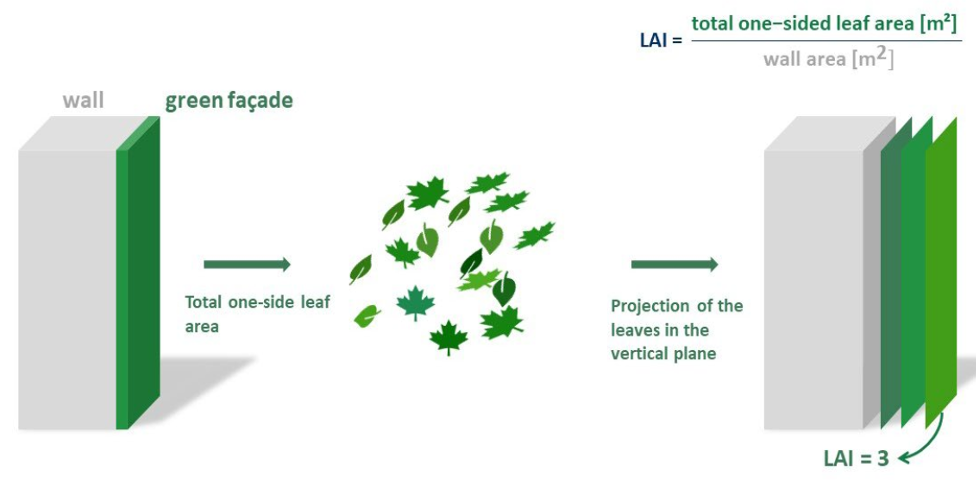
Figure 3.: “Visual representation of the Leaf Area Index in Vertical Greening Systems,” DeBock et al. (2023). (Image credits: https://doi.org/10.1016/j.buildenv.2022.109926)
Methods to Measure LAI in Vertical Greening Systems
While the importance of LAI in VGS is recognized, standardized methods for monitoring and reporting LAI remain lacking, particularly for non-destructive measurements. At present, one direct and two indirect methods of LAI are used in VGS.
Direct Method LAI Estimation of VGS
The direct method can be used in all three variations of VGS systems- Living Wall Systems (LWS), traditional skin façade (TSF), and double-skin green facade (DSGF).
The direct method is destructive: leaves are harvested, and their leaf area is measured. The sampling area used is 20 cm x 20 cm or 30 cm x 30 cm. Two variations of the method exist:
- All leaves in the sample plot are harvested and scanned using a scanner or a photo. Leaf area is measured using image analysis software that distinguishes green from white pixels.
- In the second method, 10 randomly selected leaves are harvested and scanned to measure average leaf area using image analysis. The number of leaves is then counted in the sample plot to obtain a generalized LAI for the entire façade.
Although leaves are usually harvested, some tools allow non-destructive measurements of leaf area, at least for foliage at lower accessible levels. Plot samples need to be taken at three heights along the façade to account for differences in leaf sizes in the canopy. For example, in one case, leaves at lower levels were twice as large as at upper levels. So, this produced LAI that is twice as high in the upper levels (LAI=3.9) as in the lower levels (LAI= 2.1).
Indirect LAI Estimation Methods for VGS
Indirect methods are preferable for monitoring VGS, as maintaining the vegetation layer is required, and multiple sample plots over time can thin the canopy. However, indirect methods are commonly used only for the double-skin green facade and not for LWS and TSF. Two types of indirect methods exist: radiative transfer and vegetation indices.
Radiative Transfer Methods
The radiative transfer technique is the most common method for estimating LAI in agriculture, forestry, and VGS. So far, it has been tested only with the double-skin green façade, but it could also be used in LWS and TSF. In this technique, two approaches are used to calculate LAI: radiation measurement and gap-fraction measurement. The method is easier and faster than the destructive method.
Radiation approach: The reduction in sun radiation with depth in the canopy is measured to find vegetation density. In VGS, photosynthetically active radiation (PAR) between 400 and 700 nm is estimated in front of and behind the vegetation layer. LAI is calculated using the Beer-Lambert law. High transmission indicates a thin canopy, whereas low transmission indicates a thicker canopy. The canopy extinction coefficient k quantifies the amount of light absorbed by vegetation and depends on the incident angle of light and the leaf angle distribution. Therefore, light measurements in front of and behind the vegetation layer in VGS must be taken under similar weather conditions. A plant canopy analyzer or a ceptometer is used to measure LAI using this method. Ten measurements are taken at three levels. In extensive VGS, samples should be taken in various aspects (north, south, east, and west) as applicable.
The radiation method has three limitations:
- Since sun radiation levels differ significantly along the vertical plane from full sunlight to zero in lower areas, several samples are necessary.
- In dense canopies or at high LAI, very little light percolates through the vegetation layer, making light measurement by a plant canopy analyzer behind the vegetation challenging.
- LAI is underestimated when Beer’s Law is used compared to destructive sampling, by 35.5 to 46.5%.
Gap fraction approach: In this approach, the fraction of the sky visible through canopy gaps is measured from a single point. The method assumes that leaves are randomly distributed. A plant canopy analyzer is necessary for this approach. Ten measurement points are also necessary for this method.
Vegetative Index
LAI can be calculated using spectroscopy to measure light reflection by leaves in the red (ca. 700 nm) and near-infrared (NIR) regions (900 nm) to calculate the Normalized Difference Vegetation Index (NDVI). Chlorophyll present in the mesophyll tissues of leaves absorbs red light for photosynthesis. As canopy density increases, so does the amount of red light absorbed, therefor reflectance at this wavelength decreases. In contrast, NIR reflectance increases due to more mesophyll.
NDVI is calculated using the following formula:
NDVI=ρIR – ρed
ρIR + ρed
where, ρIR is reflectance in red wavelengths
ρed is reflectance in NIR wavelengths
So, denser canopies with higher LAI have higher NDVI values, while lower NDVI indicates lower LAI or thinner canopies.
Sensors permanently fixed to the wall and portable sensors in front of the VGS measure light behind and in front of the VGS, respectively.
The disadvantage of the NDVI method is that at LAI values above 4, NDVI is insensitive to changes in canopy density. The method is not applicable to LWS because the substrate material (e.g., moss) can interfere with reflectance measurements. The NDVI method is not commonly used for LAI estimation in VGS.
Tools for Measuring LAI in Vertical Greening Systems
Handheld, portable tools for on-site use are necessary for LAI estimation in vertical greening systems. CID Bio-Science Inc. supplies a range of tools useful for two methods currently used for LAI estimation in VGS.
Direct method: The CI-202 Portable Laser Leaf Area Meter and CI-203 Handheld Laser Leaf Area Meter can be used to simultaneously scan and measure leaves. The tools can also be used to measure leaf area non-destructively without harvesting leaves.
Indirect method: The CI-110 Plant Canopy Imager is suitable for nondestructive LAI measurement using both radiation-based approaches. The instrument can record PAR sunflecks on the tool’s long arm to use the radiation approach. The hemispherical lens provides a 150° field of view of the plant canopy for the gap-fraction method of LAI estimation.
These tools are precise enough for research and easy enough for other stakeholders to use, as they do not require training.
Contact us to find out more about our precision tools for VGS research or maintenance.
Sources
Chen, S., Olivieri, F., Peng, L., & Li, J. (2025). Benefits and monetary values of vertical greening systems: A semi-systematic review. Building and Environment, 113463.
De Bock, A., Belmans, B., Vanlanduit, S., Blom, J., Alvarado Alvarado, A., & Audenaert, A. (2023). A review on the leaf area index (LAI) in vertical greening systems.
Building and Environment, 229,1-14. Article 109926. https://doi.org/10.1016/j.buildenv.2022.109926
Fonseca, F., Paschoalino, M., & Silva, L. (2023). Health and Well-Being Benefits of Outdoor and Indoor Vertical Greening Systems: A Review. Sustainability, 15(5), 4107. https://doi.org/10.3390/su15054107
Manouchehri, M., Santiago López, J., & Valiente López, M. (2024). Sustainable Design of Vertical Greenery Systems: A Comprehensive Framework. Sustainability, 16(8), 3249. https://doi.org/10.3390/su16083249
Related Products
Most Popular Articles
- Transpiration in Plants: Its Importance and Applications
- Leaf Area – How & Why Measuring Leaf Area…
- How to Analyze Photosynthesis in Plants: Methods and Tools
- Plant Respiration: Its Importance and Applications
- The Forest Canopy: Structure, Roles & Measurement
- Stomatal Conductance: Functions, Measurement, and…
- Forest & Plant Canopy Analysis – Tools…
- Root Respiration: Importance and Applications
- 50 Best Universities for Plant Science
- The Importance of Leaf Area Index (LAI) in…