Using the CI‑110 to Monitor Forest Canopy Recovery After Wildfire

Scott Trimble

January 5, 2026 at 7:48 pm | Updated January 6, 2026 at 5:49 pm | 5 min read
Forest canopy recovery is one of the clearest indicators of ecosystem resilience following wildfire. Researchers, land managers, and restoration ecologists all rely on accurate canopy metrics to understand how quickly vegetation structure and function return after disturbance.
Measuring forest canopy recovery consistently across time and space has always been a challenge, especially in rugged or recently burned terrain. The CI-110 Plant Canopy Imager from CID Bio-Science was developed to address these challenges directly, offering a practical way to quantify canopy structure in post-fire environments.
This article explores how the CI-110 supports forest canopy recovery studies after wildfire, why canopy metrics matter, and how this instrument compares favorably to more complex or less field-ready alternatives.
Subscribe to the CID Bio-Science Weekly article series.
By submitting this form, you are consenting to receive marketing emails from: . You can revoke your consent to receive emails at any time by using the SafeUnsubscribe® link, found at the bottom of every email. Emails are serviced by Constant Contact
Why Canopy Recovery Matters After Wildfire?
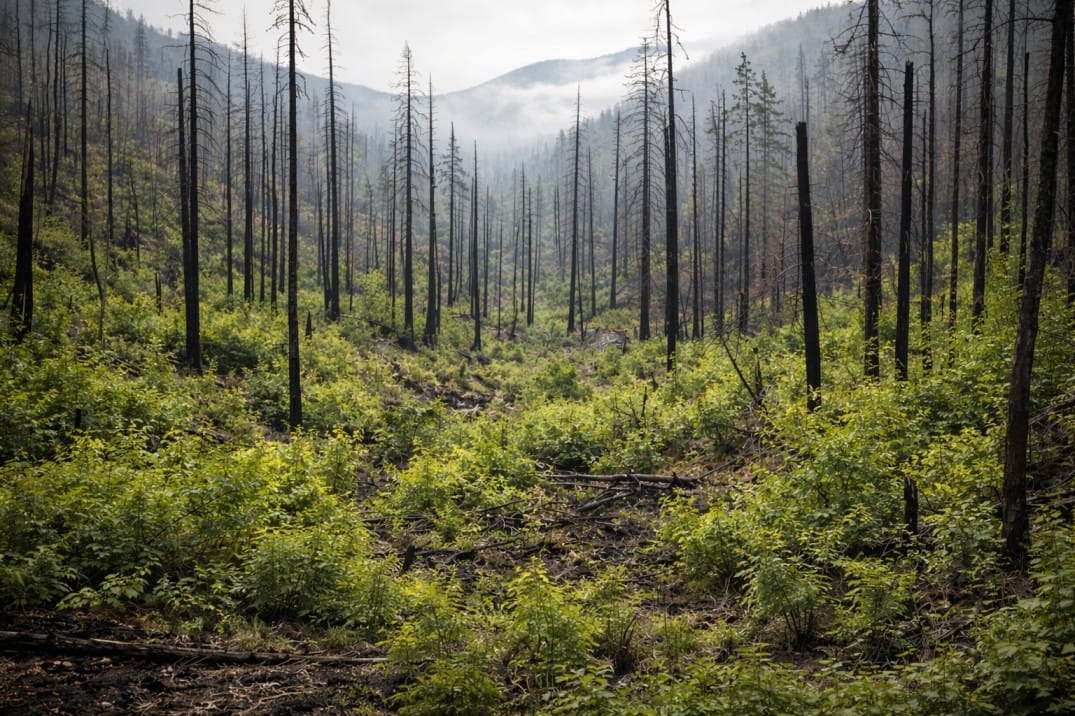
Wildfire alters forest structure almost instantly. Canopy loss affects light penetration, soil temperature, moisture retention, and understory regeneration. As forests recover, changes in canopy density and architecture shape microclimate conditions and influence long-term successional trajectories.
Forest canopy recovery is commonly evaluated through metrics such as leaf area index, canopy gap fraction, and light interception. These parameters help researchers answer practical questions.
-
How quickly is leaf area returning after fire
-
Are different species or functional groups recovering at different rates
-
How does canopy structure influence regeneration below
-
When does the recovering stand begin to resemble pre-fire conditions
Reliable answers depend on repeatable, non-destructive measurement techniques that can be applied across seasons and years.
Challenges of Measuring Post-Fire Canopy Structure
Post-fire landscapes present unique logistical and methodological hurdles. Terrain is often uneven, access can be limited, and vegetation structure is highly heterogeneous. Traditional approaches such as destructive sampling or tower-based measurements are rarely feasible.
Hemispherical photography has become a standard tool for canopy analysis, but many systems require external cameras, careful leveling, manual image processing, and strict sky conditions. These constraints can slow data collection and introduce variability between users and sites.
For forest canopy recovery studies, researchers need an instrument that works under variable light, captures standardized images quickly, and produces consistent outputs without extensive post-processing.
Overview of the CI-110 Plant Canopy Imager
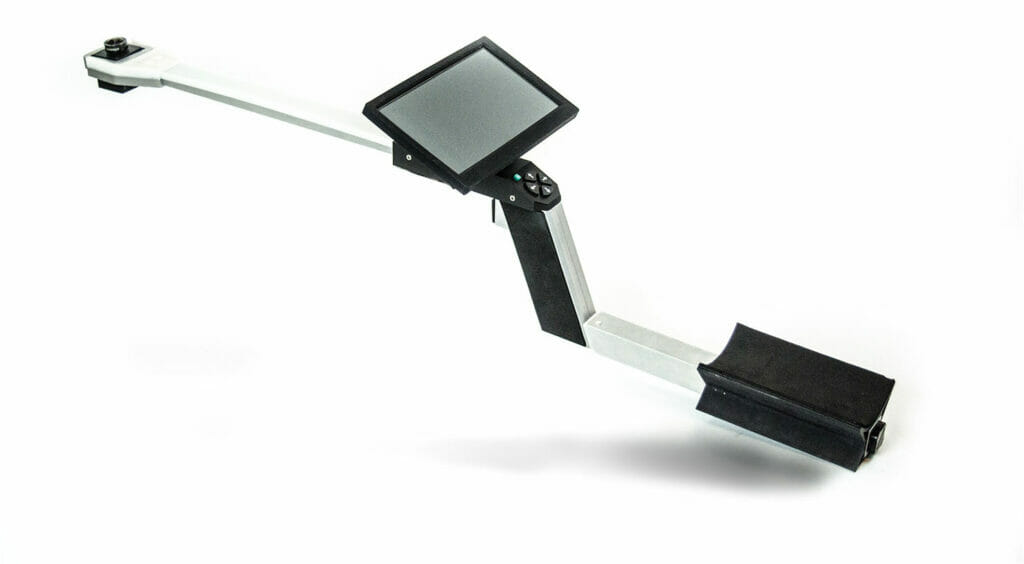
The CI-110 integrates hemispherical canopy photography and light measurement into a single handheld instrument. Designed specifically for field use, it allows users to estimate leaf area index and related canopy parameters directly at the point of measurement.
Key capabilities include:
-
A self-leveling digital camera with a 150 degree field of view
-
Instant calculation of leaf area index using image analysis or PAR sensors
-
Measurement of photosynthetically active radiation with 24 integrated photodiodes
-
Onboard data storage and visualization in the field
Because the CI-110 does not require above-canopy reference readings for gap fraction based LAI, it is especially well suited for forest canopy recovery work in burned or partially regenerated stands.
Measuring Leaf Area Index in Recovering Forests
Leaf area index is one of the most widely used indicators of forest canopy recovery. It reflects the total leaf area relative to ground area and correlates strongly with photosynthetic capacity, transpiration, and carbon uptake.
In post-fire environments, LAI typically increases in stages as herbaceous vegetation establishes, shrubs expand, and tree canopies redevelop. The CI-110 allows researchers to track these changes over time without disturbing the site.
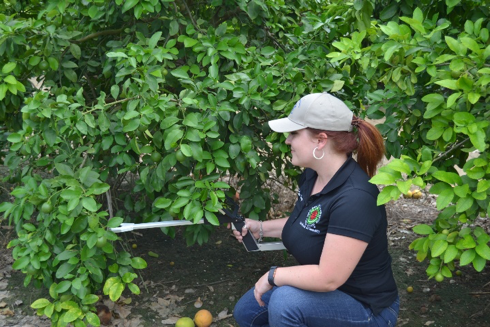
Users can collect measurements at fixed plots or along transects, ensuring consistency across repeated sampling events. The self-leveling camera reduces operator error, while selectable thresholding methods help standardize image analysis across different canopy densities.
Working Under Real Field Conditions
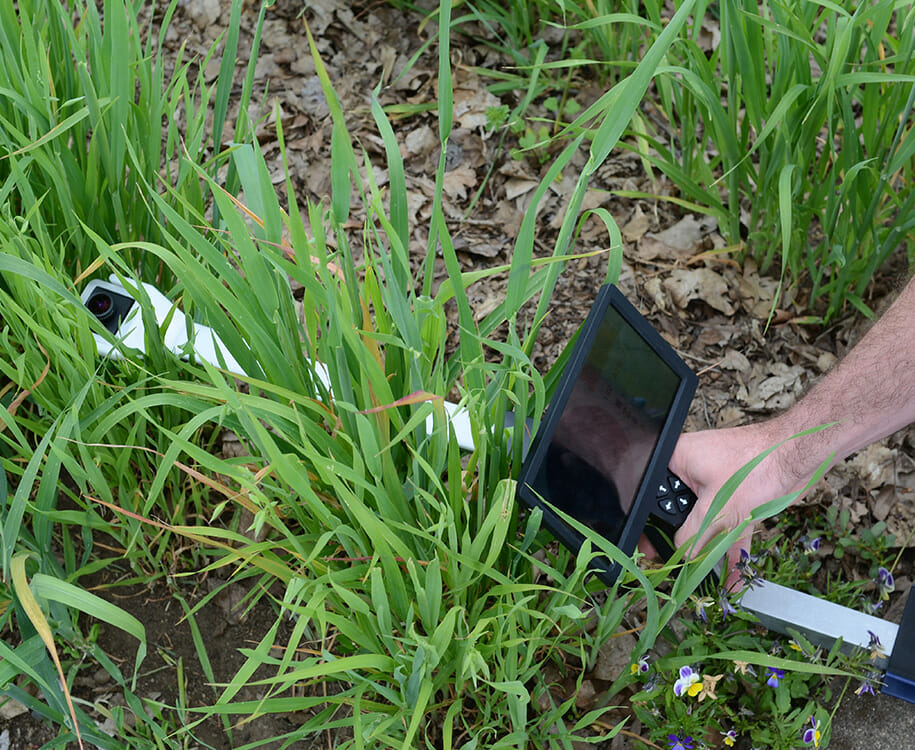
One of the main advantages of the CI-110 for forest canopy recovery studies is its flexibility under varying sky conditions. Burned landscapes often lack shade and can experience extreme light variability. Many optical systems require diffuse light or overcast conditions, limiting sampling windows.
The CI-110 is designed to perform measurements under any sky condition. Neutral density filters and adjustable image settings help maintain data quality even under bright sunlight. This flexibility allows researchers to collect canopy data when access is possible, not just when conditions are ideal.
Integrated GPS support further strengthens long-term recovery studies. Location data from multiple satellite constellations ensures that measurements can be precisely relocated in subsequent years, supporting robust time series analysis.
Combining Structural and Light Measurements
Forest canopy recovery is not just about structure. Light availability drives regeneration dynamics, species composition, and competitive interactions. By combining hemispherical images with direct PAR measurements, the CI-110 provides a more complete picture of canopy function.
The instrument’s 24 PAR sensors can be used to:
-
Assess current radiation levels at the forest floor
-
Evaluate sunfleck patterns in regenerating stands
-
Cross-validate LAI estimates derived from image analysis
This dual approach is particularly useful in early recovery stages, when sparse canopies create highly variable light environments.
Advantages Over Alternative Canopy Tools
Compared to camera-based systems that rely on external hardware and software, the CI-110 simplifies the workflow. All image capture, analysis, and data storage occur on a single device, reducing setup time and potential points of failure.
Relative to indirect methods that estimate canopy cover from visual assessments or point sampling, the CI-110 delivers quantitative, repeatable metrics. This consistency is essential when comparing forest canopy recovery across treatments, fire severities, or management interventions.
The non-destructive nature of the instrument also aligns with long-term ecological research goals. Plots can be revisited without altering vegetation or soil conditions, preserving the integrity of recovery trajectories.
Integrating CI-110 Data Into Recovery Studies
Data collected with the CI-110 can be exported for further analysis and combined with other post-fire measurements such as tree growth, species composition, and soil properties. Many researchers pair canopy data with physiological or spectral measurements from complementary tools, building a multi-scale understanding of recovery processes.
For forest canopy recovery projects spanning multiple years, the CI-110 supports consistent methodology across field seasons and personnel. This continuity reduces uncertainty and strengthens the interpretability of long-term trends.
Practical Considerations for Post-Fire Research
Using the CI-110 in burned environments requires minimal preparation. The ergonomic design and touchscreen interface support quick training and efficient data collection. Measurements take less than a second, allowing large datasets to be collected even in remote locations.
Because the instrument stores both images and calculated parameters, researchers can verify data quality in the field and revisit raw images during analysis if needed. This transparency is especially valuable in heterogeneous post-fire landscapes.
The Bottom Line
Forest canopy recovery is a central indicator of ecosystem resilience after wildfire. Accurately tracking changes in canopy structure and light environment requires tools that are reliable, flexible, and designed for real field conditions.
The CI-110 Plant Canopy Imager provides a practical solution for post-fire canopy monitoring. By combining hemispherical photography, PAR measurement, and onboard analysis in a single handheld unit, it enables researchers to quantify recovery dynamics with confidence. For long-term forest canopy recovery studies, the CI-110 offers a balance of precision, efficiency, and field readiness that supports both scientific rigor and operational practicality.
Related Products
Most Popular Articles
- Transpiration in Plants: Its Importance and Applications
- Leaf Area – How & Why Measuring Leaf Area…
- How to Analyze Photosynthesis in Plants: Methods and Tools
- Plant Respiration: Its Importance and Applications
- The Forest Canopy: Structure, Roles & Measurement
- Stomatal Conductance: Functions, Measurement, and…
- Forest & Plant Canopy Analysis – Tools…
- Root Respiration: Importance and Applications
- The Importance of Leaf Area Index (LAI) in…
- 50 Best Universities for Plant Science