12 Crop Types that Benefit from Canopy Imaging Research

Scott Trimble

June 18, 2026 at 5:13 pm | Updated June 18, 2026 at 5:13 pm | 5 min read
Canopy imaging research has become a core method for understanding crop performance in real field conditions. By combining canopy imaging research with tools that measure leaf area, photosynthesis, root growth, and spectral response, researchers can connect structure with function. At CID Bio-Science, our integrated platform makes that connection straightforward, whether you are studying row crops, specialty crops, or perennial systems.
In this article, we look at 12 crop types that benefit directly from canopy imaging research and explain how CID instruments such as the CI-110 Plant Canopy Imager, CI-340 Handheld Photosynthesis System, CI-203 and CI-202 Leaf Area Meters, CI-600 Root Imager, and CI-710s SpectraVue Leaf Spectrometer support that work.
Why Canopy Imaging Research Matters
Canopy imaging research gives you measurable data on leaf area index, gap fraction, light interception, and canopy architecture. With the CI-110 Plant Canopy Imager, researchers can capture 150 degree hemispherical images and instantly estimate LAI while also measuring PAR with 24 integrated sensors . The system works in varying daylight conditions and does not require above-canopy reference readings for gap fraction LAI calculations.
Subscribe to receive our monthly round-up of articles.
That level of efficiency changes how frequently and consistently canopy data can be collected across treatments and environments.
Now let’s look at specific crop types.
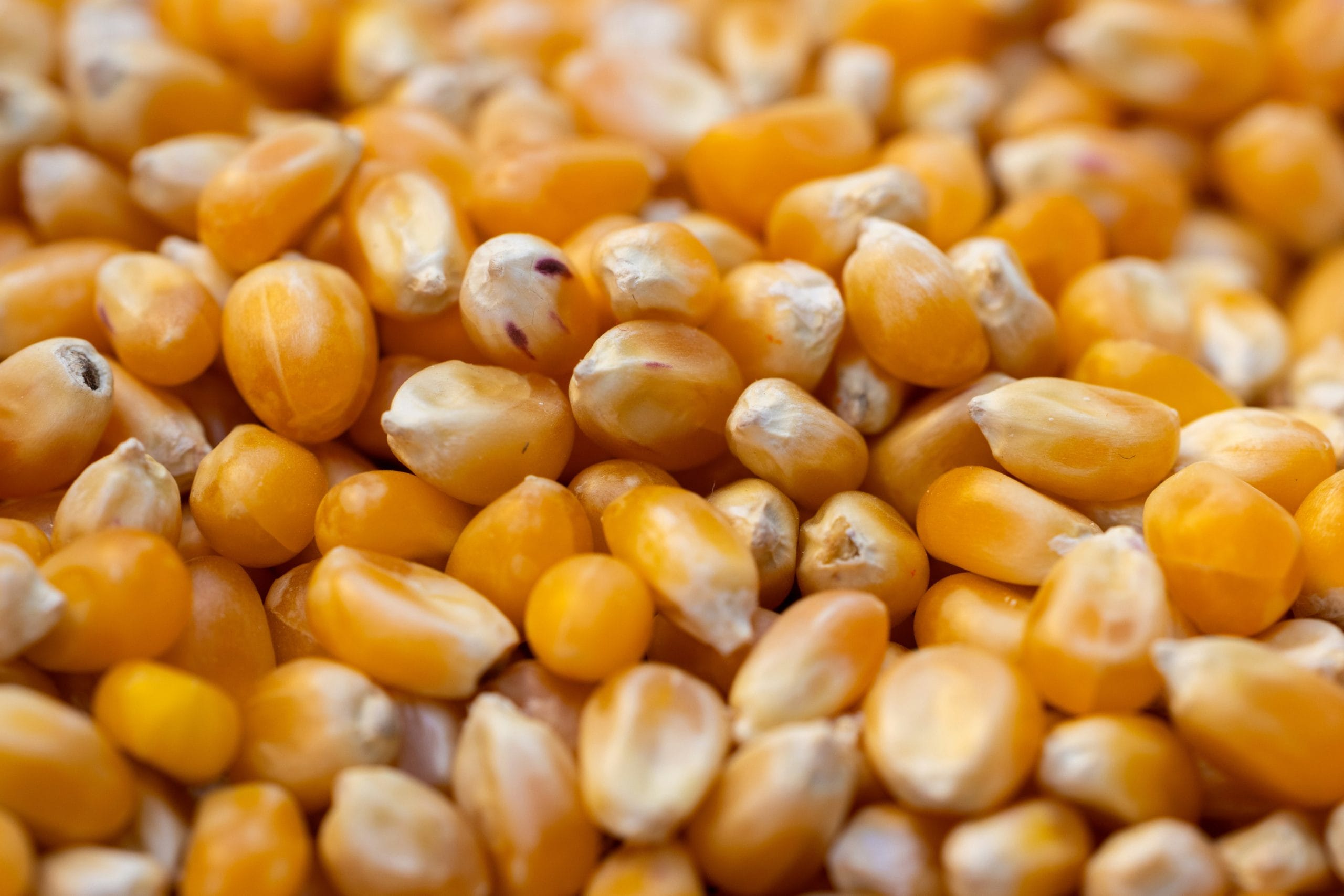
1. Corn
Corn is highly responsive to canopy density and light interception. Small differences in LAI can translate into major yield differences.
With canopy imaging research using the CI-110, researchers can quantify canopy closure rates and radiation penetration throughout the season . Pair that with leaf-level measurements from the CI-203 Handheld Laser Leaf Area Meter, which provides seven parameters including area, width, length, and shape factor, and you get both macro and micro canopy insight.
The CI-203 also supports GPS tagging and virtually unlimited SD storage, making it practical for large breeding trials.
2. Soybeans
Soybeans respond strongly to canopy architecture and light distribution within the canopy. Canopy imaging research helps evaluate branching patterns and row spacing strategies.
Using the CI-110 to estimate LAI and PAR , and the CI-340 Handheld Photosynthesis System to measure photosynthesis, transpiration, stomatal conductance, and internal CO2, researchers can directly connect canopy density with gas exchange efficiency.
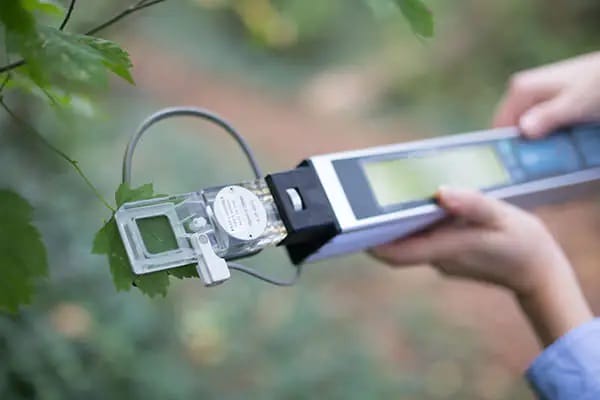
The CI-340 offers interchangeable chambers and optional modules for light, CO2, H2O, temperature control, and chlorophyll fluorescence. That flexibility is especially useful in genotype comparisons.
3. Wheat
Wheat canopy uniformity affects both grain fill and disease development. Canopy imaging research supports evaluation of plant spacing, tillering, and stand density.
The CI-110 captures canopy gap fraction and leaf angle distribution. For leaf-level area confirmation, the CI-202 Portable Laser Leaf Area Meter provides 0.01 cm2 resolution and stores up to 8,000 measurements.
The CI-202 is self-contained and requires no user calibration, which makes it reliable in multi-location wheat trials.
4. Rice
Rice canopy research often involves dense stands and water-managed environments. LAI tracking across growth stages is critical.
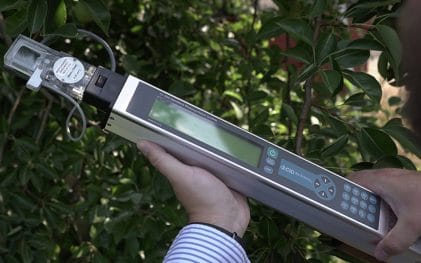
The CI-110’s self-leveling digital camera and wide-angle lens simplify measurements in flooded or uneven plots. When paired with the CI-710s SpectraVue Leaf Spectrometer, researchers can also quantify pigment and nutrient-related indices across visible and NIR wavelengths from 360 to 1100 nm .
This combination links canopy structure to biochemical changes.
5. Cotton
Cotton canopy structure influences boll retention and microclimate. Canopy imaging research helps optimize plant density and irrigation management.
The CI-110 provides LAI without destructive sampling. Meanwhile, the CI-340 measures photosynthesis and water-related parameters, including transpiration and stomatal conductance.
For drought studies, that direct physiological data is essential.
6. Potatoes
Potato yields are sensitive to canopy development timing. Early canopy closure improves light interception and weed suppression.
Canopy imaging research with the CI-110 allows rapid field-level LAI assessments. Leaf-level area changes due to stress or nutrient treatment can be captured using the CI-203, which flattens curled leaves for precise measurement.
That detail is useful in nutrient trials and disease progression studies.
7. Grapes
In vineyards, canopy architecture directly influences fruit quality and disease pressure.
The CI-110 enables measurement of canopy gap fraction and extinction coefficients. For leaf-level physiological performance, the CI-340 supports both open and closed system measurements and includes infrared non-contact leaf temperature readings.
Researchers can then correlate canopy density with berry composition and stress indicators.
8. Apples
Apple orchards present multi-layered canopies. Canopy imaging research helps quantify light penetration into the lower canopy.
The CI-110 performs under various sky conditions and offers user-selectable thresholding methods such as Otsu and Entropy Crossover. That flexibility improves image consistency across orchard blocks.
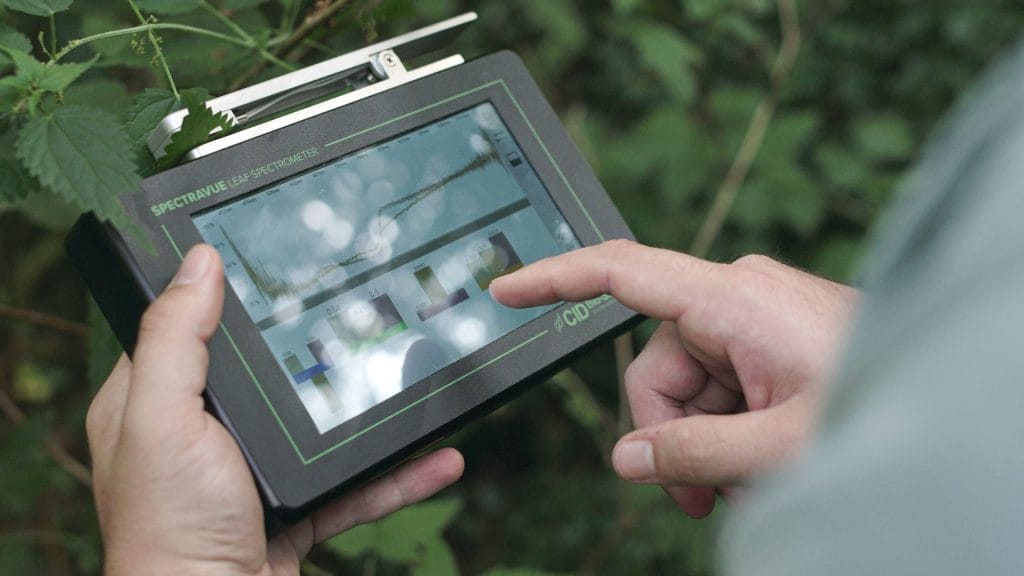
Pairing this with spectral measurements from the CI-710s, which measures reflectance, transmittance, and absorbance simultaneously, allows researchers to track pigment shifts linked to stress or nutrient management.
9. Citrus
Citrus canopy density affects fruit set and disease dynamics. Canopy imaging research allows non-destructive monitoring of tree development.
The CI-110 calculates LAI across multiple canopy size classes. For more detailed leaf physiology studies, the CI-340 offers chlorophyll fluorescence measurement alongside gas exchange.
This is especially useful when studying heat stress or salinity effects.
10. Tomatoes
In high-value vegetable systems, canopy architecture and stress detection drive yield and quality decisions.
The CI-710s SpectraVue supports real-time nutrient and pigment quantification using built-in or custom indices . Its handheld design and on-board software allow immediate field analysis.
Combine that with canopy imaging research from the CI-110 and you gain a clear view of both structural and biochemical plant status.
11. Alfalfa
For forage crops like alfalfa, canopy height and density influence biomass yield and regrowth.
Canopy imaging research provides LAI and radiation data without destructive sampling . Root development can also be tracked using the CI-600 In-Situ Root Imager, which captures root growth in undisturbed soil environments.
Connecting canopy and root data improves understanding of regrowth after cutting.
12. Barley
Barley is often used in stress and breeding research. Rapid canopy assessment supports selection decisions.
The CI-110 offers fast image capture with a 0.5 second measuring time. The CI-202 provides high-resolution leaf measurements with 0.01 cm2 precision .
When paired with the CI-340 for gas exchange and the CI-710s for spectral data, canopy imaging research becomes part of a fully integrated phenotyping workflow.
The Advantage of an Integrated Platform
Many researchers piece together tools from multiple manufacturers. That approach can create data compatibility issues and inconsistent measurement workflows.
CID Bio-Science instruments are designed to complement one another. The CI-110 provides canopy-scale structure. The CI-203 and CI-202 deliver precise leaf-level morphology. The CI-340 captures real-time gas exchange and fluorescence. The CI-710s delivers spectral insight across visible and NIR wavelengths. The CI-600 connects aboveground performance to belowground root development.
This consistency simplifies training, reduces calibration complexity, and strengthens data integrity across projects.
Move Your Canopy Imaging Research Forward
If you are planning field trials, breeding programs, or stress physiology studies, canopy imaging research should be central to your approach.
CID Bio-Science offers a full line of plant science tools designed for real-world research conditions. Our instruments are durable, field-ready, and built for precise measurement without unnecessary complexity.
Visit www.cid-inc.com to explore application notes, published research, and detailed specifications. Talk with our team about how to configure a system that fits your crop and research goals.
Related Products
Most Popular Articles
- Transpiration in Plants: Its Importance and Applications
- Leaf Area – How & Why Measuring Leaf Area…
- How to Analyze Photosynthesis in Plants: Methods and Tools
- Plant Respiration: Its Importance and Applications
- The Forest Canopy: Structure, Roles & Measurement
- Stomatal Conductance: Functions, Measurement, and…
- Forest & Plant Canopy Analysis – Tools…
- Root Respiration: Importance and Applications
- 50 Best Universities for Plant Science
- The Importance of Leaf Area Index (LAI) in…