8 Questions to Ask Before Buying a Field Phenotyping Instrument

Scott Trimble

June 18, 2026 at 5:13 pm | Updated June 18, 2026 at 5:13 pm | 5 min read
Field phenotyping instrument selection can shape the quality and efficiency of plant research for years. Whether you are studying crop stress, canopy structure, photosynthesis, or leaf morphology, the right tools determine how quickly and accurately you collect data.
A reliable field phenotyping instrument should fit your workflow, handle real field conditions, and generate data that integrates with modern analysis methods.
Before investing in any new system, it helps to step back and evaluate your research needs. The following eight questions can guide that process and help ensure you select a field phenotyping instrument that supports both current projects and future studies.
Subscribe to receive our monthly round-up of articles.
#01 What traits do you actually need to measure?
The first question is straightforward but often overlooked. Field phenotyping covers many plant characteristics, including canopy structure, photosynthesis, spectral signatures, root growth, and leaf morphology. A single instrument rarely captures all of these traits.
For example, researchers studying leaf morphology may prioritize high resolution leaf area measurements. Instruments such as handheld laser leaf area meters allow researchers to collect measurements like leaf area, width, length, perimeter, and shape factors quickly and non destructively.
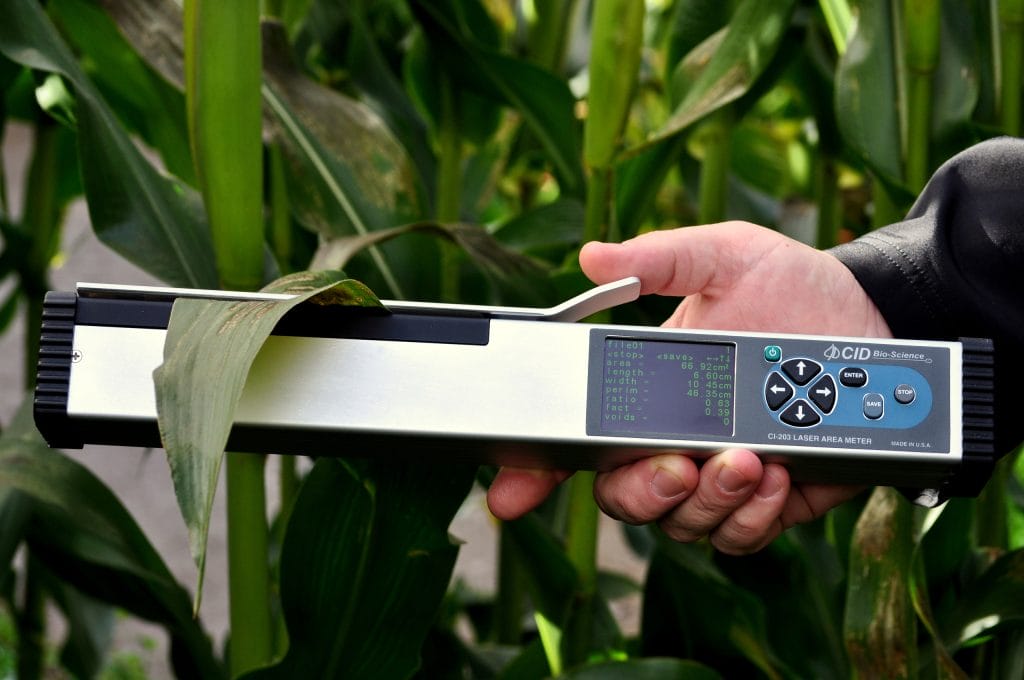
Tools like the CI-203 Handheld Laser Leaf Area Meter allow users to sweep the device across a leaf and instantly generate multiple measurement parameters while maintaining plant integrity.
Other studies might focus on physiological responses such as gas exchange or photosynthetic rate. In that case, a photosynthesis system designed for field use may be the better investment. Clarifying which plant traits matter most will immediately narrow your options.
#02 Will the instrument work reliably in field conditions?
Many phenotyping systems perform well in controlled environments but struggle outdoors. Field research often involves temperature fluctuations, humidity, dust, and uneven terrain.
A field phenotyping instrument should be durable, portable, and easy to operate in remote locations. Instruments designed specifically for fieldwork typically feature integrated batteries, onboard storage, and rugged housings.
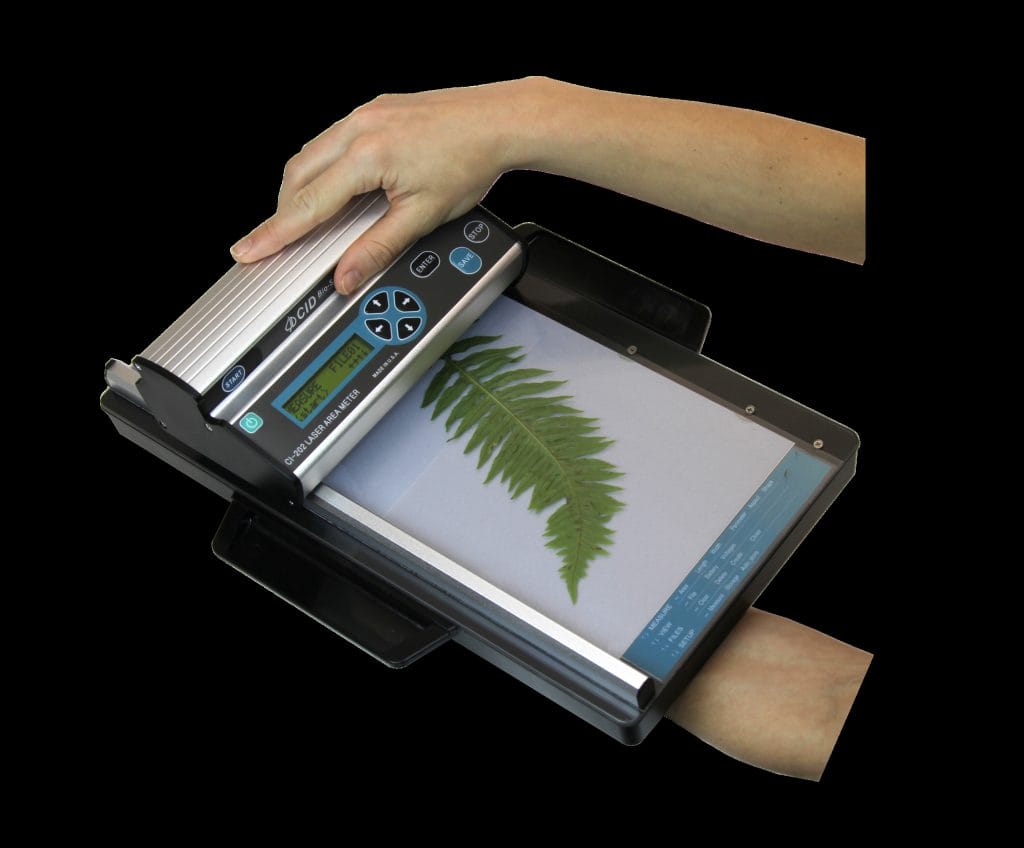
For example, portable leaf measurement tools like the CI-202 Portable Laser Leaf Area Meter are built with self contained data logging, rechargeable power, and straightforward operation so measurements can be collected in both field and lab settings.
When evaluating instruments, consider the following:
-
Battery life for long field days
-
Weather tolerance and operating temperature
-
Weight and portability
-
Ease of transport between field sites
These factors often determine whether an instrument becomes a daily research tool or sits unused in the lab.
#03 How quickly can you collect measurements?
Field phenotyping studies often involve large sample sizes. Even small inefficiencies can add hours to a data collection session.
An effective field phenotyping instrument should minimize setup time and allow rapid measurements. Devices with automated analysis, touchscreen interfaces, and one touch capture can significantly speed up the workflow.
For instance, canopy imaging systems can collect hemispherical photographs and calculate leaf area index in seconds while also measuring photosynthetically active radiation. Instruments that combine multiple measurements into a single capture help researchers collect more data in less time.
When evaluating speed, ask yourself:
-
How many samples must be measured per day?
-
Does the device automate calculations?
-
Can measurements be performed with minimal setup?
High throughput capabilities are essential for large scale phenotyping trials.
#04 Does the instrument support multiple plant types?
Plant research rarely stays limited to one species or growth form. Crops, shrubs, trees, and specialty plants all present different measurement challenges.
A flexible field phenotyping instrument should accommodate a wide range of plant structures. Photosynthesis systems, for example, may offer interchangeable chambers designed for broad leaves, needles, or unusual plant shapes.
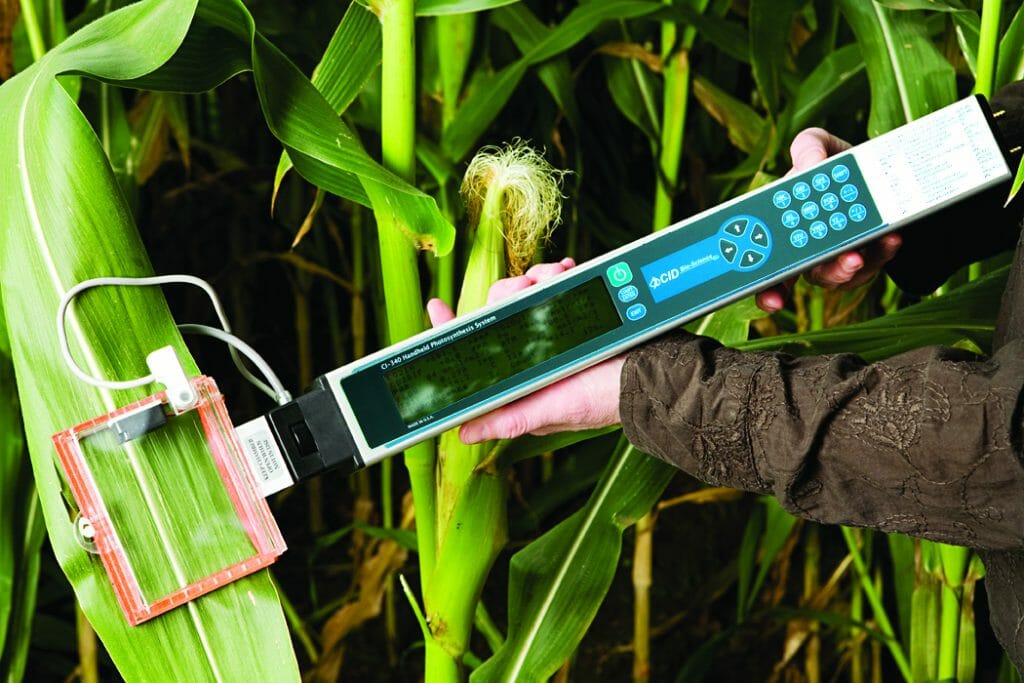
The CI-340 Handheld Photosynthesis System includes multiple chamber options and control modules that allow researchers to manipulate environmental conditions such as light intensity, temperature, and CO2 concentration during gas exchange measurements.
This flexibility allows the same instrument to support many different experiments and plant types over time.
#05 How much data can the instrument store?
Large field studies generate significant volumes of data. An effective field phenotyping instrument should store measurements reliably and allow easy data export.
Key storage features to look for include:
-
Internal data logging
-
SD card or high capacity memory
-
USB or wireless data transfer
-
Compatibility with analysis software
Many modern handheld instruments now allow thousands of measurements to be stored directly on the device. This eliminates the need for constant data transfers during fieldwork and reduces the risk of data loss.
Efficient data management can save hours during both collection and analysis phases.
#06 Does the instrument provide real time feedback?
Immediate feedback during field measurements can dramatically improve data quality. Instruments that provide visual confirmation or real time analysis allow researchers to catch mistakes before leaving the field site.
For example, some leaf measurement systems display the scanned leaf outline on screen so users can verify that the measurement captured the full shape correctly. This type of visual confirmation reduces errors and eliminates the need to repeat sampling later.
Similarly, modern spectrometers provide on board analysis of reflectance, absorbance, and transmittance spectra, enabling researchers to observe plant stress signals immediately during data collection.
Real time insights can help guide sampling decisions and improve overall experiment quality.
#06 Can the instrument measure multiple variables at once?
Efficiency often improves when a single instrument can measure several variables simultaneously. Instead of collecting separate datasets, researchers can capture multiple physiological or structural traits in one measurement session.
Spectral analysis instruments are a good example. By measuring light absorption and reflection across visible and near infrared wavelengths, they can estimate pigment concentrations, nutrient status, and stress responses from a single measurement.
Advanced field phenotyping instruments now integrate several measurement capabilities, reducing equipment needs and simplifying field logistics.
When evaluating new equipment, consider whether multi variable measurements could streamline your workflow.
#08 Will the instrument support long term research goals?
The final question focuses on long term research value. A field phenotyping instrument should support not only your current experiment but also future projects.
Look for systems that offer:
-
Expandable modules or accessories
-
Software updates and analysis tools
-
Compatibility with emerging research methods
-
Proven use in published studies
Instruments that evolve alongside research programs provide much greater long term value.
For example, modular photosynthesis systems allow researchers to add light control, fluorescence measurements, or environmental manipulation modules as new experimental questions arise. This flexibility extends the useful lifespan of the instrument and supports evolving research goals.
Takeaway
Selecting the right field phenotyping instrument requires careful consideration of research goals, measurement capabilities, and real world field conditions. Asking the right questions early in the decision process helps researchers avoid costly mistakes and choose equipment that truly supports their work.
From portable leaf area meters to advanced photosynthesis systems and spectral analysis tools, CID Bio Science designs instruments specifically for accurate and efficient field phenotyping. These tools are built for durability, rapid measurements, and flexible research applications.
If you are planning to upgrade your phenotyping workflow, explore the full range of CID Bio Science instruments to find a field phenotyping instrument that matches your research needs.
Related Products
Most Popular Articles
- Transpiration in Plants: Its Importance and Applications
- Leaf Area – How & Why Measuring Leaf Area…
- How to Analyze Photosynthesis in Plants: Methods and Tools
- Plant Respiration: Its Importance and Applications
- The Forest Canopy: Structure, Roles & Measurement
- Stomatal Conductance: Functions, Measurement, and…
- Forest & Plant Canopy Analysis – Tools…
- Root Respiration: Importance and Applications
- 50 Best Universities for Plant Science
- The Importance of Leaf Area Index (LAI) in…