Using the CI‑340 Handheld Photosynthesis System for Drought Stress Trials in Wheat

Scott Trimble

January 5, 2026 at 7:43 pm | Updated January 5, 2026 at 7:43 pm | 5 min read
Drought stress trials in wheat often come down to one core question: how efficiently is the plant still exchanging gas as water becomes limiting?
The CI-340 Handheld Photosynthesis System is designed for exactly this type of work. In field plots, greenhouses, and controlled environments, the CI-340 Handheld Photosynthesis System gives researchers direct access to photosynthesis, transpiration, and stomatal conductance data without the complexity or fragility of larger cart-based systems.
For wheat researchers focused on drought response, this matters because subtle physiological changes often appear well before visual symptoms.
Subscribe to receive our monthly round-up of articles.
Understanding drought stress in wheat requires tools that are fast, portable, and reliable under variable field conditions. This article walks through how the CI-340 Handheld Photosynthesis System fits into drought stress trials, what it measures, and why it is particularly well suited for cereal crops like wheat.
Why Measure Photosynthesis During Drought Stress Trials?
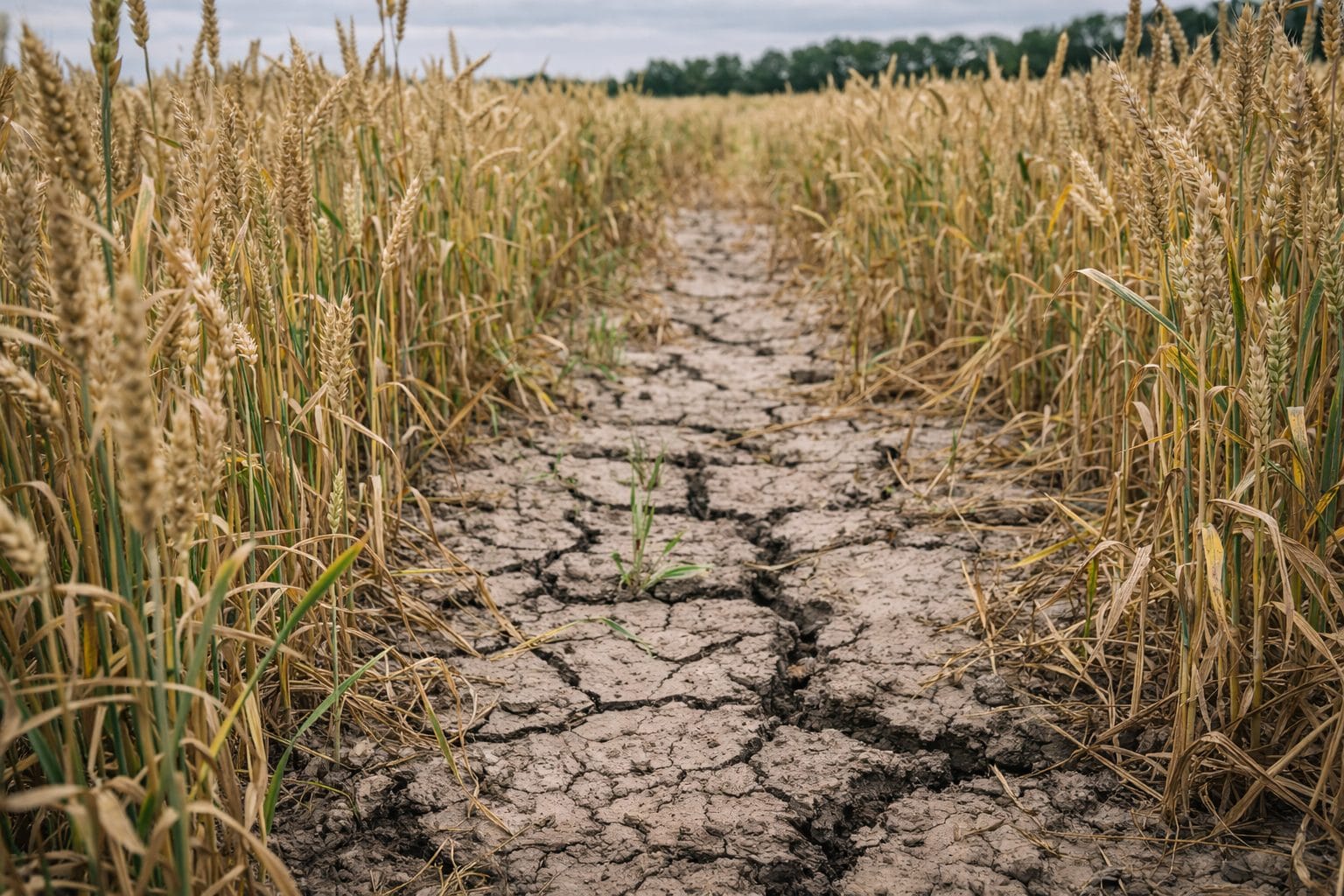
Drought stress affects wheat physiology long before yield losses become obvious. Reductions in stomatal conductance limit CO2 uptake, which in turn lowers photosynthetic rate.
Transpiration changes reflect how plants regulate water loss, while internal CO2 concentration provides insight into biochemical versus stomatal limitations.
Relying only on soil moisture or canopy temperature can miss these leaf-level responses. Gas exchange data gives a direct readout of how the plant is functioning. In drought stress trials, these measurements help researchers:
-
Compare drought tolerance across wheat genotypes
-
Identify early stress responses before wilting or chlorosis
-
Link physiological traits to yield or biomass outcomes
-
Validate irrigation treatments or drought simulation protocols
The CI-340 Handheld Photosynthesis System is built to capture these parameters quickly, making it practical to sample many wheat plants across treatments in a single day.
Overview of the CI-340 Handheld Photosynthesis System
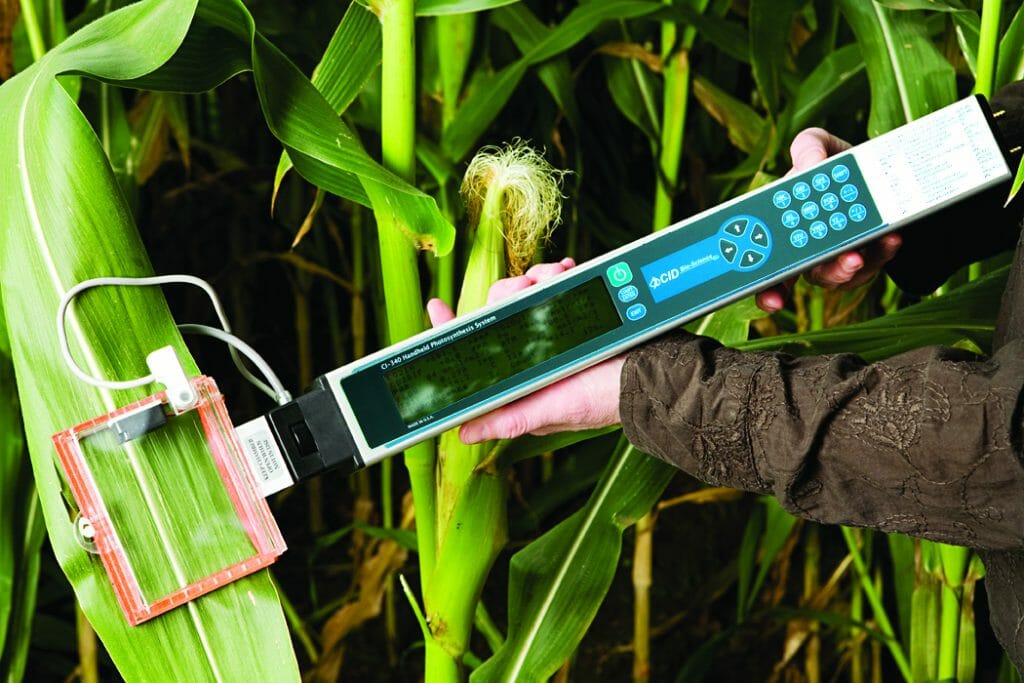
The CI-340 Handheld Photosynthesis System is a compact, single-handed gas exchange instrument that measures photosynthesis, respiration, transpiration, stomatal conductance, PAR, internal CO2, and leaf temperature in one unit.
Unlike larger systems that require external consoles or carts, the CI-340 integrates the gas analyzer directly with the leaf chamber. This design reduces measurement delay and simplifies field operation .
For wheat trials, portability is a major advantage. Plots are often spread across fields, irrigation gradients, or rainout shelters. The CI-340 can be carried easily between plots without sacrificing measurement stability.
Key features relevant to drought stress work include:
-
Stable CO2 and H2O analyzers for accurate gas exchange
-
Interchangeable chambers that accommodate narrow wheat leaves
-
Infrared, non-contact leaf temperature measurement
-
Support for open and closed system measurements
Setting up Drought Stress Measurements in Wheat
Selecting the Right Leaf and Chamber
In wheat, measurements are typically taken on the flag leaf or the most recently fully expanded leaf. The CI-340 offers multiple chamber options that help maximize enclosed leaf area while maintaining a proper seal.
For narrow leaves like wheat, chambers designed for small, broad leaves work well and minimize edge effects.
Consistency is critical. Measurements should be taken at similar leaf positions, times of day, and developmental stages across treatments. This reduces noise and makes drought effects easier to interpret.
Managing Environmental Conditions
Drought stress trials are often conducted under fluctuating light and temperature. The CI-340 Handheld Photosynthesis System includes optional control modules that allow researchers to standardize conditions when needed.
Light, temperature, and CO2 concentration can be adjusted to isolate specific stress responses rather than ambient variation.
In field trials, many researchers prefer to measure under ambient conditions to capture realistic plant responses. In that case, the CI-340 still records PAR and leaf temperature, allowing these variables to be accounted for during analysis.
Key Parameters to Track During Drought Stress
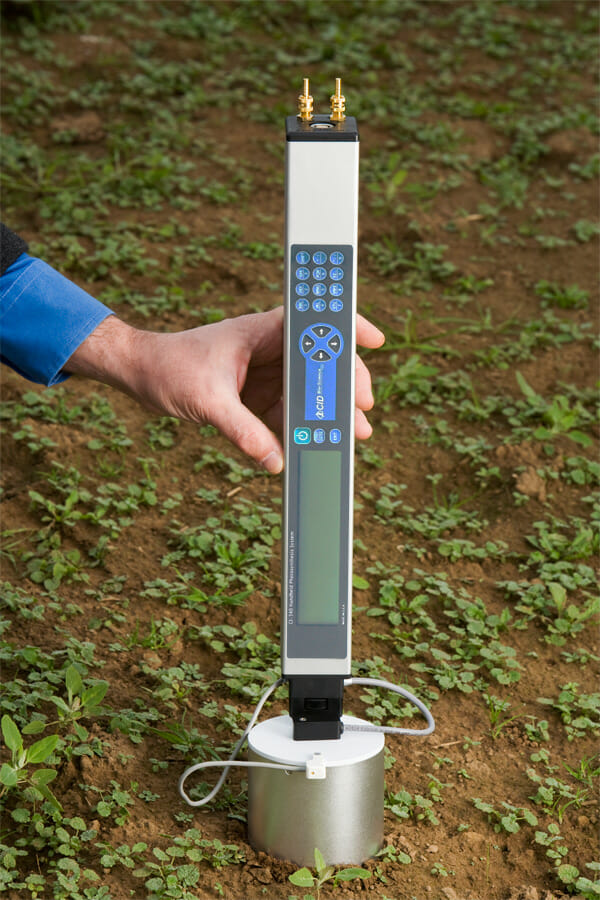
The CI-340 Handheld Photosynthesis System provides several outputs that are particularly informative in wheat drought studies.
Photosynthetic Rate
Net photosynthesis is often the first parameter to decline under water limitation. Comparing rates across irrigation treatments or genotypes helps identify plants that maintain carbon assimilation longer under stress.
Stomatal Conductance
Stomatal conductance reflects how wheat regulates water loss. Under drought, tolerant genotypes may show tighter control, reducing transpiration while maintaining reasonable photosynthesis.
Transpiration
Transpiration data complements conductance measurements and helps quantify water use strategies. These data are especially useful when paired with soil moisture or canopy measurements.
Internal CO2 Concentration
Internal CO2 helps distinguish between stomatal limitation and biochemical limitation. This distinction is important when interpreting whether reduced photosynthesis is driven primarily by water stress or by downstream metabolic constraints.
Integrating CI-340 Data Into Drought Stress Trials
Gas exchange data from the CI-340 Handheld Photosynthesis System becomes more powerful when combined with other measurements. In wheat drought studies, researchers often integrate CI-340 outputs with:
-
Soil moisture sensors or neutron probes
-
Leaf area or canopy structure measurements
-
Spectral or pigment data
-
Yield and biomass assessments at harvest
This integrated approach allows physiological responses measured early in the season to be linked directly to final agronomic outcomes.
Because the CI-340 stores data digitally and supports straightforward export, it fits easily into existing data workflows. Researchers can analyze trends across dates, treatments, or genotypes without extensive post-processing.
Practical Advantages in Field-Based Wheat Research
Drought stress trials often involve tight measurement windows. Plants may recover quickly after irrigation or rainfall, and midday stress responses can be transient.
The CI-340 Handheld Photosynthesis System is optimized for rapid measurements, allowing researchers to capture these windows without extensive setup time.
Other practical benefits include:
-
Single-handed operation that simplifies work in dense plots
-
Durable construction suitable for dusty or hot environments
-
Minimal calibration requirements in the field
-
Flexibility to move between field and greenhouse trials
These features reduce logistical barriers and make it easier to maintain consistent sampling protocols across locations and seasons.
Comparing the CI-340 to Larger Photosynthesis Systems
Many researchers are familiar with cart-based photosynthesis systems that offer fine environmental control but require more setup and power. For drought stress trials in wheat, those systems can be cumbersome, especially in large field experiments.
The CI-340 Handheld Photosynthesis System fills a different niche.
It prioritizes portability, speed, and ease of use while still delivering high-quality gas exchange data. For comparative trials, breeding programs, and stress screening studies, this balance often proves more practical than maximum control at the expense of throughput.
The Bottom Line
Drought stress remains one of the most significant constraints on wheat production worldwide. Measuring how wheat responds at the physiological level is essential for identifying tolerant genotypes and refining management strategies.
The CI-340 Handheld Photosynthesis System provides researchers with a practical, field-ready way to capture these responses directly at the leaf level.
If you are planning drought stress research in wheat and need a reliable photosynthesis measurement solution, contact CID Bio-Science to learn more about the CI-340 Handheld Photosynthesis System and how it can support your research goals.
Frequently Asked Questions
Can the CI-340 Handheld Photosynthesis System Be Used Directly in Field Wheat Plots?
Yes. The CI-340 is designed for field use and is commonly used in wheat plots under ambient environmental conditions, including drought stress trials.
How Many Wheat Plants Can Be Measured in a Day?
This depends on protocol and conditions, but the rapid measurement cycle of the CI-340 allows researchers to sample dozens to hundreds of plants per day, making it suitable for large trials.
Is the CI-340 Suitable for Comparing Drought Tolerance Across Wheat Genotypes?
Yes. The CI-340 Handheld Photosynthesis System is widely used to compare physiological responses such as photosynthesis and stomatal conductance across genotypes under varying water availability.
Related Products
Most Popular Articles
- Transpiration in Plants: Its Importance and Applications
- Leaf Area – How & Why Measuring Leaf Area…
- How to Analyze Photosynthesis in Plants: Methods and Tools
- Plant Respiration: Its Importance and Applications
- The Forest Canopy: Structure, Roles & Measurement
- Stomatal Conductance: Functions, Measurement, and…
- Forest & Plant Canopy Analysis – Tools…
- Root Respiration: Importance and Applications
- 50 Best Universities for Plant Science
- The Importance of Leaf Area Index (LAI) in…