CI‑110 vs Smartphone Fish‑Eye Canopy Solutions: Can cheap compete?

Scott Trimble

January 7, 2026 at 7:15 pm | Updated January 7, 2026 at 7:15 pm | 6 min read
Researchers talk a lot about quick canopy imaging tricks lately, especially when phone apps promise convenience. Those tools attract interest because they cost almost nothing and sit in every pocket. Still, when you compare them to a true plant canopy imager, the differences grow obvious fast. The CI-110 sits in a class of its own and gives researchers reliable, repeatable canopy data without workarounds or guesswork.
This comparison breaks down the strengths and limits of each approach so you can decide which method actually supports your research needs.
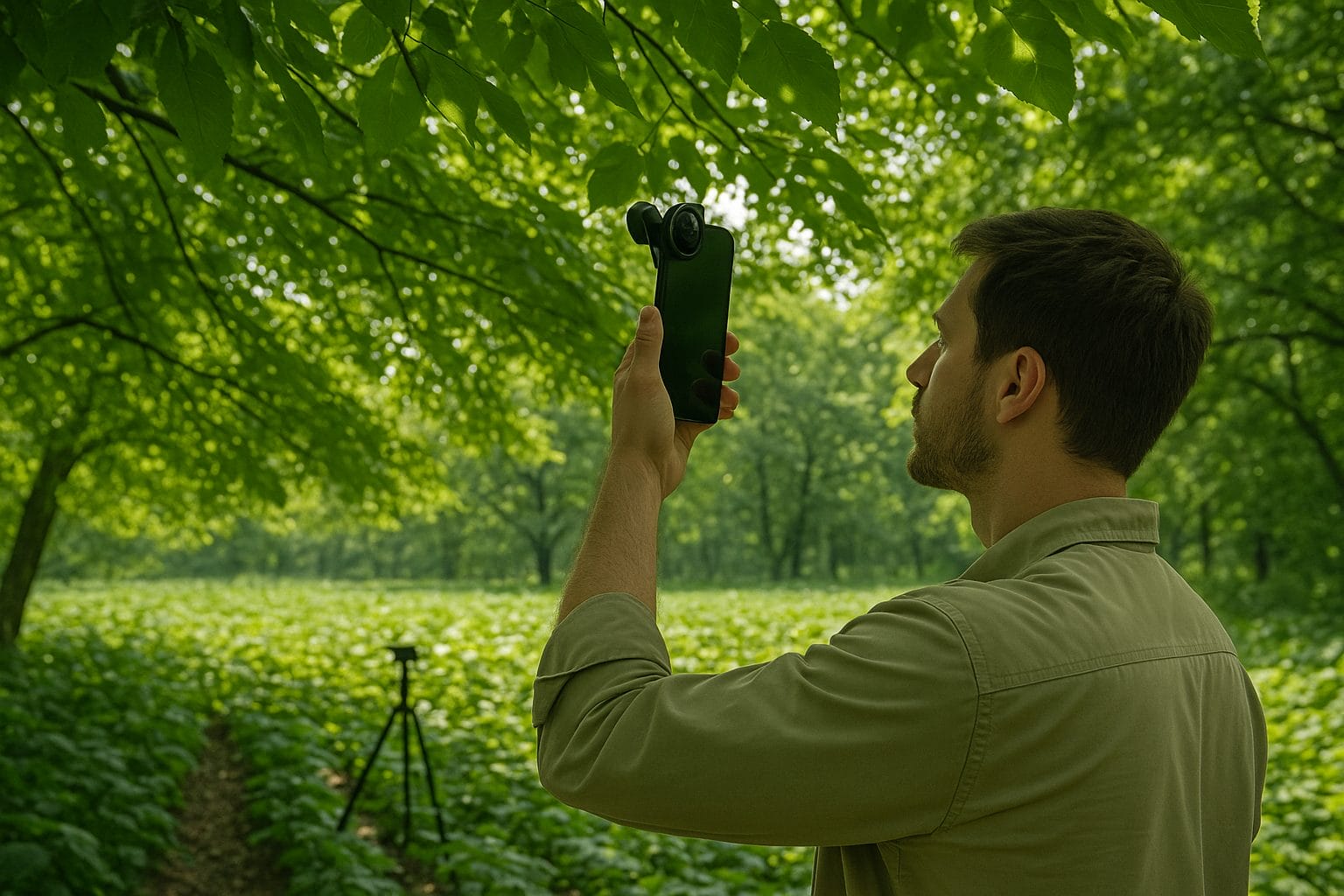
What Phone-based Fish-eye Methods Try To Do
Phone apps that use clip-on fish-eye lenses aim to replace a traditional plant canopy imager by capturing hemispherical photos. They often automate thresholding, gap fraction estimation or sunfleck interpretation. Many researchers try them because they already carry a phone and want to cut down on gear.
Subscribe to the CID Bio-Science Weekly article series.
By submitting this form, you are consenting to receive marketing emails from: . You can revoke your consent to receive emails at any time by using the SafeUnsubscribe® link, found at the bottom of every email. Emails are serviced by Constant Contact
Common features in app-based solutions
-
Basic hemispherical photo capture with a third-party fish-eye lens
-
Auto-thresholding with limited adjustment
-
Rough LAI estimates
-
Limited metadata tagging (depending on the app)
-
Variable image quality across phone models
These tools seem appealing, but they break down once the work shifts to serious ecological or agronomic research. Light conditions, angles, leveling and lens quality introduce inconsistencies that pile up with each measurement. Phones also change their internal processing without warning, which affects every image you collect.
What the CI-110 Brings To The Table
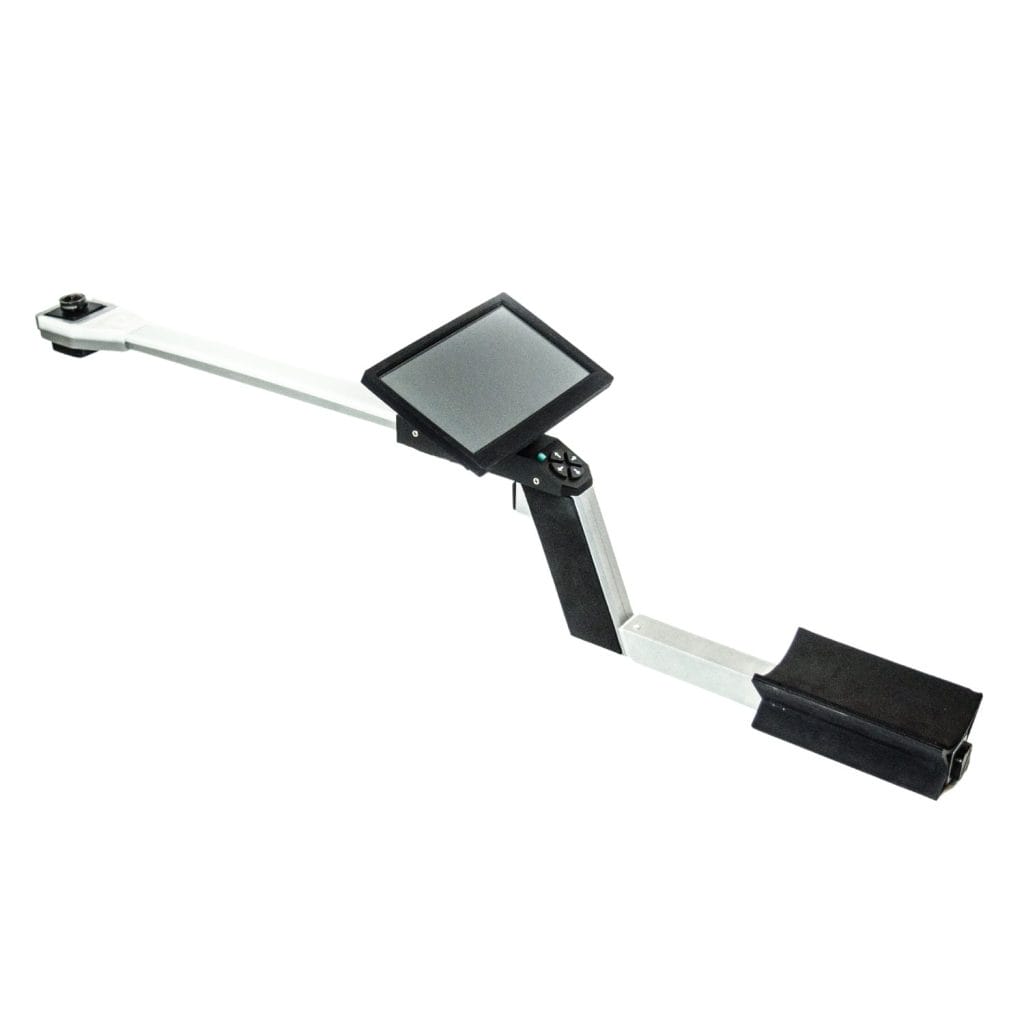
The CI-110 plant canopy imager solves the weaknesses found in phone-based solutions by controlling the entire imaging workflow. The system combines a self-leveling wide-angle camera, PAR sensors, adjustable filters and a dedicated interface that runs in the field without extra hardware. You get full control of each variable that matters for canopy work.
Key features of the CI-110
The brochure describes several capabilities that matter directly to canopy studies:
-
Self-leveling digital camera with a 150-degree field of view
-
Real-time LAI calculation
-
PAR measurement with 24 sensors built into the instrument arm
-
Gap fraction, leaf angle distribution and extinction coefficient calculations
-
No above-canopy reference readings required for gap-fraction LAI
-
A 7-inch touchscreen for viewing images and data in the field
-
Trigger with delayed image capture to reduce motion blur
-
GPS, Glonass, Beidou and Galileo compatibility for accurate location data
-
Internal compass for consistent orientation
-
Multiple thresholding methods including Otsu and Entropy Crossover
-
Neutral density filters included for bright-light conditions
These tools let you work in any sky condition, across a wide range of canopy heights and under tight time constraints. Nothing in the phone-based ecosystem comes close to this control.
Accuracy: Where the Gap Becomes Obvious
Accuracy and repeatability set the tone for meaningful canopy analysis. You want your results to show real differences in structure, not differences caused by the imaging tool.
CI-110 accuracy advantages
-
The lens stays fixed in calibration.
-
The self-leveling mechanism removes angle errors.
-
The built-in thresholding tools let you adapt to each setting.
-
The PAR sensors let you compare image-based LAI with sensor-based LAI.
-
GPS and compass alignment lock in site metadata.
These parts create a consistent dataset even when you collect hundreds of images under changing conditions.
Phone method accuracy issues
-
Clip-on lenses vary in shape and clarity.
-
Phone cameras apply processing that changes with updates.
-
Leveling depends on hand stability or a bubble-level app.
-
Light metering varies across models and software versions.
-
Thresholding tools rarely let you fine-tune important parameters.
The lack of control makes it hard to create a clean dataset across time. Even careful users run into noise that masks ecological patterns.
Field Workflow Differences
CI-110 workflow
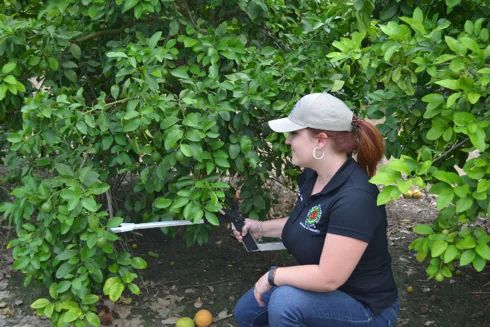
The CI-110 plant canopy imager lets you power up, level the camera, choose a thresholding method, capture an image and check LAI instantly on the touchscreen. The trigger with delayed capture helps you keep images crisp even when the ground feels uneven. The device stores everything, including location and orientation, so you don’t rely on extra apps.
Phone workflow
Phones force you to clip on a lens, check that the lens sits correctly, run an app that may or may not support your model, fight inconsistent auto-exposure and then adjust level by hand. You often need a second app for metadata. The workflow slows down and still introduces unpredictable error.
Environmental Conditions
Canopy research often takes place in harsh conditions: glare, patchy clouds or dim understory environments.
CI-110 resilience
Neutral density filters let you handle intense sunlight. The wide dynamic range supports measurements across forest types. The system keeps working in a broad temperature range, and the sensor suite stays reliable through shifts in humidity.
Phone limitations
Clip-on lenses fog easily. Phones struggle with intense light that creates blown-out pixels. Some apps crash when the phone overheats. All these factors reduce usable data.
Data Consistency Across Years
A plant canopy imager earns its value by producing comparable results over long time spans. Studies often require multi-year trends.
The CI-110 gives you consistent optics, identical leveling behavior and stable processing. You control thresholding and the imaging environment. That stability makes multiyear datasets credible.
Phones age fast and change quickly. A new phone camera changes your lens, sensor, exposure curves and processing pipeline. That shift breaks continuity and adds noise to long-term research.
Cost Considerations
Phone-based tools win in upfront cost. A clip-on lens costs less than a lunch, and apps often cost a few dollars. That low price attracts students and early career researchers.
The CI-110 demands investment, but it eliminates workflow bottlenecks, supports high-level studies and produces valid data in places where phone images fail. Over time you save hours of cleanup and correction, which matters when a project scales up or spans multiple sites.
When Each Tool Makes Sense
Phone fish-eye solutions work when:
-
You need a rough, quick visual record
-
You work in non-research settings
-
You want to teach the concept of hemispherical imaging
-
You feel comfortable with noise in the dataset
The CI-110 works when:
-
You need reliable LAI data
-
You collect data across light conditions
-
You compare datasets across seasons or years
-
You want PAR and canopy metrics together
-
You work with multiple canopy heights
-
You rely on accurate location metadata
-
You can’t risk errors caused by exposure changes
Why the CI-110 Stands Out
The CI-110 plant canopy imager produces high-quality canopy data in real time and removes frustration from the workflow. It also gives you tools that phone methods simply cannot match: PAR integration, stable optics, self-leveling, advanced thresholding and reliable orientation. It supports research at scale and across long timeframes. Cheap tools try to imitate the idea of canopy imaging, but the CI-110 delivers actual canopy science.
If your work demands dependable numbers rather than rough approximations, the CI-110 solves problems before they appear.
Final Thoughts
Smartphone fish-eye setups help with casual observations, but they fall short when you need consistent and trustworthy canopy data. The CI-110 brings clarity, speed and scientific reliability to every measurement, whether you work in forests, orchards, restoration plots or controlled experiments. It keeps your workflow clean and your results comparable, even when conditions shift throughout the day.
If you want a dependable plant canopy imager that supports real research instead of quick guesses, explore the CI-110 on the CID Bio-Science site and request a quote to see how it fits your field or lab work.
FAQs
1. Can a smartphone fish-eye setup produce reliable LAI values?
It can produce a rough estimate, but the numbers shift a lot between phone models, lenses and lighting conditions. Phones change their internal processing often, which affects consistency over time. A dedicated plant canopy imager like the CI-110 avoids those problems by using fixed optics, controlled thresholding and a self-leveling camera.
2. Why does leveling matter so much in canopy imaging?
Even slight tilt changes the distribution of sky pixels in hemispherical photos. That shift affects gap fraction and LAI calculations. The CI-110 levels itself automatically, which removes one of the biggest sources of user error. With phone setups, leveling depends entirely on the user, and small mistakes add up across large datasets.
3. Do neutral density filters really make a difference?
Yes. Bright sky conditions often cause overexposed areas in hemispherical photos. When that happens, thresholding becomes inaccurate and canopy metrics drift. The CI-110 includes neutral density filters so you can keep exposures consistent in open, high-light environments. Phone lenses rarely offer that control, which increases noise in the data.
Related Products
Most Popular Articles
- Transpiration in Plants: Its Importance and Applications
- Leaf Area – How & Why Measuring Leaf Area…
- How to Analyze Photosynthesis in Plants: Methods and Tools
- Plant Respiration: Its Importance and Applications
- The Forest Canopy: Structure, Roles & Measurement
- Stomatal Conductance: Functions, Measurement, and…
- Forest & Plant Canopy Analysis – Tools…
- Root Respiration: Importance and Applications
- The Importance of Leaf Area Index (LAI) in…
- 50 Best Universities for Plant Science