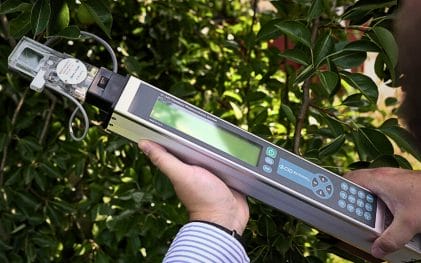
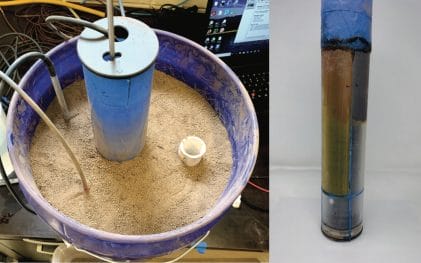
3 Metrics That Matter More Than Leaf Area Index


Scott Trimble

June 18, 2026 at 5:14 pm | Updated June 18, 2026 at 5:14 pm | 5 min read
Leaf Area Index has long been a standard metric in canopy research, but LAI alone rarely tells the full story. If you rely only on Leaf Area Index to interpret plant performance, you are likely missing critical context about function, stress, and productivity. Leaf Area Index is useful, but it is structural. It describes how much leaf surface is present, not how well that leaf area is working.
In practice, three other metrics often provide deeper insight than Leaf Area Index alone: gas exchange, spectral reflectance, and precise leaf morphology. When combined, these measurements move beyond structure and into function. CID Bio-Science instruments are designed to capture these metrics accurately and efficiently in the field, giving researchers a more complete understanding of plant systems.
1. Gas Exchange: Measuring What the Canopy Is Actually Doing
Leaf Area Index estimates canopy density. Gas exchange measurements tell you whether that canopy is productive.
Subscribe to receive our monthly round-up of articles.
Photosynthesis, transpiration, stomatal conductance, internal CO2 concentration, and respiration all reflect real-time plant function. These parameters show how plants respond to drought, temperature shifts, nutrient availability, and light intensity. Two canopies with identical Leaf Area Index values can have dramatically different photosynthetic rates.
The CI-340 Handheld Photosynthesis System is built specifically for this level of analysis. It measures photosynthesis, respiration, transpiration, stomatal conductance, PAR, and internal CO2 in a compact, single-handed instrument. Direct chamber connection to the CO2 and H2O gas analyzer reduces measurement delay and allows rapid gas exchange measurements, which matters when working under variable field conditions.
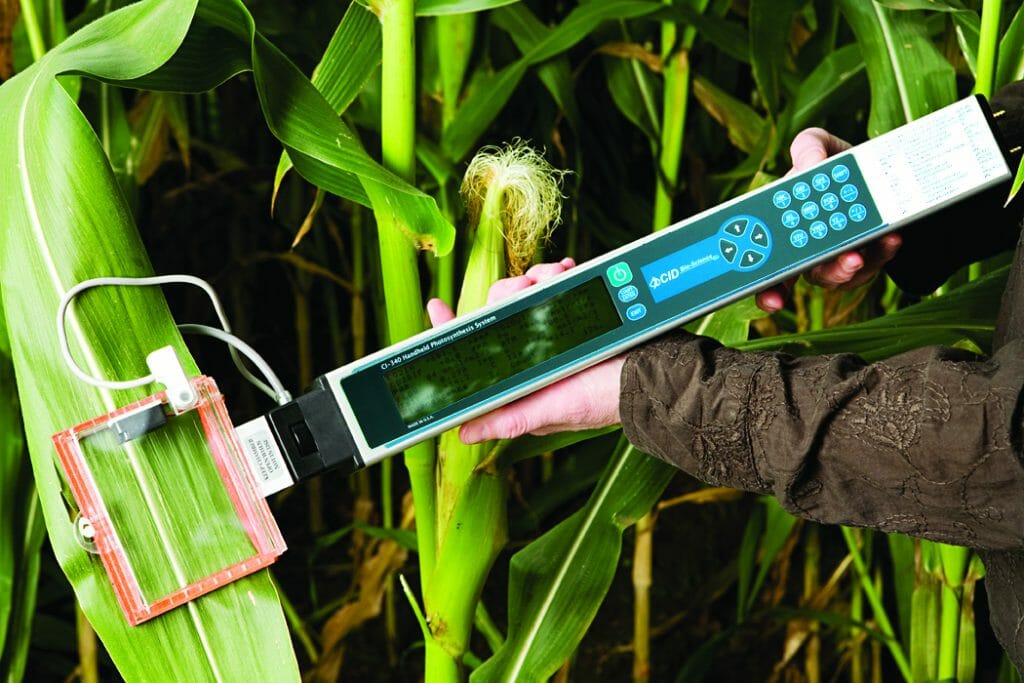
Researchers can further expand control with optional modules:
-
Light control for standardized light-response curves
-
Temperature control to assess heat or cold stress
-
CO2 and H2O control for physiological response experiments
-
Simultaneous chlorophyll fluorescence measurement
This flexibility allows you to isolate environmental drivers of plant performance. Instead of asking how much leaf area is present, you ask how efficiently that leaf area is assimilating carbon.
For agronomists comparing genotypes, ecologists studying seasonal transitions, or horticulturalists evaluating drought stress, gas exchange data often explains performance differences that Leaf Area Index alone cannot.
2. Spectral Reflectance: Early Detection of Stress and Pigment Changes
Leaf Area Index changes slowly. Spectral signals change fast.
Before visible symptoms appear, stress alters pigment composition, chlorophyll concentration, and photochemical efficiency. Spectral reflectance and absorbance measurements detect these subtle physiological shifts early.
The CI-710s SpectraVue Leaf Spectrometer measures reflectance, transmittance, and absorbance across a wide spectral range of 360 to 1100 nm, covering visible and near infrared light. This wavelength coverage supports pigment quantification, nutrient analysis, and stress detection.
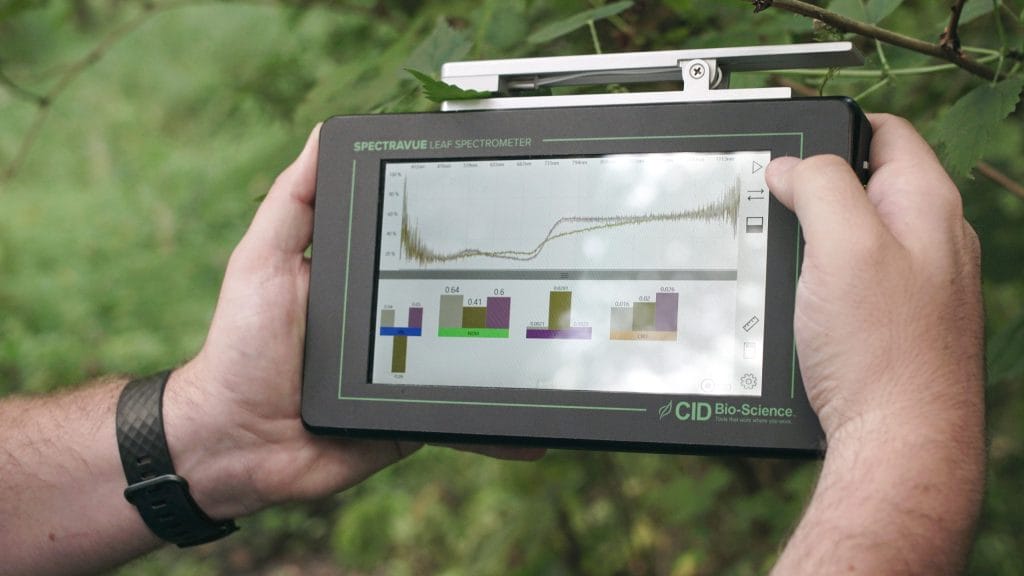
The instrument enables:
-
Real-time plant data collection and analysis in the field
-
Use of preloaded or custom spectral indices
-
Quantification of chemical concentrations
-
Deployment of chemometric modeling such as PLS
Because SpectraVue measures transmission, absorption, and reflection simultaneously, researchers gain a multidimensional view of leaf optical properties . That level of detail provides insight into nitrogen status, chlorophyll degradation, anthocyanin shifts, and photochemical reactions.
In nutrient trials, spectral data often reveals treatment effects days or weeks before changes in Leaf Area Index become measurable. In stress physiology, reflectance indices can show damage progression even when canopy structure remains intact.
Leaf Area Index describes canopy quantity. Spectral reflectance reveals canopy quality.
3. High-Resolution Leaf Morphology: Beyond Surface Area
Leaf Area Index depends on accurate leaf area measurement. If leaf area measurements lack precision, LAI calculations inherit that error.
Beyond total area, leaf morphology metrics such as perimeter, length, width, and shape factor provide functional clues. Changes in leaf shape can indicate stress adaptation, phenotypic plasticity, or treatment effects that simple area values miss.
CID Bio-Science offers two complementary tools for precise, non-destructive leaf measurement.
CI-202 Portable Laser Leaf Area Meter
The CI-202 provides high-resolution laser scanning in a durable, battery-powered unit . It measures area, length, width, and perimeter while calculating shape factor and ratio . With a resolution of 0.01 cm² and storage for up to 8,000 measurements, it supports both field and laboratory workflows.
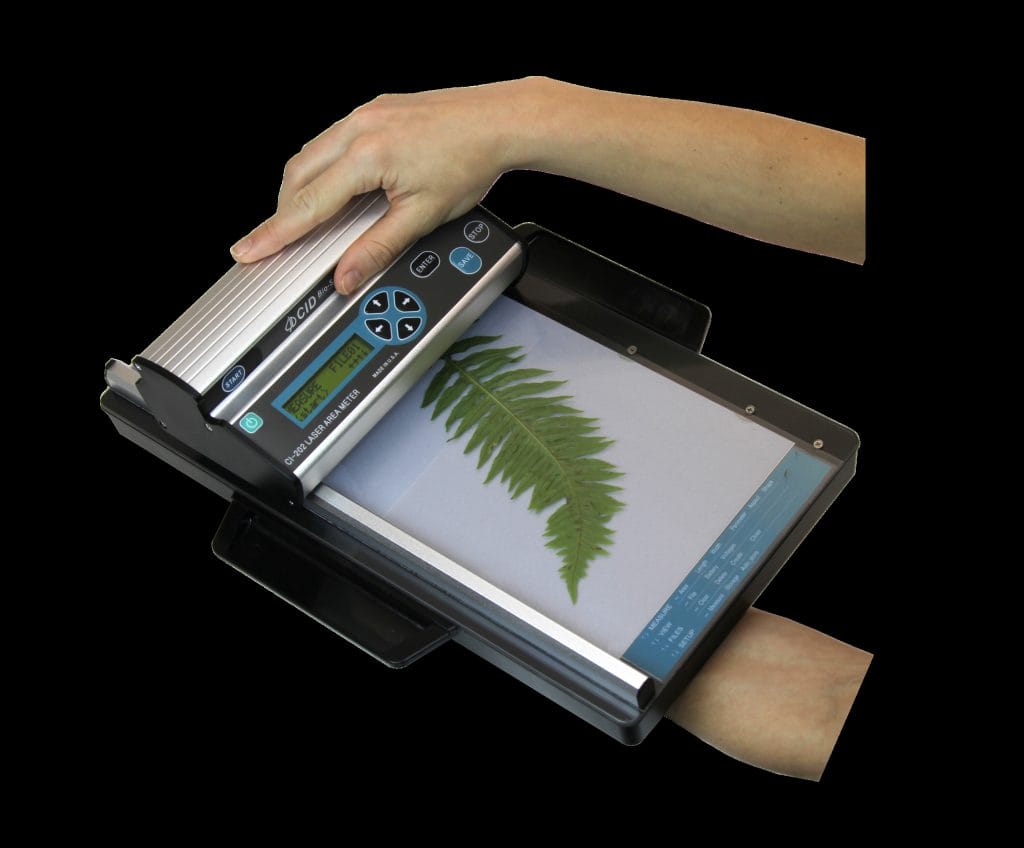
Researchers use the CI-202 to:
-
Quantify phenotypic changes in situ
-
Relate leaf morphology to physiological function
-
Measure diverse materials including needles and seeds
Its straightforward operation and lack of required user calibration reduce measurement variability across operators .
CI-203 Handheld Laser Leaf Area Meter
For rapid, single-handed measurements in dynamic field conditions, the CI-203 provides exceptional flexibility . A simple sweep across the leaf yields seven parameters: area, width, length, perimeter, shape factor, ratio, and void count.
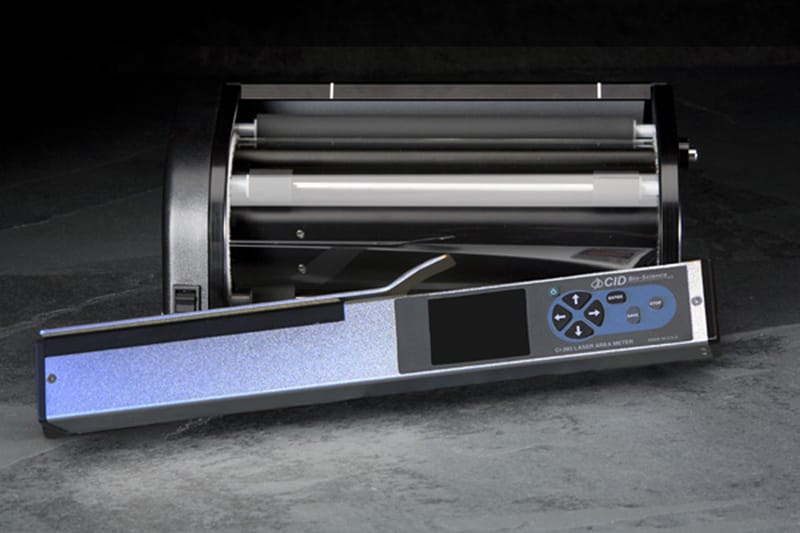
Key advantages include:
-
Non-destructive measurement on living plants
-
Graphic display of leaf outline for scan verification
-
GPS tagging for location-based datasets
-
Virtually unlimited storage via SD card
Because it flattens curled leaves during scanning, it improves measurement accuracy under real-world conditions . The optional conveyor attachment allows rapid processing of detached leaves when throughput is critical.
When calculating Leaf Area Index or modeling canopy productivity, precise leaf area data forms the foundation. Instruments like the CI-202 and CI-203 ensure that structural metrics are not compromised by measurement error.
Integrating Metrics for a Complete Picture
Leaf Area Index remains useful, especially when measured with robust canopy tools such as the CI-110 Plant Canopy Imager. The CI-110 combines hemispherical canopy photography with PAR sensing to calculate LAI and other canopy parameters non-destructively. Its 150 degree field-of-view camera and 24 PAR sensors support gap fraction analysis and sunfleck assessment.
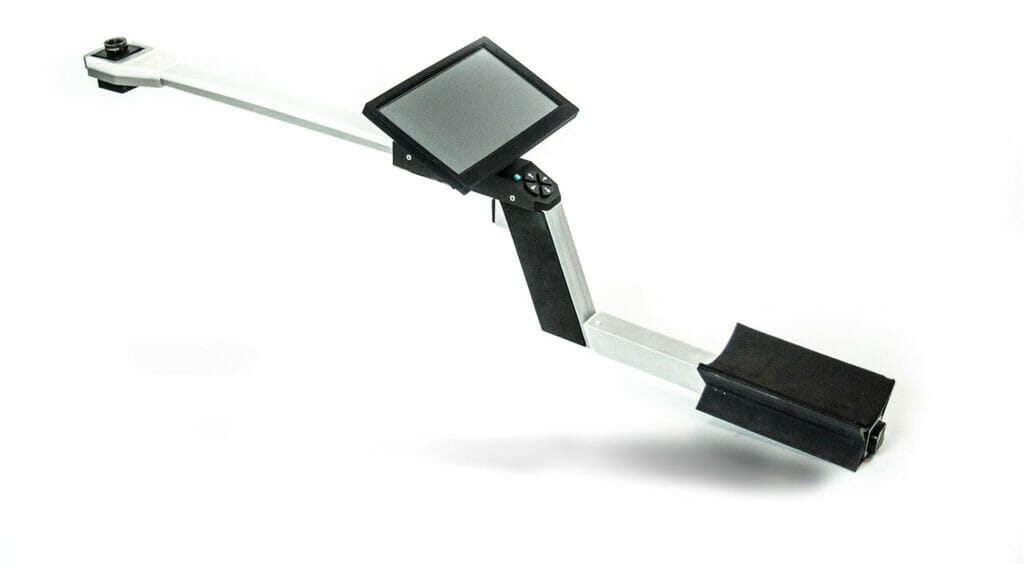
However, the strongest research designs integrate LAI with:
-
Gas exchange to quantify carbon assimilation
-
Spectral reflectance to detect early stress
-
High-resolution leaf morphology to refine structural accuracy
This integrated approach answers three key questions:
-
How much leaf area is present
-
How well that leaf area is functioning
-
How leaf traits are changing in response to environment or treatment
CID Bio-Science instruments are designed to work together across these scales. From canopy imaging to leaf-level gas exchange and spectral analysis, researchers can build datasets that connect structure and function directly.
Why This Matters in Competitive Research
In crop improvement, ecological forecasting, and climate response studies, relying on Leaf Area Index alone can oversimplify complex plant responses. Subtle stress signals, genotype differences, or nutrient imbalances often appear first in physiology or spectral characteristics.
CID Bio-Science instruments prioritize portability, data integrity, and modular flexibility. Whether you are conducting controlled experiments or field surveys across remote sites, the tools are designed to minimize setup time while maximizing data quality.
Instead of choosing between structure and function, you can measure both.
Summary
If your research currently centers on Leaf Area Index alone, it may be time to expand your measurement strategy. Explore how the CI-340 Handheld Photosynthesis System, CI-710s SpectraVue Leaf Spectrometer, and CI-202 or CI-203 Laser Leaf Area Meters can complement canopy measurements and strengthen your data.
Visit www.cid-inc.com to review application notes, published research, and detailed specifications. The CID Bio-Science team can help you select the right combination of tools for your research objectives.
Better data leads to better conclusions. CID Bio-Science provides the instruments to get there.
Related Products
Most Popular Articles
- Transpiration in Plants: Its Importance and Applications
- Leaf Area – How & Why Measuring Leaf Area…
- How to Analyze Photosynthesis in Plants: Methods and Tools
- Plant Respiration: Its Importance and Applications
- The Forest Canopy: Structure, Roles & Measurement
- Stomatal Conductance: Functions, Measurement, and…
- Forest & Plant Canopy Analysis – Tools…
- Root Respiration: Importance and Applications
- 50 Best Universities for Plant Science
- The Importance of Leaf Area Index (LAI) in…