What to Ask Your Supplier Before Buying a Plant Measurement Tool


Scott Trimble

January 6, 2026 at 6:01 pm | Updated January 6, 2026 at 6:01 pm | 5 min read
Buying a plant measurement tool is rarely a casual purchase. These instruments sit at the center of data collection, and the quality of your results often depends on how well the tool matches your research goals. Whether you are measuring leaf area, photosynthesis, canopy structure, roots, or spectral properties, asking the right questions upfront can save time, budget, and frustration later. If plant measurement tool performance matters to your work, the supplier conversation is where that decision really starts.
Below are the most important questions to ask before committing to a plant measurement tool, with practical context drawn from real field and lab workflows.
What Parameters Does the Plant Measurement Tool Actually Measure?
This sounds obvious, but it is often misunderstood. Many tools measure more than one parameter, and others only estimate derived values. Ask the supplier to clearly list what is directly measured and what is calculated.
Subscribe to the CID Bio-Science Weekly article series.
By submitting this form, you are consenting to receive marketing emails from: . You can revoke your consent to receive emails at any time by using the SafeUnsubscribe® link, found at the bottom of every email. Emails are serviced by Constant Contact
For example, laser-based leaf area meters like the CI-203 measure area, width, length, perimeter, and shape characteristics directly from scanned outlines . A photosynthesis system such as the CI-340 directly measures gas exchange variables like CO2 and H2O while calculating photosynthetic rate from those measurements. Canopy imagers like the CI-110 calculate leaf area index from hemispherical images and PAR sensor data rather than direct physical contact with leaves.
Knowing the difference helps you judge whether the plant measurement tool fits your experimental design or if it introduces assumptions you cannot control.
Is the Measurement Destructive or Non-Destructive?
Non-destructive measurement is a requirement for many experiments, especially long-term studies, breeding trials, or physiological monitoring over time. Always ask whether the plant measurement tool can be used on living plants without removing tissue.
Handheld laser leaf area meters flatten leaves gently during scanning, allowing repeated measurements on the same plant. Root imagers designed for minirhizotron means allow in situ root observation without excavation. Portable photosynthesis systems clamp onto leaves without damage and are designed for repeated measurements across seasons.
If destructive sampling is unavoidable, ask how much tissue is required and whether the tool supports rapid throughput to reduce sampling bias.
How Portable Is the Plant Measurement Tool in Real Field Conditions?

Portability is more than just weight. Ask about battery life, one-handed operation, storage capacity, and whether the plant measurement tool can handle uneven terrain, variable lighting, and temperature swings.
A tool designed for lab benches may technically work in the field but slow you down. Instruments like handheld photosynthesis systems and laser leaf area meters are designed for single-handed operation and battery-powered use. Canopy imagers with self-leveling cameras reduce setup time when moving between plots. Spectrometers with onboard analysis eliminate the need for a laptop in remote locations.
Ask the supplier how the plant measurement tool performs on a long field day, not just during a demo.
What Calibration and Maintenance Are Required?
Calibration requirements vary widely between instruments. Some plant measurement tools require frequent calibration against standards, while others are factory calibrated and require minimal user intervention.
Laser-based leaf area meters often require no user calibration, which reduces operator error and training time. Gas exchange systems may need periodic calibration of analyzers, but high-quality systems are designed to remain stable over long periods. Spectrometers should provide clear guidance on wavelength accuracy and stray light correction.
Ask how often calibration is needed, how long it takes, and whether it can be done in the field.
How Flexible Is the Tool for Different Plant Types?
Plants are not uniform, and a plant measurement tool should reflect that reality. Ask whether the instrument accommodates different leaf sizes, shapes, and structures.
Photosynthesis systems that offer multiple interchangeable chambers are better suited for diverse species, from broad leaves to needles and succulents. Leaf area meters that handle long or curled leaves reduce the need for trimming or flattening by hand. Canopy imagers with adjustable lens focus work across crop rows, forest understories, and orchards.
A flexible plant measurement tool extends its useful life as your research evolves.
How Is Data Stored, Accessed, and Exported?
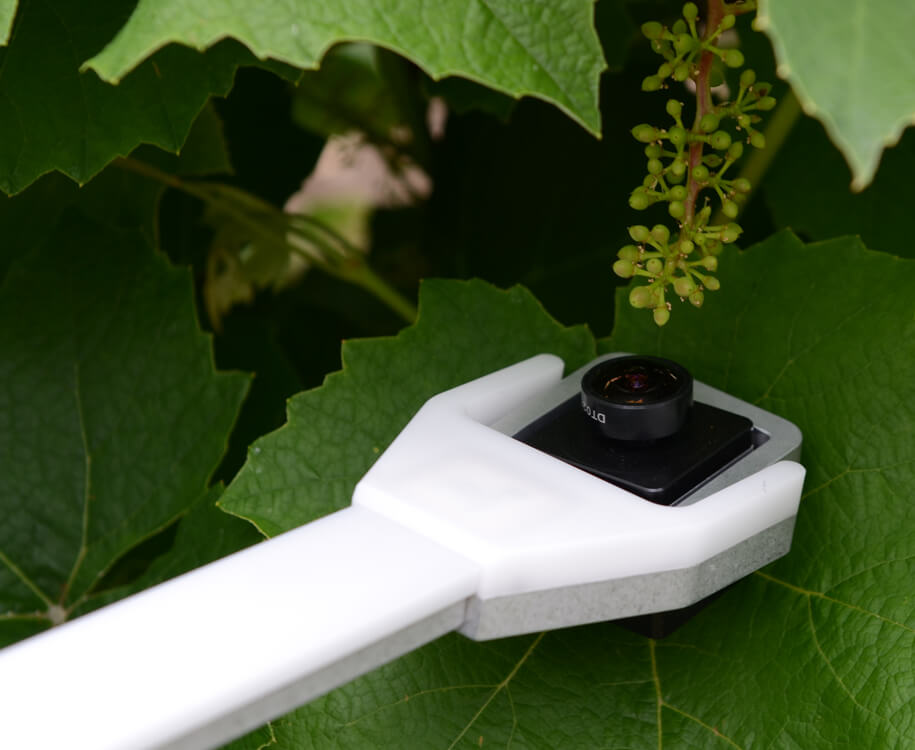
Data handling is often overlooked until the first large dataset arrives. Ask where data is stored, how much can be stored onboard, and how it is exported.
Many modern plant measurement tools use SD cards or internal memory with USB transfer. Some include GPS tagging for spatial analysis. Onboard displays that show data and images in real time help catch errors before leaving the field.
Also ask about file formats and compatibility with your existing analysis workflows.
What Software and Analysis Support Is Included?
A plant measurement tool is only as useful as the software that supports it. Ask whether analysis software is included, optional, or subscription-based.
Leaf spectrometers often include preloaded indices and the ability to create custom indices. Canopy imagers include thresholding methods drawn from published literature. Photosynthesis systems may include tools for generating light response curves and temperature response data.
Ask whether software updates are included and how long the supplier supports older instruments.
What Training and Documentation Are Available?
Even experienced researchers benefit from clear documentation. Ask whether the supplier provides manuals, application notes, and published research examples. CID Bio-Science instruments typically include operational manuals and are supported by application resources showing real-world use cases. This reduces the learning curve and helps new users get reliable data quickly.
How Does the Supplier Handle Service and Long-Term Support?
Plant measurement tools are long-term investments. Ask about warranty length, repair turnaround time, and whether parts are stocked locally. Suppliers that design and manufacture their own instruments tend to offer more consistent long-term support. Ask how long the model has been in production and whether it is actively supported.
Conclusion: Choosing Confidence Over Compromise
Choosing a plant measurement tool is about more than specifications. It is about trust in the data and confidence in the supplier behind the instrument. Asking these questions helps you compare tools based on usability, flexibility, and long-term value rather than just price.
CID Bio-Science has built its plant measurement tools around real research needs, offering portable, non-destructive instruments backed by practical software and long-term support. If you are evaluating a new plant measurement tool, start the conversation with CID Bio-Science and make sure your next instrument works as hard as you do.
Frequently Asked Questions
What Is the Most Versatile Plant Measurement Tool for Field Research?
Tools that are handheld, battery powered, and support non-destructive measurements across multiple plant types tend to be the most versatile.
How Important Is GPS Integration in a Plant Measurement Tool?
GPS is essential for spatial studies, long-term monitoring, and linking measurements to plot locations, especially in field trials.
Can One Supplier Support Multiple Plant Measurement Needs?
Yes. Working with a supplier that offers leaf, canopy, root, gas exchange, and spectral tools simplifies training, data integration, and long-term support.
Related Products
Most Popular Articles
- Transpiration in Plants: Its Importance and Applications
- Leaf Area – How & Why Measuring Leaf Area…
- How to Analyze Photosynthesis in Plants: Methods and Tools
- Plant Respiration: Its Importance and Applications
- The Forest Canopy: Structure, Roles & Measurement
- Stomatal Conductance: Functions, Measurement, and…
- Forest & Plant Canopy Analysis – Tools…
- Root Respiration: Importance and Applications
- The Importance of Leaf Area Index (LAI) in…
- 50 Best Universities for Plant Science