What Is Plant Disease Detection and Which Technology Works Best?

Dr. Vijayalaxmi Kinhal


August 6, 2026 at 6:33 pm | Updated August 6, 2026 at 6:33 pm | 8 min read
- Plant health monitoring can improve agricultural practices, profits, crop yield, safety, and quality.
- Non-destructive technologies for early disease detection on-site include spectroscopy and image processing.
- Among these techniques, vis-NIR spectroscopy-based devices are the most widely used for non-destructive, early detection of plant diseases.
Plant diseases result in the annual global loss of over 30% of crop yield and “hundreds of billions of dollars”. Hence, early detection of diseases is a priority as food production for a growing population is threatened on many fronts by uncontrollable factors like climate change-driven droughts and the scarcity of natural resources. Nowadays, the emphasis has been on non-destructive, real-time, easy methods of disease detection for efficient management of crop health. This article discusses the reasons behind the recent shift in technology and the most feasible options available.
Need for Early Crop Disease Detection
Plant diseases are caused by a wide range of above- and below-ground pathogens, including bacteria, fungi, viruses, and nematodes. Diseases not only reduce yield, but also the quality, nutritional value, and safety of food, affecting marketability and consumer confidence.
Pathogens reduce photosynthesis, nutrient uptake, plant growth, and vigor. Diseases also cause flower and fruit abnormalities, defoliation, and premature plant senescence. Growers also have to spend more time and money on disease control, which can reduce their ROI.
Subscribe to receive our monthly round-up of articles.
Early detection of diseases and severity allows growers to take quick, appropriate action to limit negative effects on crop health and their spread to neighboring plants. It also reduces chemical use, which improves the sustainability of food production by reducing the harmful effects of chemicals on the environment and costs.
Conventional Methods and Their Disadvantages
Early disease detection has always been a priority for growers and other stakeholders, and several conventional methods are widely used. However, these methods have many disadvantages, as listed below.
Visual symptoms: Growers use symptoms to detect and identify diseases. However, by the time symptoms are visible to the human eye, plant health is often compromised, requiring intensive use of chemicals or alternative methods to control the disease, and the possibility that it has spread to neighboring plants is high. Early detection is not possible by this method. Moreover, if growers do not have the skills and expertise to identify the disease, they may need outside expert advice.
Laboratory assessment: Laboratory tests are complex and require expensive equipment, expertise in the relevant pathology, and skilled personnel to conduct the analyses. Some methods used are as follows:
- Molecular methods include PCR-based detection, RNA interference, and microsclerotia morphological characteristics.
- Pathological methods involve taking plant tissue sections for microscopic examination of plant-pathogen interaction or response to diseases.
- Serological analyses test for antibodies produced to specific viruses; these include enzyme-linked immunosorbent assay (ELISA), dot blot immunobinding assay (DBIA), and tissue blot immuno assay (TBIA).
- Chromatography-based analyses are used to identify volatile organic compounds (VOCs) produced by plants in defense against pathogens. The VOCs are first extracted from the plant, then isolated by various chromatographic methods, after which the compounds’ makeup and properties are identified through mass spectrometry (MS), infrared spectroscopy (IR), or nuclear magnetic resonance (NMR).
A complete diagnosis by any of the above methods requires time. Also, laboratories are often far away, increasing waiting time for results due to transportation. Growers cannot use these methods often in a single season due to transport costs and waiting time, and they are not feasible for optimizing daily agricultural practice. Moreover, these methods require destructive sampling that can damage a plant.
Growers need an alternative to these laborious, time-consuming methods for early plant disease detection.
Non-destructive Disease Detection
Non-destructive methods that require no sampling and can repeatedly test plants and provide accurate, reliable results in real time are needed. Hence, many such technologies have recently been developed to enable early detection and increase the efficiency of daily crop management.
These technologies trace changes in plant tissue due to pathogen attacks, a form of biotic stress. They convert signals from plant physiological processes and biochemistry in response to pathogens into digital signals in real time. Since these technologies tap into internal processes, they can detect plant responses to diseases before they produce external symptoms visible to people. So, growers can take corrective measures much earlier than with conventional technologies and reduce disease impact on individual plants and overall yield. These detection methods are combined with advanced analytics algorithms that convert complex plant data into easy-to-understand insights growers can use immediately. These technologies help optimize agricultural practices, while simultaneously minimizing resource use and environmental damage. These methods are used in crop research and for commercial purposes, such as precision agriculture and precision forestry.
The main non-destructive technologies for on-site use in early disease detection are spectroscopy and image processing.
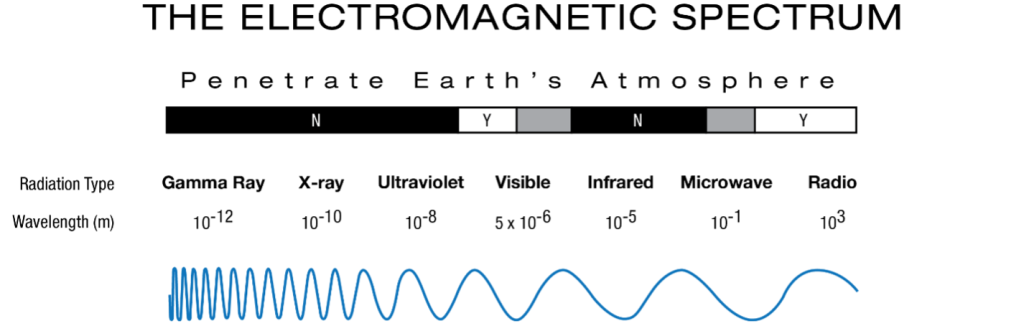
Figure 1: Electromagnetic spectrum of radiation reaching the Earth, NASA. (Image credits: https://mynasadata.larc.nasa.gov/basic-page/electromagnetic-spectrum-diagram)
Spectroscopy-based Approaches
Spectroscopy is a broad approach with several applications. It involves the interaction of the electromagnetic spectrum, which includes visible light, infrared, ultraviolet, and X- and gamma-ray wavelengths, with compounds in plant tissue; see Figure 1. When electromagnetic radiation hits the tissue, certain wavelengths are absorbed, reflected, or transmitted, and these spectra are measured to identify and quantify internal compounds. Common spectral techniques in agriculture include near-infrared, Raman, and terahertz spectroscopy.
Near-infrared spectroscopy
The technique involves estimating the amount of near-infrared (NIR) light that is absorbed by the plant tissue. NIR detects changes in the chemical composition of tissues to identify disease stress, since specific wavelengths are absorbed by different compounds, helping differentiate between healthy and diseased plants. Usually, leaves are the organs that are examined by NIR spectrometers. Leaf NIR spectroscopy also identifies changes in color, because many diseases affect pigmentation and chlorophyll content. Devices irradiate the plant with a chosen band and collect the response spectra. Portable devices have integrated software with algorithms for preprocessing and feature extraction, and a model to analyze complex spectral data and provide simple digital results.
NIR combined with visible (Vis) light spectroscopy has several advantages, as it is rapid, simple, highly precise, accurate, efficient, and low-cost. However, it can be affected by humidity, temperature, and differences in crop variety and growth stages. It has already been used for early warning and diagnosis of several diseases in various crops, such as aflatoxins in corn, root rot and yellow rust in wheat, late blight disease, powdery mildew in sugar beets, rice blast, Fusarium in barley, apple water heart disease, and oil palm base rot, to name a few.
Raman spectroscopy
Raman spectroscopy technology is highly sensitive and can identify pathogenic bacteria. The light scattered by a sample is measured to analyze molecular structure. Hence, it differentiates between healthy and diseased plants and diagnoses the causal pathogen and virus. It has been used for early warning of Leaf Curl Sardinia virus and spotted wilt virus in tomatoes, and Fusarium wilt and canker in oranges, to name a few.
The technique is more expensive than vis-NIR spectroscopy, and the wavelength penetration is shallower. The technique has yet to be popularized to fully exploit its potential.
Terahertz spectroscopy
Terahertz spectroscopy measures the absorption and emission by an object of terahertz waves, which lie between microwaves and infrared waves. It can reach deep tissue to analyze chemical components and provide information on internal structure. This method also leverages terahertz’s high sensitivity to water content.
Terahertz spectroscopy can give information on the severity of plant diseases. It is a method that has emerged in recent years and needs to be combined with other technologies like laser-induced breakdown spectroscopy (LIBS) to improve accuracy and efficiency.
A detailed comparison of the various spectroscopy techniques can be seen in Table 1.
Table 1: Comparison of different technologies, Wang et al. (2025). (Credits: https://www.mdpi.com/2077-0472/15/15/1670)
| Techniques | Cost | Portability | Depth of Penetration | Humidity Sensitivity |
| Near-infrared spectroscopy |
Lower, relatively inexpensive equipment and low operation cost, suitable for large-scale application | Higher, portable devices (such as handheld spectrometers) can be used in field sites | Medium, can obtain information on internal structure and composition of plant tissues, but with limited penetration depth | Higher, spectral information is susceptible to humidity, which may cause data fluctuations and affect detection accuracy |
| Raman spectroscopy | Medium, moderate cost for ordinary equipment, enhanced technologies (such as SERS) may be more expensive | Higher, handheld devices can be used for on-site detection | Shallow, mainly detects molecular vibration information on the surface or shallow layers of samples | Medium, humidity may have some impact on detection, but the degree of influence is relatively small |
| Terahertz Spectroscopy | Higher, expensive equipment limits its wide application | Lower, equipment is large in size and has poor portability, currently mainly used in laboratories | Deeper, can penetrate many non-conductive materials and obtain deeper information on plant tissues | Higher, terahertz waves are susceptible to humidity during propagation and detection performance may decline in high-humidity environments |
| Hyperspectral imaging | Higher, expensive equipment and high data processing and storage costs | Lower, equipment is usually large, although it can be combined with drones, overall portability is still limited, more used for laboratory fine analysis | Medium, can simultaneously obtain image and spectral information, with moderate penetration depth for plant tissues | Higher, data collection is affected by environmental factors such as light and weather, humidity may also have some impact |
| Digital Imaging | Lower, equipment (such as ordinary cameras, cameras on drones) has low cost, easy to obtain | Higher, equipment has good portability, can be collected on-site using smartphones, cameras, or drones | Shallow, mainly obtains color, texture, etc., features of plant surfaces | Lower, humidity has a relatively small impact on digital imaging |
| Thermal Imaging | Medium, moderate equipment cost, handheld devices and devices that can be mounted on drones | Higher, can be monitored on-site using handheld cameras or thermal imaging sensors mounted on drones | Shallow, mainly detects temperature changes on the surface of plants to identify diseases | Lower, humidity has a relatively small impact on thermal imaging |
Imaging Technology
Imaging involves capturing images of an object or phenomenon using different principles and methods. These images are then analyzed by relevant algorithms for observation and diagnosis. Imaging is used to differentiate and quantify the diseased areas of a plant from the healthy parts. The various technologies used for imaging are photo, hyperspectral, digital, and thermal imaging.
Photo-based imaging
Photos can provide information on the morphology and pathology of plants. However, mathematical quantification requires complex and special techniques, so this method is not often used.
Digital images
This method overcomes the problems posed by image capture through photos. It uses optical imaging to convert analog image signals to digital signals. Enhancement, compression, and recognition can be performed to identify changes in color, texture, and shape of leaves to identify plant diseases.
Hyperspectral imaging
The technique is very sensitive and captures physiological changes within the plants. The method can detect diseases and their extent in the early stages by using reflection or emission of a continuous band of light from 400 to 2500 nm. The spectral data is analyzed by models that combine complex and precise processing techniques and algorithms to produce efficient deep learning models. The technique can be miniaturized into portable devices useful for commercial applications and for research in plant resistance breeding programs.
Thermal imaging
This technology relies on infrared imaging. It measures the infrared waves emitted by a body due to its temperature and converts them to electrical signals, which are then processed and reconstructed to show the thermal distribution of an object. When plants are attacked by pathogens, their temperature changes, which thermal imaging captures to detect diseases before visible signs appear. It is a non-contact technology and avoids cross-infection during monitoring. It allows quick scanning of large areas. The technique has great potential and is expected to play a greater role in early plant detection.
Besides these on-site techniques, remote sensing uses multispectral and hyperspectral data acquired through spectroscopy and imaging to cover large areas and provide early disease detection, disease intensity, and the spatial distribution of diseased plants in the field.
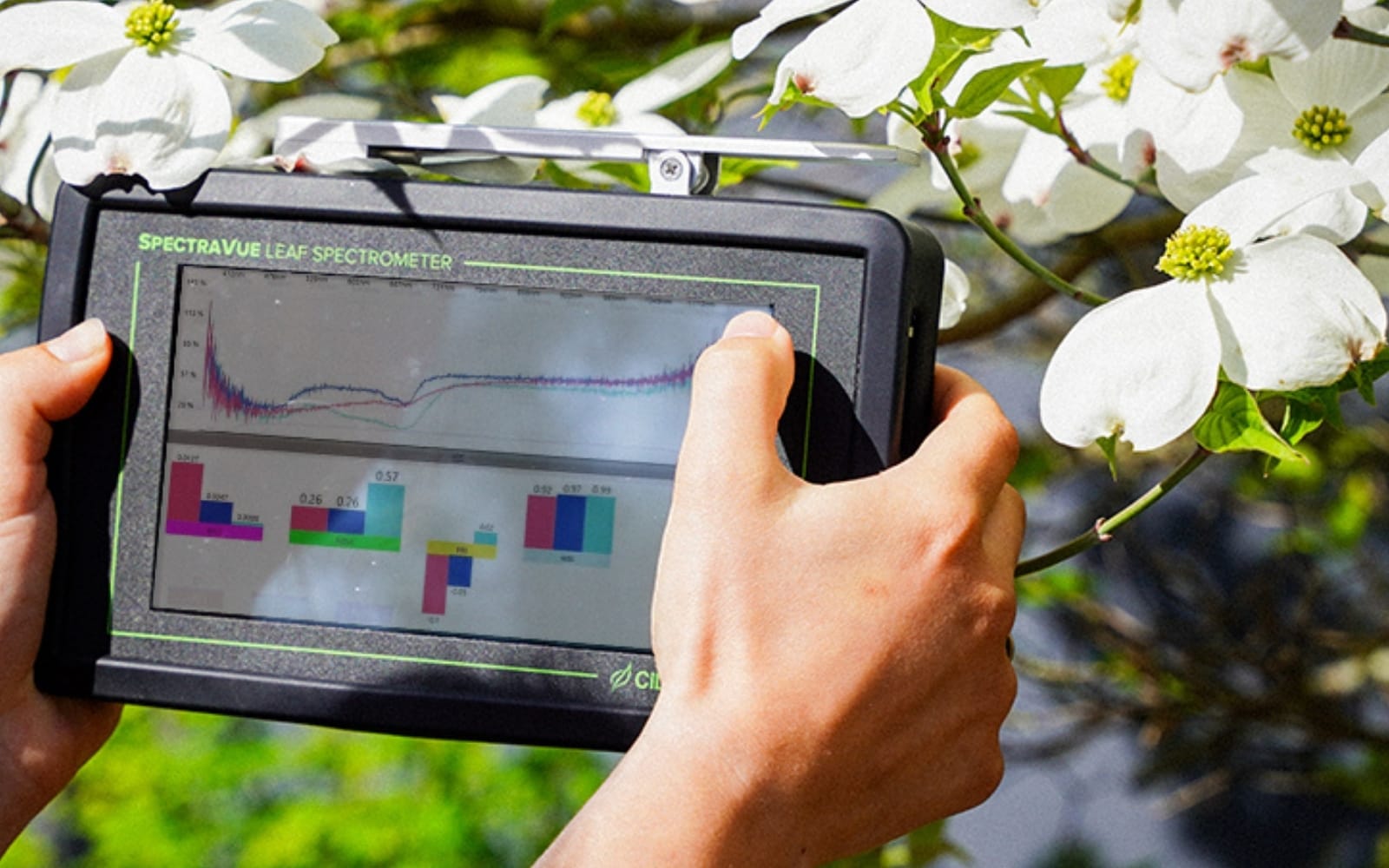
CI-710s SpectraVue Leaf Spectrometer
The CI-710s SpectraVue Leaf Spectrometer, offered by CID BioScience Inc., uses vis-NIR spectroscopy for rapid, nondestructive early detection of diseases. It is a portable device with a touchscreen display and integrated analysis software that includes many vegetative indices for stress detection. The device is accurate and precise enough for research and robust enough for field use by growers.
Contact us to find out more about the CI-710s SpectraVue Leaf Spectrometer for early nondestructive plant disease detection.
Sources
Abd El-Aziz, M. H. (2019). Three modern serological methods to detect plant viruses. Journal of Plant Science and Phytopathology, 3(3), 101–106. https://doi.org/10.29328/journal.jpsp.1001039
Ali, M. M., Bachik, N. A., Muhadi, N. A., Yusof, T. N. T., & Gomes, C. (2019). Non-destructive techniques of detecting plant diseases: A review. Physiological and Molecular Plant Pathology, 108, 101426.
Ang MC-Y and Lew TTS (2022) Non-destructive Technologies for Plant Health Diagnosis. Front. Plant Sci. 13:884454. doi: 10.3389/fpls.2022.884454
Chase, J., and Hroncich, C. (2025, June 17). Advances in Chromatographic Techniques for the Extraction and Characterization of Plant-Based Bioactive Compounds. Retrieved from https://www.chromatographyonline.com/view/advances-in-chromatographic-techniques-for-the-extraction-and-characterization-of-plant-based-bioactive-compounds
Gai, Y., & Wang, H. (2024). Plant Disease: A Growing Threat to Global Food Security. Agronomy, 14(8), 1615. https://doi.org/10.3390/agronomy14081615
Kutama, A. S., and Zafar, S. (2026). Socio-Economic Impacts Of Plant Diseases On Human Civilization: A Recap Of The Past, Present And The Future. MSI Journal of Multidisciplinary Research, ISSN 3049-0669 (Online). Retrieved from https://msipublishers.com/wp-content/uploads/2026/01/MSIJMR3032025-GS.pdf
Wang, Y., Sun, J., Wu, Z., Jia, Y., & Dai, C. (2025). Application of Non-Destructive Technology in Plant Disease Detection: Review. Agriculture, 15(15), 1670. https://doi.org/10.3390/agriculture15151670
Related Products
Most Popular Articles
- Transpiration in Plants: Its Importance and Applications
- Leaf Area – How & Why Measuring Leaf Area…
- How to Analyze Photosynthesis in Plants: Methods and Tools
- Plant Respiration: Its Importance and Applications
- The Forest Canopy: Structure, Roles & Measurement
- Stomatal Conductance: Functions, Measurement, and…
- Forest & Plant Canopy Analysis – Tools…
- Root Respiration: Importance and Applications
- 50 Best Universities for Plant Science
- How is Climate Change Affecting Photosynthesis?