Buyer Checklist: Root Imagers for Crop‑Rhizosphere Research

Scott Trimble

January 6, 2026 at 6:06 pm | Updated January 6, 2026 at 6:06 pm | 6 min read
Selecting the right root imagers for crop rhizosphere research is a practical decision that often determines the quality and reliability of underground data. Roots change constantly as they respond to water, nutrients, texture, biota, and management.
Capturing these responses in situ requires imaging systems that are stable, portable, and able to deliver clear, repeatable scans over long growing seasons.
With modern tools like the CI-600 and CI-602, researchers now have precise ways to visualize root growth without disturbing soil structure. Understanding what matters before investing is essential, especially when choosing a system that will serve a wide range of crops and research conditions.
Subscribe to the CID Bio-Science Weekly article series.
By submitting this form, you are consenting to receive marketing emails from: . You can revoke your consent to receive emails at any time by using the SafeUnsubscribe® link, found at the bottom of every email. Emails are serviced by Constant Contact
Why Root Imagers Matter in Crop Rhizosphere Studies
Rhizosphere processes are dynamic. Researchers need tools that can characterize root length, diameter, branching, and turnover while the plant continues to grow.
Traditional destructive sampling gives only a single snapshot. Modern root imagers solve this by producing high resolution digital images directly inside the soil. This allows long term monitoring, making it possible to see how crops respond to irrigation changes, drought cycles, nutrient regimes, and soil amendments.
CID Bio Science provides two primary instruments for these tasks.
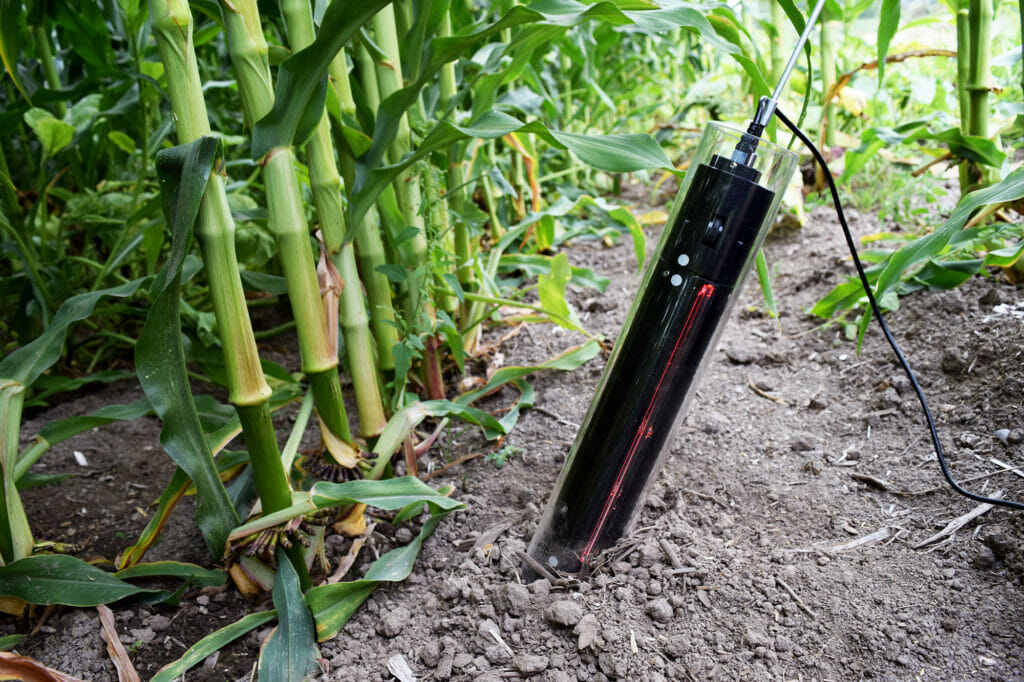
The CI-600 In-Situ Root Imager captures high resolution, distortion free 360 degree scans inside acrylic tubes to measure root growth across seasons .
The CI-602 Narrow Gauge Root Imager offers the same fundamental capabilities but is designed for 2 inch tubes, making it compatible with narrower installations and locations where space or tube size is limited.
Checklist 1: Tube Compatibility and Installation Needs
Tube compatibility is one of the first things to check when evaluating root imagers.
CI-600
The CI-600 works with transparent acrylic tubes that allow researchers to image roots growing around the tube surface.
CI-602
The CI-602 is specifically designed for installations using 2 inch inner diameter tubes, including Bartz tubes. It is compatible with transparent tubes supplied in two lengths, each with custom machined watertight plugs and insulated caps to prevent moisture buildup inside the tube.
What buyers should ask
-
Are you already using 2 inch tubes
-
Is the site suitable for larger acrylic tubes
-
Will you need to install new tubes for uniformity across treatments
-
Will tube length affect your sampling interval or soil profile depth
Checklist 2: Scan Resolution and Image Quality
High quality images translate into higher confidence in measurements.
CI-600
The CI-600 offers high resolution images up to 23.5 million pixels and linear scanning with no distortion . It also provides scanning resolutions of 100, 300, and 600 DPI and produces 360 degree scans that cover 21.59 by 19.56 centimeters. This level of detail supports precise measurement of root length, branching, and diameter changes across seasons.
CI-602
The CI-602 produces high resolution images designed for long term monitoring in narrow tubes. In this imager, images are processed directly through the included tablet with RootSnap software, which calculates total and individual root length, area, volume, diameter, and branching angle from each scan .
What buyers should ask
-
What root traits do you need to quantify
-
Is image resolution high enough for species with fine roots
-
Do you need narrow tubes without sacrificing scan clarity
Checklist 3: Portability and Field Durability
Crop and rhizosphere research often involves large field plots or remote installations. A portable system reduces fatigue and speeds up fieldwork.
CI-600
The CI-600 is portable and easy to transport between tubes. It is convenient and suitable for repeated seasonal imaging without disturbing soils or installing new equipment.
CI-602
The CI-602 is described as durable, lightweight, and easy to transport to any location. It is especially useful for sites with multiple treatments or scattered tube placements across an experiment .
What buyers should ask
-
How far apart are your tube installations
-
Do you need one person to operate the system efficiently
-
Will you be imaging during wet or compacted soil conditions
Checklist 4: Software, Analysis, and Data Workflow
A root imager is only as useful as its analysis pipeline. Automated tools save time and help maintain consistency across users.
CI-600
The CI-600 comes with a tablet loaded with RootSnap software. RootSnap offers rapid analysis and measurement of roots while providing consistent scan intervals through the collapsible indexing handle that helps users collect images at the same depth every time .
CI-602
RootSnap is also included with the CI-602. It calculates a variety of root parameters immediately after imaging. The system is controlled and powered by the provided tablet, making it straightforward to collect, process, and store scans in the field .
What buyers should ask
-
Will you process images in the field or in the lab
-
Do you require automatic trait extraction
-
Do you need indexing tools to maintain consistent depth measurements
Checklist 5: Research Focus and Application Fit

Different projects have different priorities. Determining your focus helps match the tool to your workflow.
When the CI-600 is ideal
-
Deep soil profile studies
-
Long term monitoring of roots around larger tubes
-
Capture of wide 360 degree scan areas
-
High resolution imaging on crops with thicker or more complex root systems
When the CI-602 is ideal
-
Studies using 2 inch tubes
-
Research in compact soils where narrow tubes are easier to install
-
High sampling frequency across many small plots
-
Root systems with fine structures where smaller tube diameters reduce distortion
Checklist 6: Field Conditions and Environmental Constraints
Root imagers must remain reliable through seasonal changes. Consider how weather, soil type, and crop rotations will affect imaging.
Ask yourself
-
Will moisture buildup be a concern
-
Do tubes need insulated caps or watertight plugs
-
Will repeated movement across plots require a lighter instrument
-
Do you need protection against glare or inconsistent lighting inside the tube
The CI-602 tubes include insulated caps and watertight plugs to reduce condensation, this helps maintain image clarity during long term studies in high moisture soils.
Checklist 7: Data Consistency Across Seasons
Consistency matters for seasonal studies. If you are monitoring root turnover or treatment differences, each scan must align with previous scans.
Both the CI-600 and CI-602 offer indexing features and 360 degree rotation control to ensure reproducible placement.
Takeaway
Root imagers give researchers an essential window into the rhizosphere. For crop studies that depend on accurate, long term root data, choosing the right system affects both efficiency and scientific quality.
The CI-600 supports high resolution, full circumference imaging for large tubes, while the CI-602 offers a narrow gauge option for 2 inch installations with strong portability and detailed trait extraction.
If you are evaluating root imagers for upcoming projects or expanding your capacity for rhizosphere monitoring, CID Bio Science can help you choose the right configuration for your research needs.
Contact CID Bio Science to request specifications, pricing, or a product demonstration tailored to your field setup.
FAQs
1. How often should I scan roots with a root imager during a growing season?
Most researchers scan every two to four weeks, but the ideal frequency depends on crop growth rate and experimental design. Fast growing species may benefit from weekly scans during peak growth, while perennial systems may only require monthly intervals.
2. Do I need to reinstall tubes for every new experiment?
No. Both the CI-600 and CI-602 systems are designed for long term use with the same tubes over multiple seasons. As long as tubes remain stable and free from internal condensation or scratching, they can support repeated studies year after year.
3. Will soil type affect the quality of root images?
Soil type can influence clarity, but good tube installation and proper indexing usually minimize issues. Acrylic tubes used with the CI-600 and the 2 inch tubes with the CI-602 allow fine root visualization even in clay or loamy soils, as long as the tube wall remains clean.
4. Which system works better for dense field plots with limited space?
The CI-602 is often favored for narrow row crops or dense experimental layouts because it uses 2 inch tubes that take up less space and are easier to position between plants.
5. Can I analyze images directly in the field?
Yes. Both imagers include tablets pre-loaded with RootSnap software, allowing immediate processing of traits such as root length, area, diameter, volume, and branching angle without needing to return to the lab.
6. How long do root imagers typically last in field conditions?
With proper cleaning and storage, root imagers and tubes can last for many years. Protective caps, watertight plugs, and careful tube installation extend their lifespan even in harsh soil or weather conditions.
7. Do root imagers disturb the soil or root system during use?
No. Both the CI-600 and CI-602 are non-destructive systems. Once tubes are installed, imaging takes place inside the tube without disturbing the soil profile, which preserves natural root architecture throughout the study.
Related Products
Most Popular Articles
- Transpiration in Plants: Its Importance and Applications
- Leaf Area – How & Why Measuring Leaf Area…
- How to Analyze Photosynthesis in Plants: Methods and Tools
- Plant Respiration: Its Importance and Applications
- The Forest Canopy: Structure, Roles & Measurement
- Stomatal Conductance: Functions, Measurement, and…
- Forest & Plant Canopy Analysis – Tools…
- Root Respiration: Importance and Applications
- The Importance of Leaf Area Index (LAI) in…
- 50 Best Universities for Plant Science
Related Reading