Measuring Leaf Area Index in Greenhouse Tomatoes with the CI‑202

Scott Trimble

January 5, 2026 at 7:44 pm | Updated January 5, 2026 at 7:44 pm | 5 min read
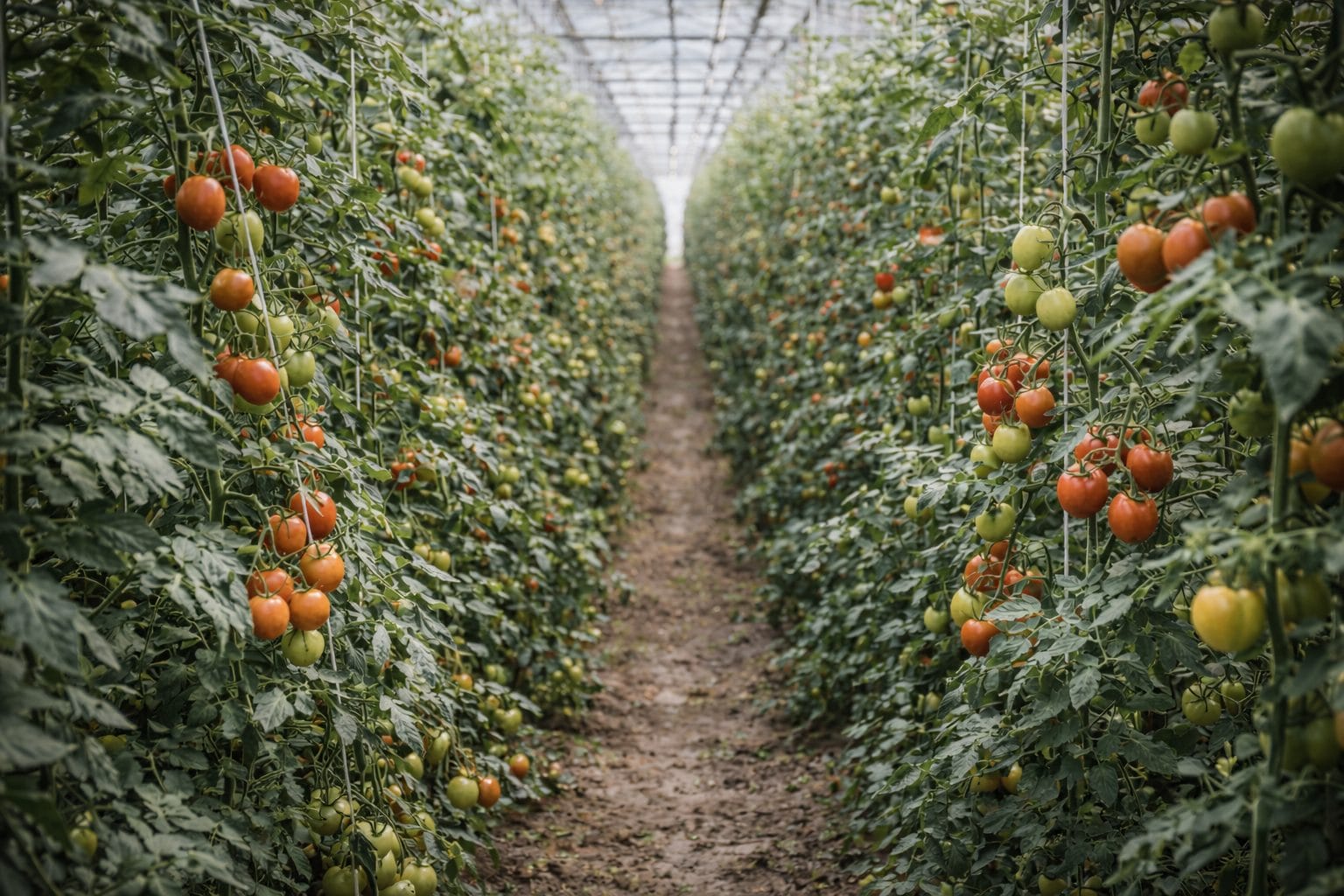
Leaf area index greenhouse tomatoes is a phrase that comes up often in discussions about crop vigor, light interception, and yield potential. In controlled environments like greenhouses, leaf area index, or LAI, becomes even more important because every management decision influences canopy structure. Growers and researchers need reliable ways to quantify leaf area without slowing down experiments or damaging plants. That is where portable laser leaf area measurement fits naturally into greenhouse tomato workflows.
This article focuses on how LAI is approached in greenhouse tomato systems and how the CI-202 Portable Laser Leaf Area Meter supports accurate, repeatable measurements that feed into LAI calculations. The emphasis here is practical use, data quality, and why direct leaf area measurement still matters even when indirect canopy tools are available.
Why Leaf Area Index Matters in Greenhouse Tomatoes
Leaf area index greenhouse tomatoes research often starts with one core question. How efficiently is the crop capturing light? LAI describes the total one sided leaf area per unit ground area. In tomatoes, this value is tightly linked to photosynthesis, transpiration, nutrient demand, and fruit development.
Subscribe to the CID Bio-Science Weekly article series.
By submitting this form, you are consenting to receive marketing emails from: . You can revoke your consent to receive emails at any time by using the SafeUnsubscribe® link, found at the bottom of every email. Emails are serviced by Constant Contact
In greenhouse systems, plant density, pruning strategy, and cultivar selection all affect LAI. A canopy that is too dense can reduce light penetration and increase disease pressure. A canopy that is too sparse limits carbon assimilation and yield. Because greenhouse tomatoes are managed intensively, LAI is not just a descriptive metric. It is a management signal.
Researchers use LAI to compare treatments such as nutrient regimes, lighting strategies, or training systems. Growers use it indirectly when deciding how aggressively to prune or space plants. Accurate leaf area data underpins all of these decisions.
Direct vs Indirect Approaches to LAI Measurement
There are two main paths to estimating leaf area index greenhouse tomatoes studies rely on. Indirect methods infer LAI from light interception or canopy images. Direct methods measure leaf area itself and then scale up.
Indirect tools are fast and useful for large canopies, but they depend on assumptions about leaf angle distribution and canopy uniformity. In greenhouse tomatoes, where rows, trellising, and pruning create complex structures, those assumptions can break down.
Direct measurement focuses on the leaves themselves. Individual leaf area data can be combined with plant counts and spacing to calculate LAI with fewer assumptions. This approach is especially valuable in experiments where canopy structure changes over time or differs between treatments.
The Role of Portable Laser Leaf Area Measurement
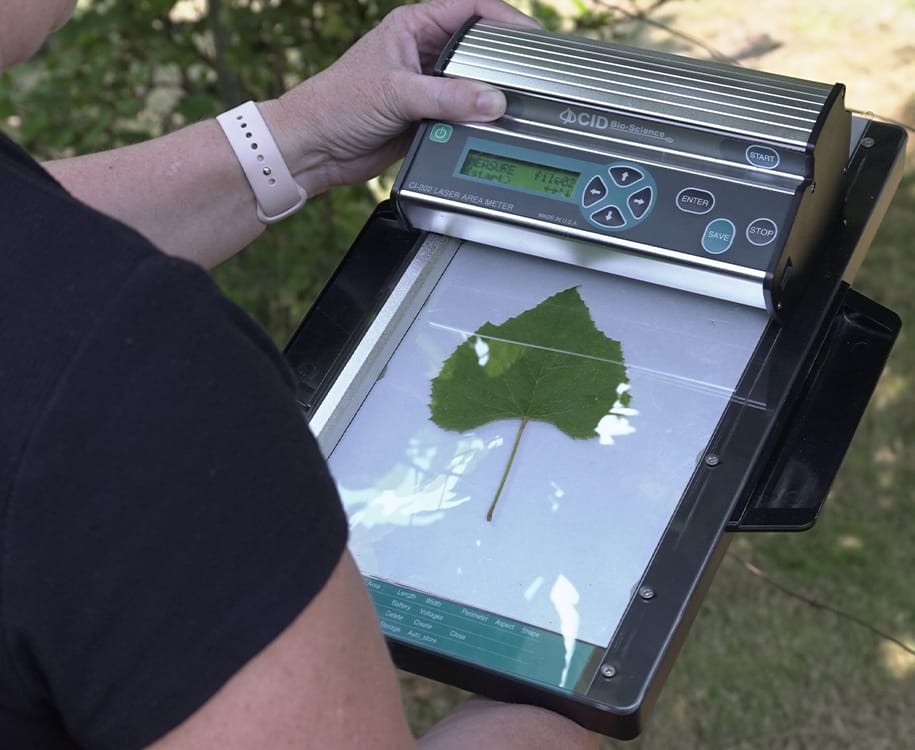
Portable laser scanners bridge the gap between destructive bench methods and indirect canopy estimates. Instead of cutting leaves and feeding them through large scanners, researchers can measure leaves in situ or immediately after removal with minimal disruption.
The CI-202 Portable Laser Leaf Area Meter was designed with this workflow in mind. It uses a high resolution laser scanning system to capture leaf outlines and calculate area, length, width, and perimeter. Measurements are stored internally and later exported for analysis. The instrument is self contained and battery powered, making it well suited to greenhouse environments where space is limited and throughput matters.
Applying the CI-202 in Greenhouse Tomato Studies
When measuring leaf area index greenhouse tomatoes research often involves repeated sampling across growth stages. Tomato leaves vary widely in size depending on node position and plant age. The CI-202 accommodates this variability without requiring recalibration.
A typical workflow looks like this:
-
Select representative plants within each treatment or greenhouse zone
-
Measure individual leaves directly using the laser scanner
-
Record plant density and average leaf count per plant
-
Calculate total leaf area per ground area to derive LAI
Because the CI-202 flattens curled leaves during scanning, measurements remain consistent even with mature tomato foliage that naturally twists or folds. This matters when comparing leaves from different canopy positions or stress treatments.
Data Quality and Repeatability
One reason direct leaf measurement remains popular is repeatability. With a resolution of 0.01 cm², the CI-202 captures small differences in leaf expansion that indirect methods may miss . This level of detail is useful when studying subtle responses to light spectra, nutrient availability, or water stress.
The device stores up to 8,000 measurements internally, allowing researchers to complete full sampling sessions without stopping to offload data. In greenhouse tomato trials where timing matters, this reduces interruptions and improves consistency.
Another advantage is traceability. Leaf area measurements can be linked to specific plants, treatments, or dates. This makes it easier to integrate LAI data with gas exchange, yield, or spectral measurements collected using other instruments.
Integrating Leaf Area Data with Other Measurements
Leaf area index greenhouse tomatoes work rarely exists in isolation. LAI data becomes more powerful when paired with physiological or environmental measurements. For example:
-
Combining leaf area with photosynthesis data helps explain differences in canopy carbon gain
-
Pairing LAI with light measurements clarifies how efficiently supplemental lighting is used
-
Tracking leaf area alongside nutrient treatments reveals allocation strategies under different fertility regimes
Because the CI-202 produces clean, exportable datasets, integration with spreadsheets or statistical software is straightforward. This flexibility is important in multidisciplinary greenhouse research where datasets need to align across instruments and seasons.
Practical Advantages in Greenhouse Environments
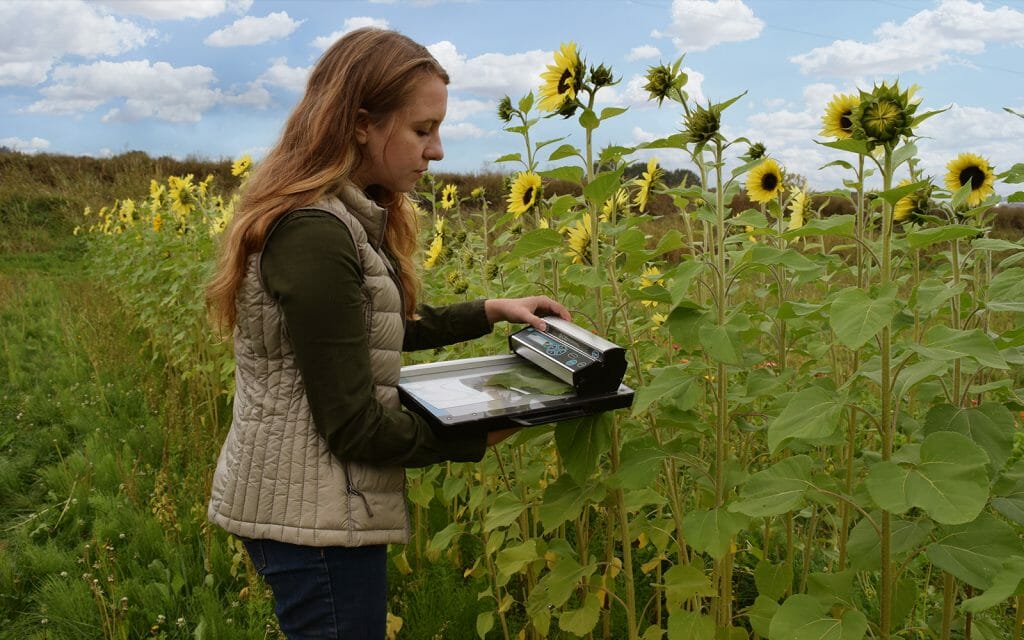
Greenhouses pose practical challenges that field tools do not always handle well. Space is tight. Humidity is high. Power outlets are not always convenient. The CI-202 addresses these constraints through its compact design and rechargeable battery system .
The instrument requires no user calibration, which reduces setup time and minimizes operator error. Its simple interface allows multiple team members to collect comparable data, even if they rotate through sampling duties. For long term greenhouse trials, this consistency matters.
Unlike imaging systems that require controlled lighting conditions, the CI-202 operates independently of ambient light. Measurements can be taken at any time of day without adjusting greenhouse lighting schedules.
When Direct Leaf Area Measurement Makes the Most Sense
Direct measurement with a tool like the CI-202 is especially useful when:
-
LAI needs to be calculated from first principles rather than estimated
-
Treatments alter leaf shape, size, or thickness
-
Sampling occurs repeatedly throughout the growth cycle
-
Greenhouse structure complicates indirect canopy measurements
In these cases, measuring the leaf itself provides clarity that indirect approaches cannot always match. For many greenhouse tomato researchers, the CI-202 becomes a core instrument rather than a supplementary one.
Ending Note
Leaf area index greenhouse tomatoes studies depend on reliable leaf area data. While indirect canopy tools have their place, direct measurement remains the reference standard when precision matters.
The CI-202 Portable Laser Leaf Area Meter offers a practical balance of accuracy, speed, and portability for greenhouse tomato research.
If your work involves tracking canopy development, comparing treatments, or refining greenhouse management strategies, the CI-202 fits naturally into your workflow. To learn more about how the CI-202 can support your LAI measurements in greenhouse tomatoes, explore the full product details from CID Bio-Science and see how it can streamline your data collection from leaf to canopy.
Related Products
Most Popular Articles
- Transpiration in Plants: Its Importance and Applications
- Leaf Area – How & Why Measuring Leaf Area…
- How to Analyze Photosynthesis in Plants: Methods and Tools
- Plant Respiration: Its Importance and Applications
- The Forest Canopy: Structure, Roles & Measurement
- Stomatal Conductance: Functions, Measurement, and…
- Forest & Plant Canopy Analysis – Tools…
- Root Respiration: Importance and Applications
- The Importance of Leaf Area Index (LAI) in…
- 50 Best Universities for Plant Science