20 FAQs Every New CI‑340 User Asks


Scott Trimble

June 18, 2026 at 5:15 pm | Updated June 18, 2026 at 5:15 pm | 5 min read
If you just started working with the CI-340 Handheld Photosynthesis System, you probably have a list of practical questions. That is normal. Even experienced plant physiologists want to know how a new gas exchange system will perform in real field conditions. The CI-340 Handheld Photosynthesis System is designed to make photosynthesis measurements straightforward, portable, and reliable. Below are 20 of the most common questions new users ask, along with clear answers based on real-world use.
#01 What Does the CI-340 Measure?
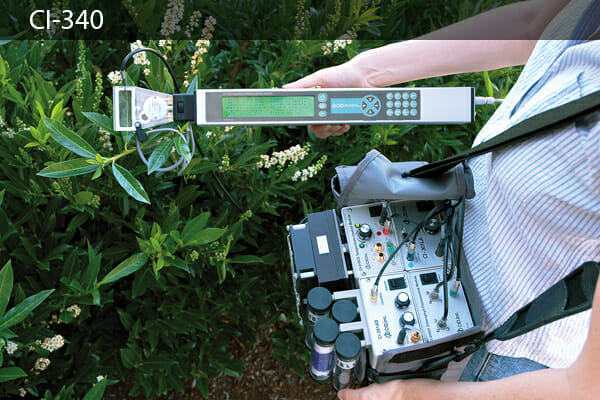
The CI-340 Handheld Photosynthesis System measures photosynthesis, respiration, transpiration, stomatal conductance, PAR, and internal CO2 in a single portable unit. Because the gas analyzer is directly connected to the chamber, measurement delay is minimized, allowing rapid gas exchange data collection .
#02 Is It Really Portable Enough for Field Work?
Yes. The system is lightweight and optimized for single-handed operation . Researchers regularly carry it through field plots, forests, and greenhouses without needing a cart or external console. That portability is one of the major differences between the CI-340 Handheld Photosynthesis System and larger, bench-style systems.
Subscribe to receive our monthly round-up of articles.
#03 Can It Handle Different Leaf Types?
It can. The CI-340 supports ten interchangeable chambers customized for different leaf types . This includes chambers for small broad leaves, conifer needles, very large leaves, and even cactus tissues. That flexibility makes it useful across crops, forestry, and ecological research.
#04 Does It Support Both Open and Closed System Measurements?
Yes. The CI-340 Handheld Photosynthesis System accommodates both open and closed system measurements . This allows users to adapt protocols depending on species, experimental design, or research objectives.
#05 How Accurate Are the CO2 and H2O Measurements?
The system uses stable analyzers for accurate CO2 and H2O measurements . The direct chamber connection reduces lag and helps maintain measurement stability, especially during rapid environmental transitions.
#06 Can I Control Environmental Conditions Inside the Chamber?
You can expand environmental control with optional modules:
-
Light Module to adjust light intensity and run light-response curves
-
Temperature Control Module to manipulate leaf chamber temperature
-
H2O and CO2 Control Module to adjust incoming air concentrations
-
Chlorophyll Fluorescence Module for simultaneous fluorescence and gas exchange
These control modules extend the CI-340 Handheld Photosynthesis System into a fully customizable research platform .
#07 Can It Measure Chlorophyll Fluorescence at the Same Time as Gas Exchange?
Yes. The Chlorophyll Fluorescence Module allows simultaneous fluorescence and photosynthesis measurements . This is especially useful when studying stress physiology and energy dissipation.
#08 How Quickly Can I Get Stable Readings?
Because the gas analyzer connects directly to the chamber, response time is fast. Most users report rapid stabilization compared to systems that rely on longer tubing paths. This efficiency makes the CI-340 System ideal for high-throughput field campaigns.
#09 Is It Suitable for Crop Research?
Absolutely. Agronomists use the CI-340 to evaluate water status and genotype differences across crop varieties . The ability to control CO2 and light makes it practical for breeding and stress-response trials.
#10 What About Ecological Applications?
Ecologists use the CI-340 System to measure seasonal changes in photosynthetic rate in response to temperature shifts . Its portability makes it well suited for remote sites and long-term monitoring.
#11 Can I Measure Soil Respiration?
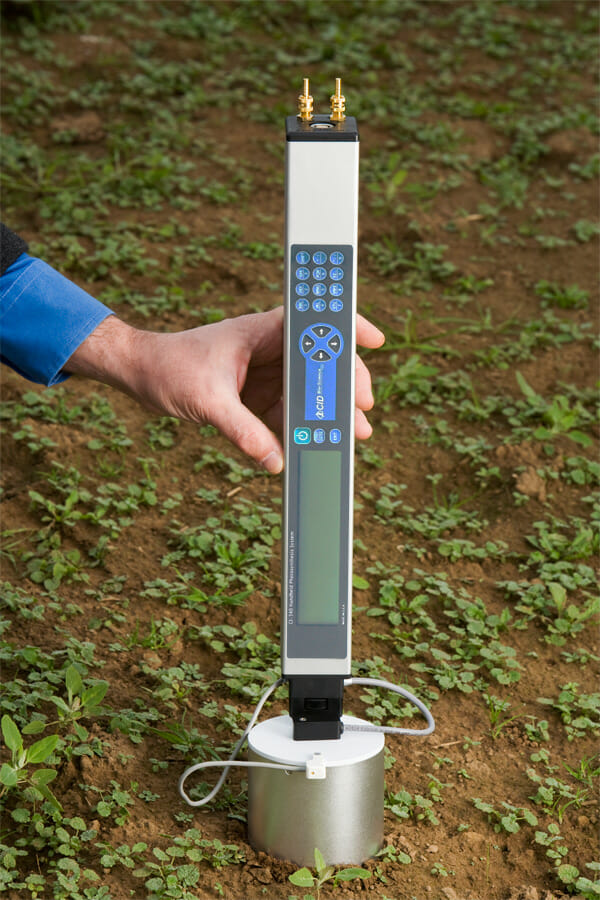
Yes. A custom soil respiration chamber is available . That allows researchers to extend measurements below ground, making it easier to link canopy and soil carbon flux data.
#12 How Does Leaf Temperature Get Measured?
The system includes infrared, non-contact leaf temperature measurement . This avoids disturbing the leaf surface and improves accuracy during active measurements.
#13 Do I Need Multiple Instruments to Run Advanced Experiments?
No. One advantage of the CI-340 Handheld Photosynthesis System is modular expansion. Instead of buying separate devices for fluorescence, light control, and gas mixing, you add the modules you need. That simplifies logistics and budgeting.
#14 How Durable Is the System?
The unit is built for field research. Its compact design and integrated structure reduce external components that can fail. Many users report years of consistent performance in demanding outdoor environments.
#15 Can It Handle Extreme Environments?
The CI-340 System is commonly used in drought studies, high-temperature trials, and greenhouse experiments. With temperature and CO2 control modules, it can simulate a wide range of environmental conditions .
#16 Is It Complicated to Learn?
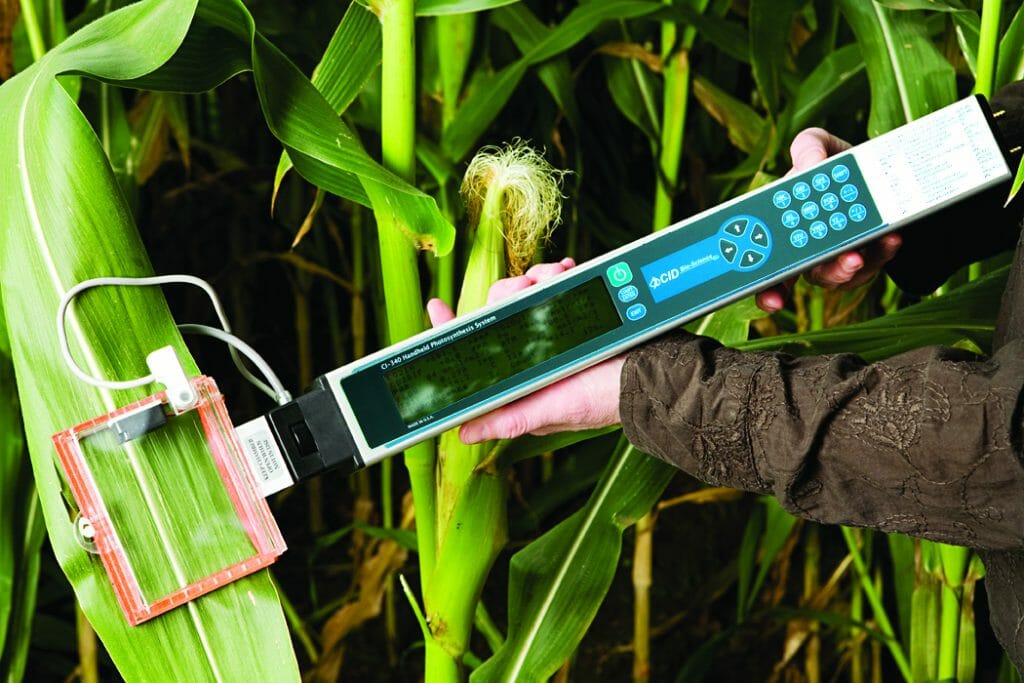
Most researchers find the learning curve manageable. The workflow mirrors how plant physiologists already think about gas exchange: clamp leaf, stabilize environment, record data. The modular design is intuitive rather than overwhelming.
#17 How Does It Compare to Larger Console Systems?
Larger systems may offer integrated lab-based setups, but they often sacrifice portability. The CI-340 Handheld Photosynthesis System balances precision with mobility. For researchers who need to move between plots, greenhouses, and growth chambers, that mobility matters.
#18 What Types of Studies Benefit Most?
Common applications include:
-
Drought stress physiology
-
Heat stress response
-
Genotype comparisons
-
Carbon assimilation studies
-
Stomatal conductance analysis
-
Fluorescence efficiency research
Because the CI-340 System supports environmental control and fluorescence integration, it works across fundamental and applied research.
#19 Can I Standardize Light Conditions in Field Experiments?
Yes. The Light Module allows you to standardize light intensity across measurements . That reduces variability caused by shifting clouds or canopy gaps and improves data consistency.
#20 Is the System Future-Proof for Expanding Research Goals?
The modular approach helps future-proof your investment. As research questions evolve, additional modules extend functionality without replacing the core system. That flexibility is one reason many labs choose the CI-340 Handheld Photosynthesis System over less adaptable alternatives.
Why Researchers Choose CID Bio-Science?
CID Bio-Science builds instruments around real research workflows. The CI-340 System integrates gas exchange, environmental control, and fluorescence in a compact format. Instead of forcing users to adapt to the instrument, the instrument adapts to the research question.
When compared to bulkier or less flexible systems, the CI-340 stands out for:
-
True handheld portability
-
Rapid gas exchange stabilization
-
Ten interchangeable chambers
-
Simultaneous fluorescence capability
-
Expandable environmental control
For teams working in crops, forestry, ecology, or controlled environment agriculture, that combination simplifies experimental design.
Final Thoughts
If you are considering upgrading your gas exchange workflow, explore the CI-340 Handheld Photosynthesis System in detail at www.cid-inc.com. You can review technical specifications, application notes, and published research to see how it fits your work. Contact CID Bio-Science directly to discuss chamber selection and module configuration tailored to your research goals.
Related Products
Most Popular Articles
- Transpiration in Plants: Its Importance and Applications
- Leaf Area – How & Why Measuring Leaf Area…
- How to Analyze Photosynthesis in Plants: Methods and Tools
- Plant Respiration: Its Importance and Applications
- The Forest Canopy: Structure, Roles & Measurement
- Stomatal Conductance: Functions, Measurement, and…
- Forest & Plant Canopy Analysis – Tools…
- Root Respiration: Importance and Applications
- 50 Best Universities for Plant Science
- The Importance of Leaf Area Index (LAI) in…