How to Choose a Canopy Analyzer: What to Look For in 2025
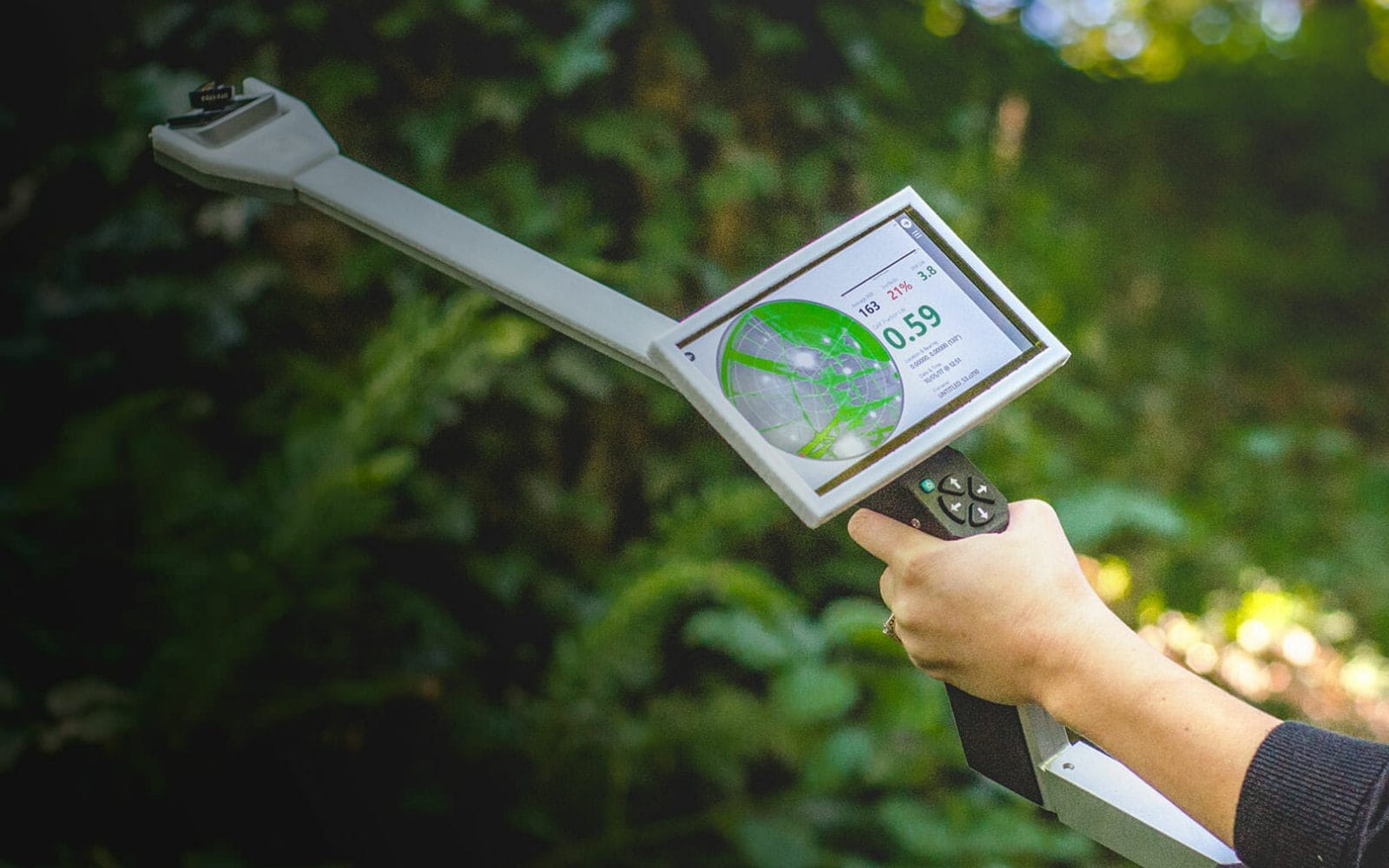

Scott Trimble

January 6, 2026 at 6:07 pm | Updated January 6, 2026 at 6:07 pm | 5 min read
Choosing a canopy analyzer in 2025 is not as straightforward as picking the newest device on the market.
Plant scientists, ecologists, foresters and agronomists rely on these instruments to quantify canopy structure, estimate LAI, evaluate light environments and understand how vegetation interacts with the atmosphere.
Because the canopy analyzer plays such a central role in field measurements, selecting the wrong one can impact data reliability long before the analysis phase even begins. Understanding what separates a dependable canopy analyzer from a limited one helps you invest in a tool that genuinely supports high quality research.
Subscribe to the CID Bio-Science Weekly article series.
By submitting this form, you are consenting to receive marketing emails from: . You can revoke your consent to receive emails at any time by using the SafeUnsubscribe® link, found at the bottom of every email. Emails are serviced by Constant Contact
A modern canopy analyzer must perform consistently in variable light, handle a range of canopy conditions, and provide outputs that are easy to interpret in the field.
The best devices combine optical quality, rugged hardware and intuitive software so users can focus on decisions rather than troubleshooting. With more models available today than ever, researchers entering 2025 are asking what they should prioritize when comparing instruments.
Below are the criteria that matter most when selecting a canopy analyzer that meets real field conditions.
Key Capabilities to Look For
Optical Quality and Field of View
The first indicator of a capable canopy analyzer is the optical system. Hemispherical photography has long been the backbone of canopy analysis, but the usefulness of these images depends on the lens.
A wide angle lens with a 150 degree field of view allows the sensor to capture more sky openings and canopy structure per image, which improves the accuracy of LAI calculations.
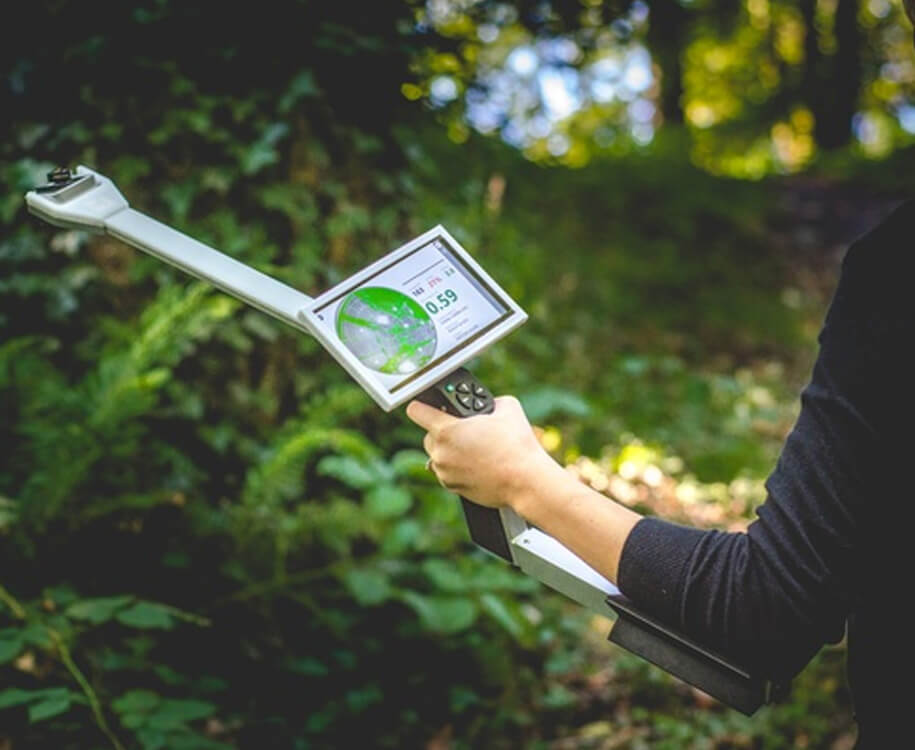
The CI-110 Plant Canopy Imager, for example, uses an equidistant wide angle lens paired with an 8 megapixel sensor to capture high resolution canopy images for analysis in any daylight condition. The combination of a wide field of view and digital self leveling ensures the device remains correctly oriented even when used on uneven terrain.
If your research involves dense forests, variable understory or tall canopy layers, this level of optical performance is essential.
Light Condition Adaptability
A reliable canopy analyzer needs to function in changing light. Many field environments do not allow users to control illumination, and researchers cannot always wait for uniform cloud cover. Instruments that only perform correctly under highly specific sky conditions limit productivity and reduce the number of usable sampling days.
One of the strengths of the CI-110 is that it performs under any sky condition and includes neutral density filters that help optimize images across varying light environments. These filters prevent overexposure, reduce glare and maintain consistent image clarity.
A canopy analyzer that adapts to real outdoor conditions is far more valuable than one that only works in ideal light.
Measurement Outputs That Matter
Accurate LAI Calculation
At its core, a canopy analyzer must provide dependable LAI values. The most useful instruments offer multiple ways to estimate LAI so researchers can choose what best fits their experiment.
The CI-110 supports LAI measurement through hemispherical photography as well as through a built-in PAR sensor array that uses 24 photodiodes. These dual measurement paths help researchers validate results or use alternative methods when lighting conditions or canopy structure make one technique more appropriate than the other.
If you frequently work in mixed canopy environments or across plant size classes, access to multiple LAI approaches is a significant advantage.
Additional Structural Parameters
Beyond LAI, a good canopy analyzer should also calculate:
- Gap fraction
- Leaf angle distribution
- Extinction coefficients
- Canopy openness
These values help researchers link canopy structure to light penetration, energy balance and plant performance across environments. A device that automatically processes these metrics in the field can streamline workflow and reduce time spent on post-processing.
Field Usability and Ergonomics
Portability and Build
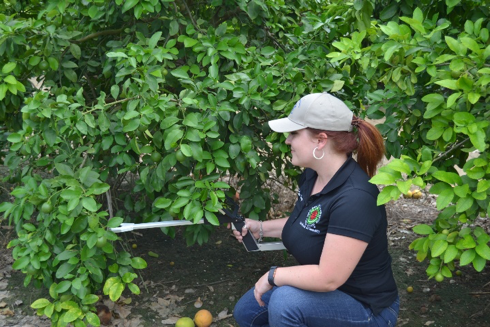
A canopy analyzer should be comfortable to carry and use for long periods. A lightweight frame, integrated handle, and balanced design reduce fatigue in large field plots. The CI-110 offers an ergonomic body paired with a 7 inch capacitive touch screen and a trigger with delayed release for steady image capture.
Compactness and durability matter if your research takes place across rugged terrain or remote sites.
Self Leveling and Orientation Tools
Precise leveling is critical for accurate canopy measurements. Manual leveling slows down sampling and increases the risk of user error. Self leveling systems are far more efficient and remove one of the most common sources of variability between users.
The CI-110 includes digital self leveling and an internal compass that standardizes measurements across locations.
Immediate Data Visibility
A canopy analyzer should allow users to review images and LAI calculations in real time. This ensures that data is captured correctly before leaving the site. Clear, high contrast displays and logical menu layouts are essential for working in direct sunlight or low light environments.
Software Capability and Data Handling
Thresholding and Image Processing
Accurate canopy analysis depends on clean separation between the sky and canopy elements. Automated thresholding algorithms speed the process, but having user selectable methods allows researchers to adapt the analysis to specific canopy types.
The CI-110 includes multiple thresholding options, including the Otsu method and entropy crossover technique, giving researchers both automation and control.
Metadata, GPS and Location Tracking
A canopy analyzer should automatically store metadata, including GPS coordinates, compass direction, date and time. These data points help maintain consistency across sampling sessions and allow researchers to revisit exact sampling spots when needed.
The CI-110 pulls location data from four satellite constellations which improves accuracy and reduces signal dropouts in forests or remote areas.
Data Export
Easy access to raw images, processed outputs, and metadata is essential for integration with statistical workflows. Look for devices that provide simple export functions without requiring proprietary software.
Practical Buying Considerations for 2025
Environment and Research Type
Your field conditions dictate which features matter most. Forest canopies require strong wide angle optics and advanced thresholding. Crop research benefits from rapid PAR based LAI measurement. Urban forestry may require a device with strong GPS reception.
Budget and Durability
A higher upfront cost may provide long term savings if the instrument can withstand years of field use and reduce data processing time. Rugged housings, sealed ports and long battery life improve reliability.
Training and Ease of Use
A canopy analyzer should shorten the learning curve. Devices with intuitive workflows reduce training time across teams and ensure more consistent data quality.
Final Thoughts
Choosing a canopy analyzer in 2025 is about matching instrument capability to the realities of your research. Pay attention to:
- Optical quality
- Light adaptability
- LAI measurement options
- Imaging software
- Ergonomics
- Metadata handling
These factors determine whether your data will be consistent, accurate and repeatable across seasons and environments.
If you are looking for a well designed canopy analyzer that performs under real field conditions, explore how CID Bio Science tools like the CI-110 support accurate, non destructive canopy measurement.
Contact CID Bio Science to learn more about our plant science instruments and how we can support your research needs.
FAQs
What is the main purpose of using a canopy analyzer in field research?
A canopy analyzer helps quantify how vegetation intercepts and filters light. Researchers use it to estimate LAI, assess canopy structure, understand light penetration patterns and compare vegetation conditions across sites or treatments.
These measurements support ecological surveys, crop modeling, forestry assessments and studies on plant productivity.
How often should canopy measurements be taken for reliable seasonal data?
The ideal frequency depends on the rate of canopy development in your study system. In fast growing crops or deciduous forests, measurements every two to four weeks capture meaningful structural changes.
Evergreen systems or slow growing species may require fewer sampling sessions. Many researchers pair repeated canopy analyzer measurements with phenology observations to improve interpretation.
Do sky conditions affect canopy analyzer accuracy?
Sky conditions can influence image based canopy measurements, especially when glare or harsh directional light alters the contrast between sky and foliage.
Modern canopy analyzers reduce these issues with filters, self leveling optics and thresholding algorithms. Devices that can operate under any sky condition help maintain consistency across sampling dates and field sites.
Related Products
Most Popular Articles
- Transpiration in Plants: Its Importance and Applications
- Leaf Area – How & Why Measuring Leaf Area…
- How to Analyze Photosynthesis in Plants: Methods and Tools
- Plant Respiration: Its Importance and Applications
- The Forest Canopy: Structure, Roles & Measurement
- Stomatal Conductance: Functions, Measurement, and…
- Forest & Plant Canopy Analysis – Tools…
- Root Respiration: Importance and Applications
- The Importance of Leaf Area Index (LAI) in…
- 50 Best Universities for Plant Science