Root System Architecture: Which Traits Improve Crop Yield?

Dr. Vijayalaxmi Kinhal


November 5, 2026 at 10:39 pm | Updated November 5, 2026 at 10:39 pm | 7 min read
- Root system architecture (RSA) can be used to address challenges of patchy resource distribution, climate change, and water shortage.
- Crop RSA for foraging resources in deep and shallow soils have differences in root growth angles, axial root numbers, and lateral root density.
- Low-input, high-input/industrial, and conservation agriculture require different RSA to deliver water and nutrients and maintain high yields.
Resource supply and abiotic stress vary across agricultural systems used to produce food. Plant root system architecture is highly plastic and responds to environmental changes, making it a critical trait targeted in breeding programs to improve crop yield and sustainability. This article explores the root system architecture that Lynch (2022) recommends for three agricultural systems and the reasons behind it.
Cropping Challenges
The current food production system faces many challenges, including soil degradation from chemical overuse; increased heat stress and drought from climate change; and rising demand from an expanding population.
Nutrients and water availability, which growers must optimize, are typically patchy. However, the agricultural systems themselves create variations to the naturally occurring distribution of resources through tillage, nutrient and water application, and other management practices.
Subscribe to receive our monthly round-up of articles.
A broad classification of agricultural systems includes low-input traditional agriculture, high-input and mechanized agriculture, and conservation agriculture.
- Low-input agriculture: Nutrient deficiency and drought are the primary challenges in these systems, and they are usually found in developing countries. These farms face soil degradation and topsoil loss, worsened by drought that hardens soils due to climate change.
- High-input agriculture: Industrial agriculture relies heavily on fertilizers, protection chemicals, and irrigation, often using heavy machinery. These soils suffer from resource depletion due to soil infertility and massive soil, water, and air pollution, making them unsustainable. Heavy machinery tillage, removing vegetative cover, and reducing soil organic matter increase soil erosion and subsoil impedance.
- Conservation agriculture: A form of alternative farming, conservation agriculture relies on reduced tillage and more organic matter, and improves soil structure and reduces topsoil erosion.
So, scientists must also consider differences in natural resource distribution created by agricultural systems, combined with global abiotic stressors from climate change, to breed crops that maintain yield across different growing scenarios.
Resource Distribution in Soils
Lynch (2022) visualizes that nutrients and water availability typically occur at two levels: in deep soils and in topsoil.
Deep soils
In natural soils, resources such as nitrogen and water usually seep into deeper soils because they are mobile. Water moves through pores and accumulates in deeper soil layers. Since nitrates and sulfates are soluble in water and are not bound to soil, they are more available in deeper soils. There are two exceptions.
- Water: In high-input agriculture, water is also available in the topsoil due to frequent irrigation.
- Nitrogen: Low-input and conservation agriculture that use manure and organic matter can have nitrogen in shallow soils due to slow mineralization.
Deep soils face challenges such as impedance, hypoxia (insufficient oxygen), and aluminum toxicity.
- Impedance: Deeper soils are harder due to lower amounts of organic matter, fewer pores, and pressure from topsoil.
- Hypoxia: Oxygen availability decreases with soil depth, limiting root growth and activity.
- Aluminum toxicity: In weathered soils, acidity increases with soil depth. When the pH is below 5.2, aluminum solubility increases. Aluminum at high concentrations is toxic, restricts calcium and magnesium uptake, and also damages root tips.
Shallow topsoil
In natural soils, phosphorus is the third most important resource for crops. Higher oxygen, organic matter, and biological activity in topsoils add this element to shallow soils; it is immobilized in soil, so its movement through diffusion to deeper layers is low. In deeper soils, acidity reduces phosphorus bioavailability. As a result, phosphorus is more abundant in topsoils.
Phosphorus levels are higher in topsoils in low-input and conservation agriculture because of added organic matter, and in high-input farms because of fertilizers.
Soil cation exchange capacity retains nutrients such as potassium, calcium, magnesium, and ammonium, which have intermediate mobilities compared to nitrogen and phosphorus.
To get all necessary resources, roots may need to forage in both topsoil and deep soils.
Root Architecture for Patchy Resources
The patchy nature of resources makes root system architecture crucial because it is a highly plastic trait that responds to its environment. Root system architecture (RSA) is the form and distribution of roots in space and time. It is described in terms of root angles, root length density, and lateral root spread. Plants change when they grow different root components and target different depths and areas of soil to forage for resources; see Figure 1.
RSA for deep soils
According to Lynch (2022), plants targeting resources, such as nitrogen and water, in deeper soils develop a steep, cheap, and deep root system by using lower root growth angles, axial roots, and lateral root density. See Figure 1.
- Root growth angle: To reach deeper soil layers, roots become steeper than standard roots by reducing the root branching angle, allowing roots to reach deeper soils faster to access nitrogen and water. It also helps roots pierce harder, deeper soils.
- Axial roots: Plants reduce the number of hypocotyl-borne axial roots to avoid higher material and energy costs of root growth and maintenance through respiration. By allotting more resources to existing axial roots and restricting new axial roots, the root system is “cheaper” to support for the plants.
- Lateral root density: Reducing the number of lateral roots in the topsoil allows plants to increase density at lower levels. However, this feature can reduce phosphorus absorption.
- Phenotypic plasticity: Plants with phenotypic plasticity to become softer can grow through oxygen-rich pores rather than thicker, harder roots that do not change their phenotype.
Developing RSA for deep soils increases biosequestration of atmospheric carbon dioxide and strengthens soil carbon sinks.
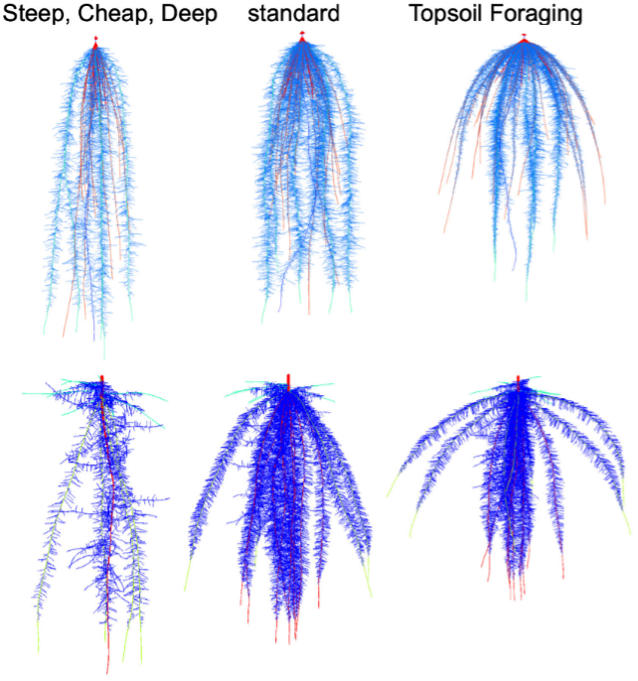
Figure 1: “Steep, Cheap, and Deep and Topsoil Foraging ideotypes in maize/monocot (top) and common bean/dicot (bottom) at 42 days after germination as simulated by opensimroot. The center image represents standard phenotypes in maize and common bean germplasm,” Lynch 2022. (Image credits: https://onlinelibrary.wiley.com/doi/10.1111/tpj.15560).
RSA for shallow topsoils
Root system architecture for using resources in the topsoil, such as phosphorus, ammonium, potassium, calcium, and magnesium, requires traits opposite those for deep soils: shallow roots and more axial and lateral roots.
- Root growth angle: Higher or shallow root angles produce more roots in the topsoil, increasing foraging in this layer.
- Axial root: Plants produce more axial roots in monocots and dicots faced with phosphorus stress, because these roots typically have a shallow angle. When more axial roots are produced, the resource allocation doesn’t allow for deeper root growth.
- Lateral root branching density: Similarly, increased lateral root branching boosts topsoil foraging by more roots in the topsoil and indirectly by reducing root depth.
In some agricultural systems, like high-input farms and low-input farms in humid regions, all necessary resources water, nitrogen, and phosphorus are available in the topsoil, and this RSA is suitable for crops in these regions.
Tradeoffs
The two extreme RSA types suit only extreme growing environments. However, in most agricultural systems, roots have to be dimorphic to forage in both shallow and topsoils, so intermediate RSA that do not produce too many roots are necessary.
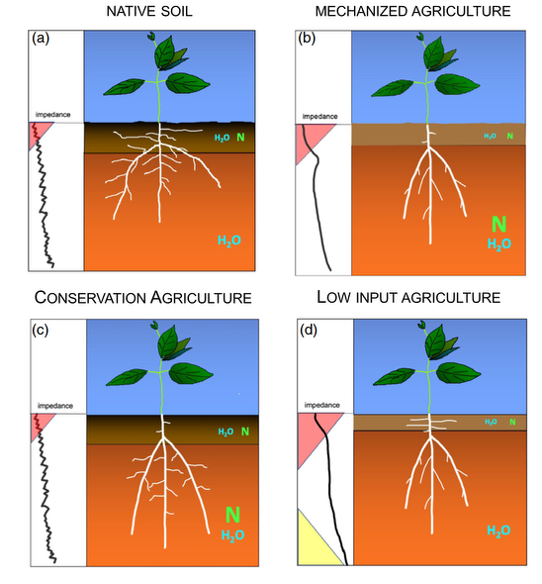
Figure 2: Resource availability in different agricultural management systems, Lynch 2022. (Image credits: https://onlinelibrary.wiley.com/doi/10.1111/tpj.15560).
Root System Architecture Recommendations
Based on these root-trait insights, soil resource distribution, and the global challenges of specific agricultural systems, crops should have the following type of root system architecture.
Natural Soils
In natural ecosystems, soils are rich in organic matter, with nitrogen in the topsoil, and a good structure with aggregates and pores that prevent deep impedance. Drought can harden topsoil, leaving water in deeper layers. The RSA for these soils needs plastic roots that can forage in both topsoil and deep soils; see Figure 2 (a).
Low-input agriculture
Soils in low-input agriculture experience soil erosion, so they have less organic matter and are more susceptible to topsoil hardening. These soils have less nitrogen, phosphorus, and micronutrients because farmers do not add chemical fertilizers to replace depleted resources. Nitrogen and water are available in deep soils, but soil acidity can be an issue. Climate change is expected to increase soil degradation due to floods and drought, and lower nutrient levels. The RSA for these systems cannot optimize for only one function; it must adapt to all conflicting factors.
The RSA for these systems should be roots that are plastic and dimorphic, foraging both topsoil and deep soils for nitrogen; see Figure 2 (d). Plants in these soils would need more axial roots to explore more soil. They should be able to grow through hard topsoil and reach deep to access nitrogen and water resources. Plasticity is necessary because resources can also vary in time. For example, 577 common bean cultivars in 51 experiments with intermediate RSA provided the best yield under drought and low-nutrient conditions.
High-input agriculture
Soils under conventional industrial tillage receive high applications of fertilizers, water, and protection chemicals. However, these soils have less organic matter, so soil structure is poor, and water-holding capacity is lower. Declining water resources, salinity, and fertilizer costs are issues the RSA must solve.
As fertilizer supply is abundant, these systems do not require the naturally high root volume of native soils. Roots that grow deep to access subsoil water and nitrogen can reduce costs and pollution from fertilizer overuse and prepare for water scarcity. So, the “steep, cheap, and deep” RSA, with fewer axial roots and lower lateral root density, suits these systems; see Figure 2 (b). Maize cultivars have used this type of root adaptation in the past decades to improve yield.
Deeper roots can reduce irrigation and fertilizer use, fossil fuel use for applications, and decrease pollution, especially nitrogen deposition.
Conservation agriculture
Reduced tillage and adding significant amounts of organic matter have restored some characteristics of natural soils. These soils have more topsoil organic matter, more soil aggregates, pores, and soil fauna than conventional farms, but the topsoil can be hard. Nitrogen is in deep soils because of leaching. Climate change is expected to make topsoils harder, so exploring deep soils becomes crucial. These soils need plastic RSA that avoids hard soil and exploits available soil pores to grow down to wet, nutrient-rich deep soils; see Figure 2 (c.).
Using RSA adapted for different soil needs can help crops access nutrients and water in low-input agriculture to increase yield. In high-input systems, farmers can reduce inputs while maintaining high yields, making agriculture less polluting.
Characterizing Root System Architecture
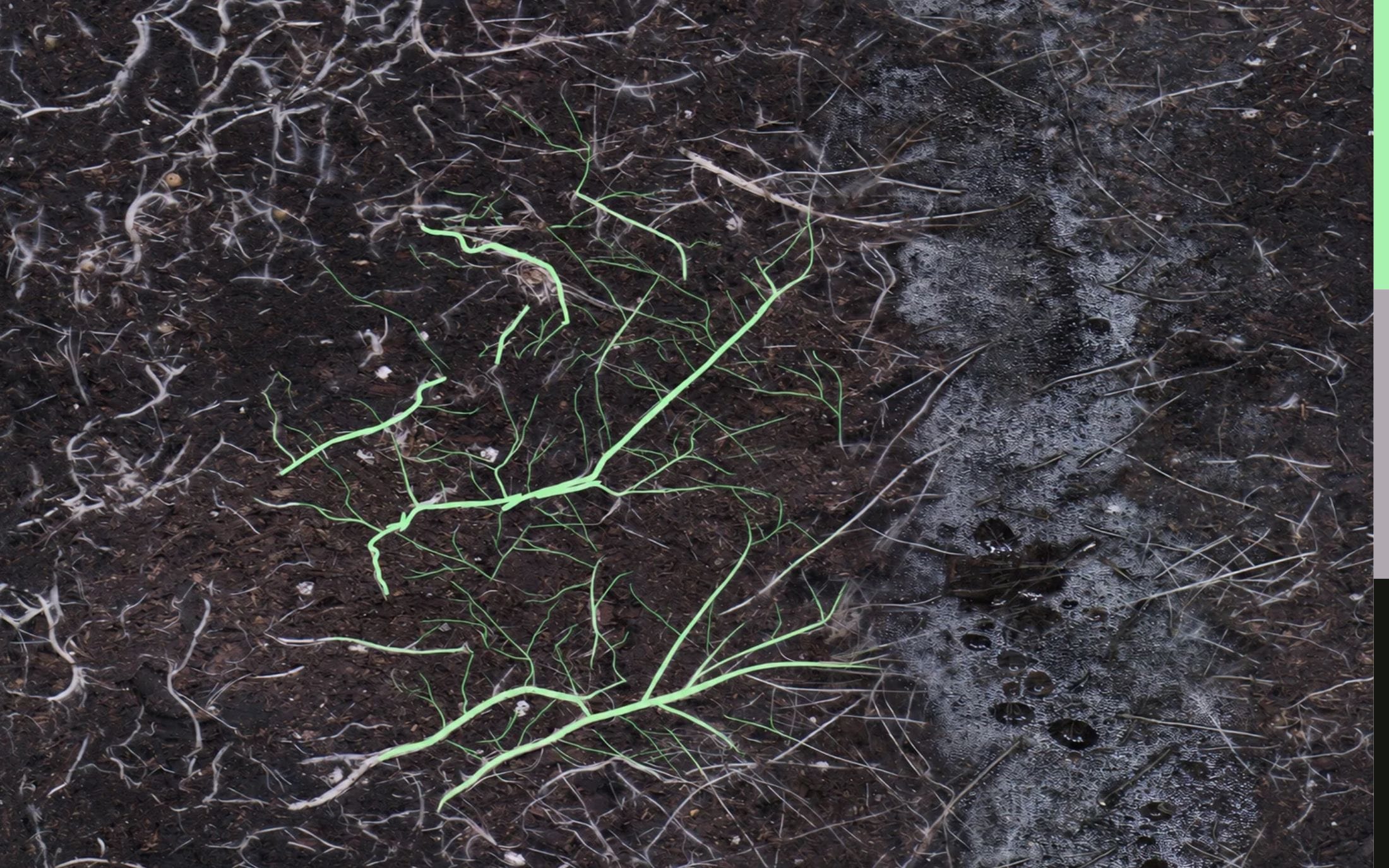
Developing crop varieties suited to current and emerging challenges is an ongoing research effort. Studying RSA for phenotyping is now easier using minirhizotron systems, which consist of transparent root tubes installed near plants and a camera to scan root growth angle, axial root numbers, and lateral root density.
CID Bio-Science Inc. provides two high-resolution cameras for non-destructive, repeated root measurements over time to study RSA changes in space and time: the CI-600 In-Situ Root Imager and the CI-602 Narrow Gauge Root Imager.
Contact us to find out more about our minirhizotron systems for Root System Architecture research.
Sources
Khan, M. A., Gemenet, D. C., & Villordon, A. (2016). Root system architecture and abiotic stress tolerance: current knowledge in root and tuber crops. Frontiers in Plant Science, 7, 1584.
Lynch, J. (1995). Root architecture and plant productivity. Plant physiology, 109(1), 7.
Lynch, J. P. (2022). Harnessing root architecture to address global challenges. The Plant Journal, 109(2), 415-431.
Maqbool, S., Hassan, M. A., Xia, X., York, L. M., Rasheed, A., & He, Z. (2022). Root system architecture in cereals: progress, challenges and perspective. The Plant Journal, 110(1), 23-42.
Related Products
Most Popular Articles
- Transpiration in Plants: Its Importance and Applications
- Leaf Area – How & Why Measuring Leaf Area…
- How to Analyze Photosynthesis in Plants: Methods and Tools
- Plant Respiration: Its Importance and Applications
- The Forest Canopy: Structure, Roles & Measurement
- Stomatal Conductance: Functions, Measurement, and…
- Forest & Plant Canopy Analysis – Tools…
- Root Respiration: Importance and Applications
- 50 Best Universities for Plant Science
- How is Climate Change Affecting Photosynthesis?