Can I Use the CI‑600 Root Imager in Sandy Soils?

Scott Trimble

April 9, 2026 at 6:46 pm | Updated April 14, 2026 at 2:45 am | 5 min read
Yes, the CI-600 Root Imager can be used in sandy soils, and in many cases sandy sites are actually well suited to this kind of root work. The bigger point, though, is that success in sand comes down to installation quality, tube stability, and a workflow built for repeated, non-destructive measurements over time.
The CI-600 Root Imager was designed for in-situ imaging with transparent tubes, so it fits the kind of long-term root monitoring that sandy field conditions often demand.
Why sandy soils are a practical match for the CI-600
Sandy soils create a few challenges for root studies, but they also remove some of the biggest obstacles that slow down below-ground research.
Subscribe to receive our monthly round-up of articles.
Traditional destructive methods require digging, washing, sorting, and rescanning roots, which is slow and disruptive.
By contrast, the CI-600 captures high-resolution images directly inside installed minirhizotron tubes, letting researchers return to the same location again and again without disturbing the root zone. That matters in sand, where root distribution, water movement, and seasonal turnover can change quickly.
There is also direct evidence from CID Bio-Science content that sandy conditions can work well with the CI-600. In one field use case from the University of Florida, researchers used 30 to 40 CI-600 minirhizotron tubes to study crops in sandy soils under subtropical field conditions.
In another CID interview about potato drought work, a researcher said the minirhizotrons were easy to install because the soil was sandy, and the tubes were placed as deep as 80 cm without much difficulty.
What makes the CI-600 useful below ground
The CI-600 is built for portable, non-destructive root imaging in plant and crop research. CID describes it as a system for high-resolution observation of root growth and behavior over time, with applications in crop optimization, forest productivity, and environmental research.
That positioning matters because sandy soils often require repeat measurements to understand drought response, nutrient capture, and root turnover rather than a one-time destructive sample.
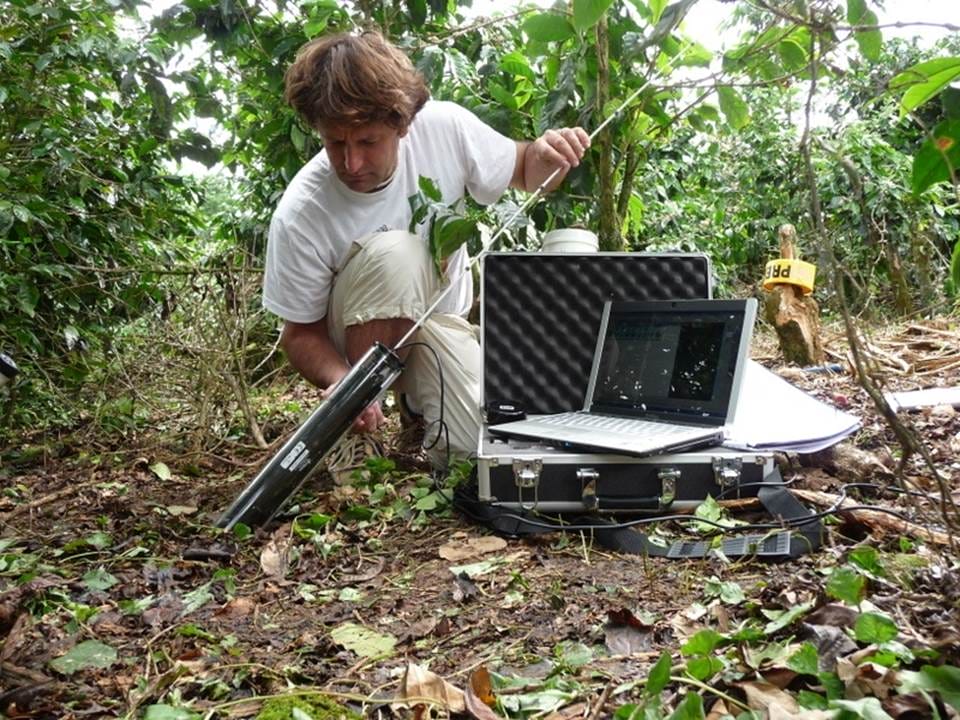
For researchers comparing methods, this is where the CI-600 separates itself from generic workflows and low-cost alternatives.
Soil coring followed by lab scanning gives you a single snapshot and introduces user-dependent variability during washing and sorting. The CI-600 instead images the same tube location repeatedly, keeps roots in their natural orientation, and avoids disturbing the soil between sessions.
CID also notes that full tube scans are typically completed in minutes, which is a major advantage when you are managing many plots in field conditions.
CID’s recent buyer guidance adds another practical layer. The CI-600 provides distortion-free 360 degree scans inside acrylic tubes, supports high-resolution imaging up to 23.5 million pixels, and offers 100, 300, and 600 DPI scan settings. It also works with RootSnap software and an indexing handle to maintain consistent scan intervals and repeat imaging at the same depth over time.
That kind of reproducibility is especially important in sandy soils, where subtle differences in root branching, distribution, and seasonal development can be easy to miss with lower quality tools.
What to watch for in sandy soil installations
Using the CI-600 Root Imager in sandy soils is not just a yes or no question. It is really a question of setup quality.
Sand is often easier to penetrate during installation, but it can also be more prone to shifting, settling, or losing tight tube-to-soil contact if the installation is rushed. That means the instrument is capable in sandy soils, but the installation protocol needs to be treated as part of the measurement system.
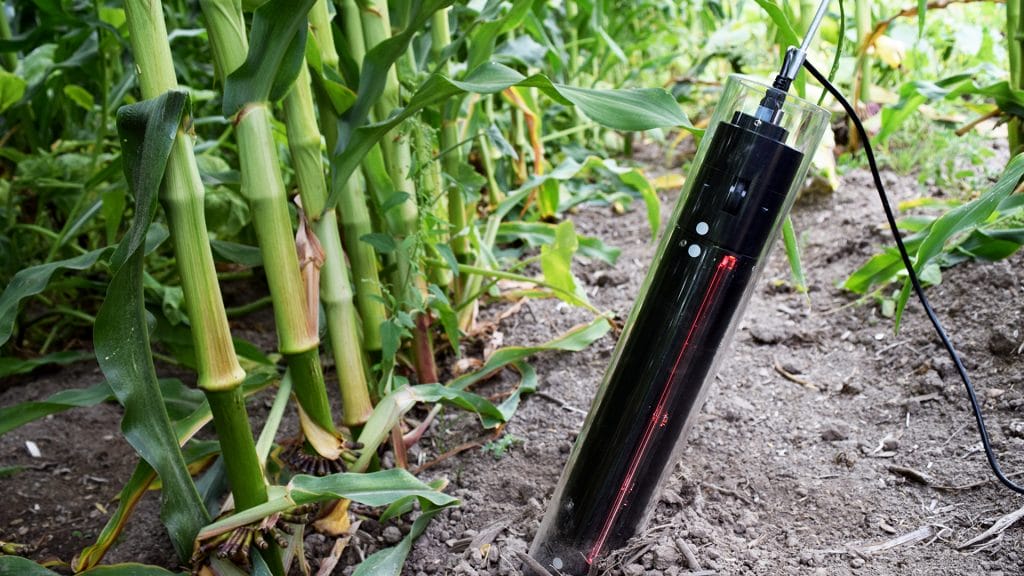
This installation point is an inference from CID’s emphasis on tube compatibility, repeatable placement, and long-term consistency across scans.
A good sandy-soil workflow usually includes:
-
careful tube installation to maintain close contact with the surrounding soil
-
consistent tube depth and angle across treatments
-
enough settling time before data collection begins
-
repeated scans at the same indexed depths
-
field checks for movement, gaps, or moisture-related artifacts over the season
Those steps matter because the value of the CI-600 is not just that it captures images. It captures comparable images over time. That is what turns root pictures into useful data.
Is sandy soil a reason to choose the CI-600 or the CI-602?
For some projects, sandy soils may still raise a second question: should you use the CI-600 or move to the narrower CI-602?
CID’s own buyer checklist says the CI-600 is ideal for deep soil profile studies, long-term monitoring around larger tubes, wide 360 degree scan areas, and crops with thicker or more complex root systems.
The CI-602 is better suited to 2-inch tube studies and research in compact soils where narrow tubes are easier to install. That means sandy soil by itself is not a reason to avoid the CI-600.
In fact, if your goal is broad scan coverage and high-resolution monitoring in larger tubes, sandy conditions may support that workflow quite well.
Why this matters for real research questions?
Sandy soils are often where root research becomes more urgent, not less. CID has highlighted research showing that root growth can differ strongly by soil type, including examples where root growth was greater in sandy soils than in clay soils.
Sandy sites also make questions about irrigation timing, amendment response, and crop establishment more important because water and nutrients move differently than they do in heavier soils. The CI-600 fits this research environment because it lets you monitor roots through the season instead of relying on one destructive endpoint.
That is really the practical answer to the title question. Yes, you can use the CI-600 Root Imager in sandy soils. More than that, it is often a strong choice when you need high-resolution, repeated, in-situ root measurements without tearing up the experiment each time you sample.
Compared with destructive coring workflows or lower-end imaging substitutes, the CI-600 gives researchers a cleaner path to time-series root data, better consistency, and a more complete picture of what is happening below ground.
Ending Note
If your work involves sandy soils, the CI-600 Root Imager is not just usable. It is well aligned with the realities of field root research in those conditions, provided the tubes are installed carefully and monitored consistently.
CID Bio-Science designed the CI-600 for non-destructive, repeated root imaging across seasons, and that makes it a practical tool for crop, environmental, and long-term plant studies where sandy soils are part of the equation.
To see whether the CI-600 fits your site, crop, and tube setup, contact CID Bio-Science and discuss your experiment with our team.
Related Products
Most Popular Articles
- Transpiration in Plants: Its Importance and Applications
- Leaf Area – How & Why Measuring Leaf Area…
- How to Analyze Photosynthesis in Plants: Methods and Tools
- Plant Respiration: Its Importance and Applications
- The Forest Canopy: Structure, Roles & Measurement
- Stomatal Conductance: Functions, Measurement, and…
- Forest & Plant Canopy Analysis – Tools…
- Root Respiration: Importance and Applications
- 50 Best Universities for Plant Science
- The Importance of Leaf Area Index (LAI) in…
Related Reading