Why Does My CI‑202 Give Different Values Than My CI‑203?

Scott Trimble

June 18, 2026 at 5:12 pm | Updated June 18, 2026 at 5:12 pm | 5 min read
If you have used both the CI-202 Portable Laser Leaf Area Meter and the CI-203 Handheld Laser Leaf Area Meter, you may have noticed something that surprises many researchers at first. The same leaf scanned on both instruments can produce slightly different results. When researchers rely on accurate leaf area measurement for plant physiology, agronomy, or ecology studies, these differences can raise questions.
The important point is that these two instruments are designed for different measurement workflows.
While both devices provide precise leaf area measurement using laser scanning technology, they operate in different ways and are optimized for different research situations. Understanding these differences helps explain why measurements may vary slightly between the two systems.
Subscribe to receive our monthly round-up of articles.
In this article, we will explore the main reasons why the CI-202 and CI-203 may produce different values and how researchers can ensure consistent leaf area measurement across experiments.
Understanding the Measurement Approach
Before comparing results, it helps to understand how each instrument performs leaf area measurement.
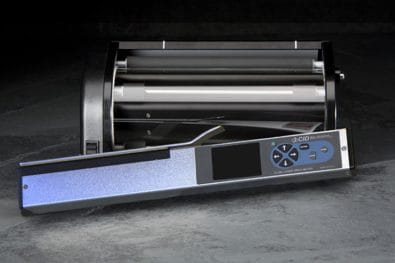
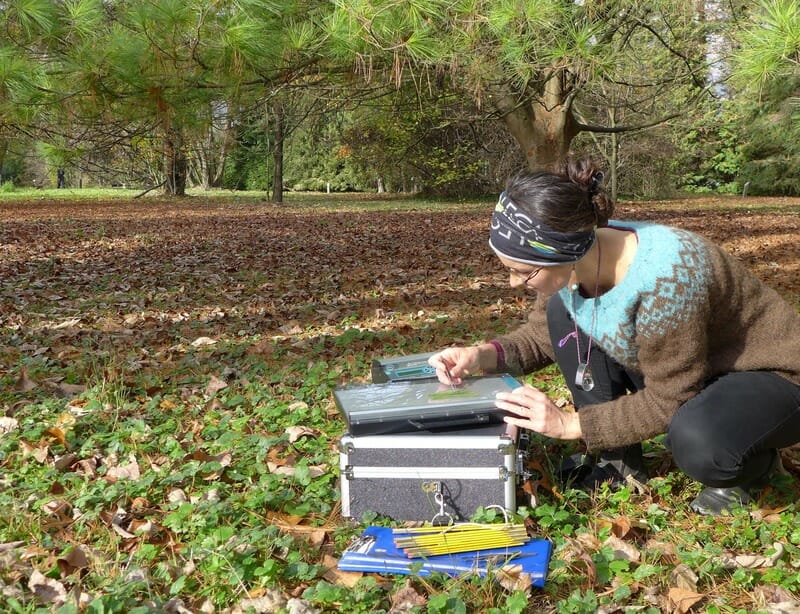
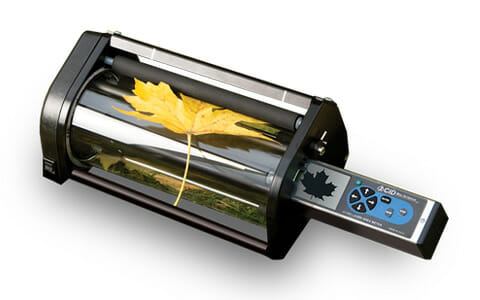
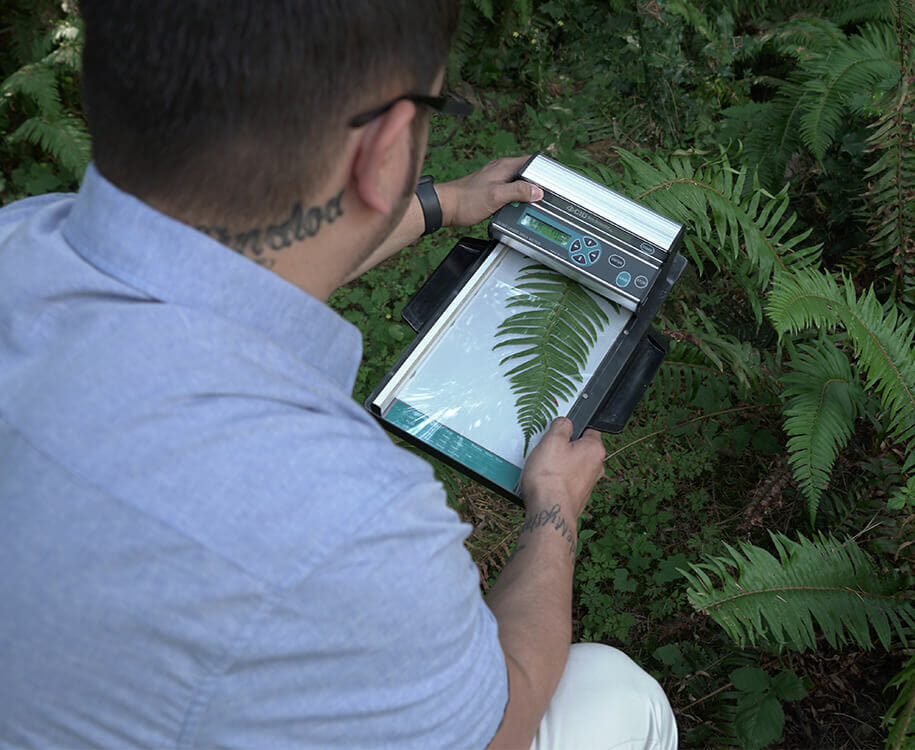
The CI-202 Portable Laser Leaf Area Meter uses a fixed scanning window. Leaves are passed through the scanner, which captures the outline of the sample and calculates parameters such as area, length, width, perimeter, and shape factor with a resolution of 0.01 cm².
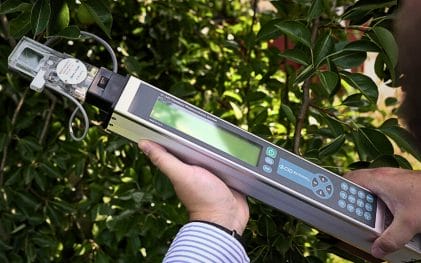
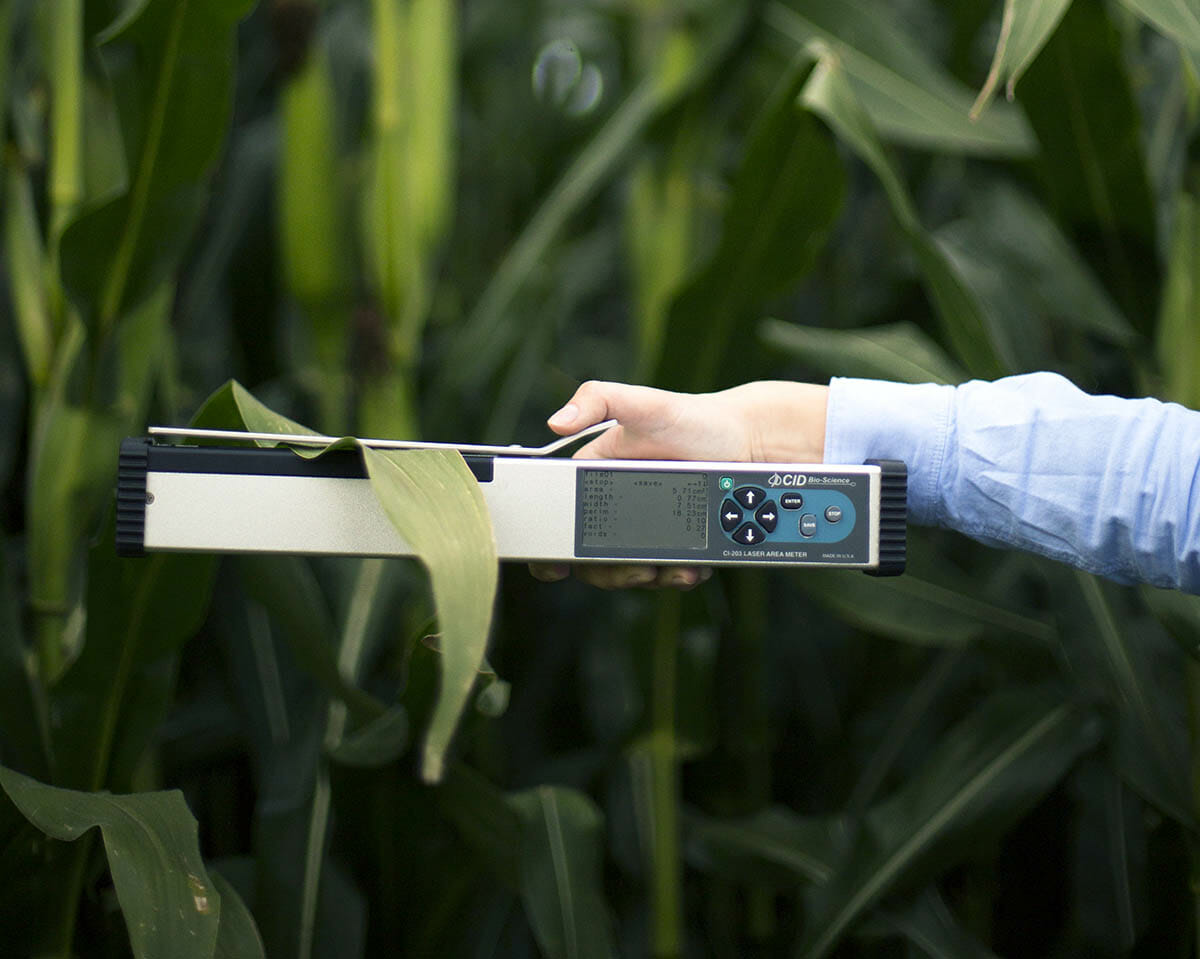
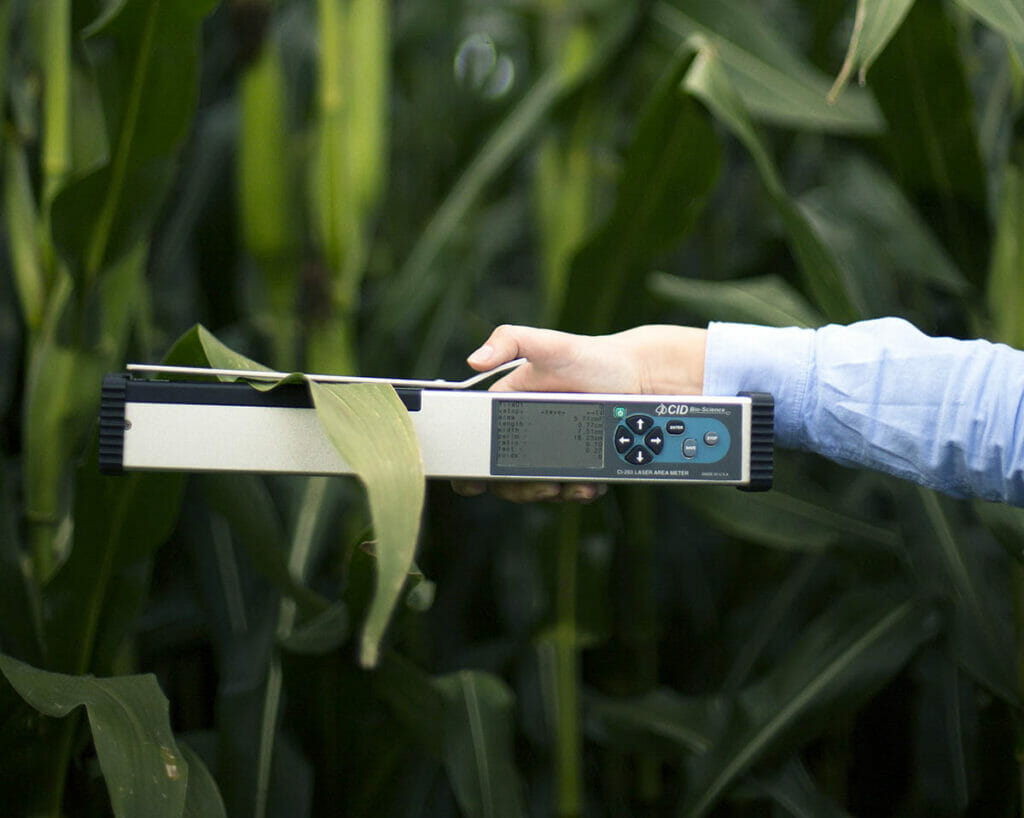
The CI-203 Handheld Laser Leaf Area Meter uses a different method. Instead of feeding leaves through a scanner, the user sweeps the instrument over the leaf surface. This motion-based scan collects the outline and calculates multiple parameters including area, length, width, perimeter, shape factor, ratio, and void count.
Because the measurement method differs, the resulting leaf area measurement values may not be identical.
Key Reasons Measurements May Differ
1. Scanning Method
The biggest difference between the two systems is how the leaf is scanned.
With the CI-202, the leaf is guided through a defined scanning area. This creates a controlled environment where the laser consistently captures the leaf profile.
The CI-203 relies on manual sweeping motion across the leaf. The speed and direction of the scan can influence how the instrument detects edges.
In practice, both systems are accurate, but the scanning method introduces slight variation in leaf area measurement results.
2. Measurement Workflow
The CI-202 is often used when scanning detached samples or when researchers process large batches of leaves in a controlled environment.
The CI-203 is optimized for in situ measurements. Researchers can scan leaves directly on the plant without detaching them. This is especially useful in field studies where preserving plant structure matters.
However, leaves measured in their natural position may not lie perfectly flat. This can slightly affect the measured area compared with a flattened sample in the CI-202.
3. Leaf Position and Flattening
Leaf shape and curvature also play a role.
Both instruments flatten curled leaves during measurement to improve accuracy. However, the degree of flattening can vary depending on the instrument and how the leaf is positioned.
The CI-203 is designed to flatten leaves during the sweep scan to ensure accurate measurements.
The CI-202 also flattens leaves as they pass through the scanning area, which helps maintain consistent measurements.
Even with these design features, slight differences in leaf positioning can affect the final leaf area measurement.
4. Sample Size and Shape
Leaves with complex shapes can produce slightly different results depending on the scanning technique.
Examples include:
-
Highly serrated edges
-
Thin grass blades
-
Needle-like leaves
-
Leaves with holes or damage
The CI-203 captures additional parameters such as void count, which can affect how complex leaf outlines are interpreted.
The CI-202 focuses primarily on core shape metrics such as area, width, length, perimeter, and shape factor.
These differences in outline interpretation can create small variations in leaf area measurement.
5. User Technique
Technique plays a bigger role with handheld scanning devices.
For example, with the CI-203:
-
Sweep speed can influence resolution
-
Starting and stopping points may vary
-
Angle of the device can affect the scan
With the CI-202, technique is more standardized since the leaf passes through a fixed scanning window.
Because of this, the CI-202 tends to produce more uniform measurements in lab environments, while the CI-203 provides flexibility for field-based leaf area measurement.
How to Maintain Consistent Measurements
If you are using both instruments in the same research program, consistency is important. Fortunately, a few best practices can reduce variation.
Use the Same Instrument Within a Study
Whenever possible, use one instrument throughout a single experiment. Switching between systems can introduce variability in leaf area measurement results.
Standardize Leaf Preparation
If leaves are detached:
-
Remove excess moisture
-
Ensure leaves are flat
-
Scan them immediately after collection
If leaves remain attached:
-
Position the leaf consistently
-
Avoid excessive bending during scanning
Maintain Consistent Technique
For CI-203 users, try to maintain:
-
A steady sweep speed
-
Straight scanning paths
-
Consistent contact with the leaf surface
Developing a consistent scanning rhythm improves repeatability.
Document the Instrument Used
When publishing or sharing results, note whether the CI-202 or CI-203 was used for leaf area measurement. This transparency helps others interpret the data correctly.
Why Both Instruments Exist
At first glance, researchers may assume the CI-202 and CI-203 perform the same job. In reality, they serve complementary purposes.
The CI-202 excels when:
-
Large numbers of detached leaves must be scanned
-
High throughput is required
-
Laboratory conditions are available
The CI-203 excels when:
-
Leaves must remain attached
-
Field measurements are required
-
Researchers need mobility and flexibility
Both instruments provide reliable leaf area measurement, but each is optimized for different research environments.
The Advantage of CID Bio-Science Instruments
CID Bio-Science instruments are designed to prioritize accuracy, portability, and durability for plant researchers. Both the CI-202 and CI-203 provide high-resolution laser scanning technology while eliminating the need for user calibration.
This allows researchers to focus on collecting reliable leaf area measurement data rather than adjusting instrument settings.
From controlled lab experiments to remote field studies, these tools support a wide range of plant science applications.
Conclusion
If your CI-202 and CI-203 produce slightly different values, the reason usually comes down to measurement method, scanning workflow, and sample positioning. Both instruments are designed for accurate leaf area measurement, but they approach the task differently.
Rather than viewing these differences as a limitation, it helps to see them as a reflection of each instrument’s strengths. The CI-202 provides consistent scanning for detached samples, while the CI-203 enables fast in-field measurements on living plants.
If you want to improve the speed and reliability of your leaf area measurement workflow, explore the full range of plant science tools available from CID Bio-Science. Our instruments are designed by researchers for researchers, helping you collect precise plant data whether you are working in the field or the lab.
Related Products
Most Popular Articles
- Transpiration in Plants: Its Importance and Applications
- Leaf Area – How & Why Measuring Leaf Area…
- How to Analyze Photosynthesis in Plants: Methods and Tools
- Plant Respiration: Its Importance and Applications
- The Forest Canopy: Structure, Roles & Measurement
- Stomatal Conductance: Functions, Measurement, and…
- Forest & Plant Canopy Analysis – Tools…
- Root Respiration: Importance and Applications
- 50 Best Universities for Plant Science
- The Importance of Leaf Area Index (LAI) in…