5 Emerging Trends in Plant Canopy Analysis for 2025


Scott Trimble

June 18, 2026 at 5:15 pm | Updated June 18, 2026 at 5:15 pm | 5 min read
Plant canopy analysis is moving well beyond simple LAI estimates and light measurements. In 2025, researchers expect more integrated, data-rich, and field-ready approaches that connect canopy structure, physiology, and spectral responses in real time. As climate variability increases and breeding programs accelerate, the need for fast, accurate, and non-destructive plant canopy analysis is more urgent than ever.
Below are five emerging trends shaping how scientists and agronomists approach plant canopy analysis this year and beyond.
#01 Integrated LAI and PAR Measurements in a Single Workflow
One of the most important shifts in plant canopy analysis is the integration of structural and light data into a single field workflow. Traditionally, researchers measured Leaf Area Index using hemispherical photography and collected PAR data separately. That process required multiple instruments, additional processing steps, and sometimes above-canopy reference readings.
Subscribe to receive our monthly round-up of articles.
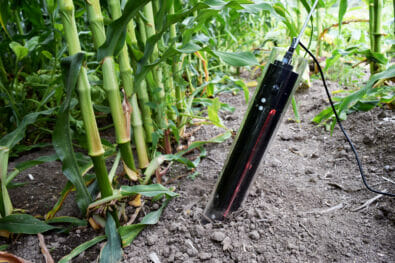
Modern systems such as the CI-110 Plant Canopy Imager streamline this process by combining hemispherical canopy photography with 24 PAR sensors in one device. The self-leveling digital camera captures a 150 degree field-of-view image, while integrated photodiodes measure photosynthetically active radiation simultaneously. Researchers can calculate LAI using image analysis or PAR-based methods without needing above-canopy reference readings .
Key advantages driving this trend:
-
Instant LAI calculations in the field
-
Real-time PAR and sunfleck assessment
-
Gap fraction, leaf angle distribution, and extinction coefficient analysis
-
Operation under any sky condition
The ability to perform plant canopy analysis in a single pass reduces field time and limits variability caused by changing light conditions. As research timelines tighten, efficiency matters.
#02 High-Resolution Leaf Area Data to Support Canopy Models
Another trend shaping plant canopy analysis is the demand for higher resolution leaf-level measurements to improve canopy-scale models. Researchers are not satisfied with bulk area estimates. They want shape factors, perimeter data, and morphological descriptors that feed into functional-structural plant models.
Portable laser leaf area meters such as the CI-203 Handheld Laser Leaf Area Meter provide non-destructive measurements of area, width, length, perimeter, shape factor, ratio, and void count in one sweep. The device flattens curled leaves for precision and offers virtually unlimited storage via SD card.
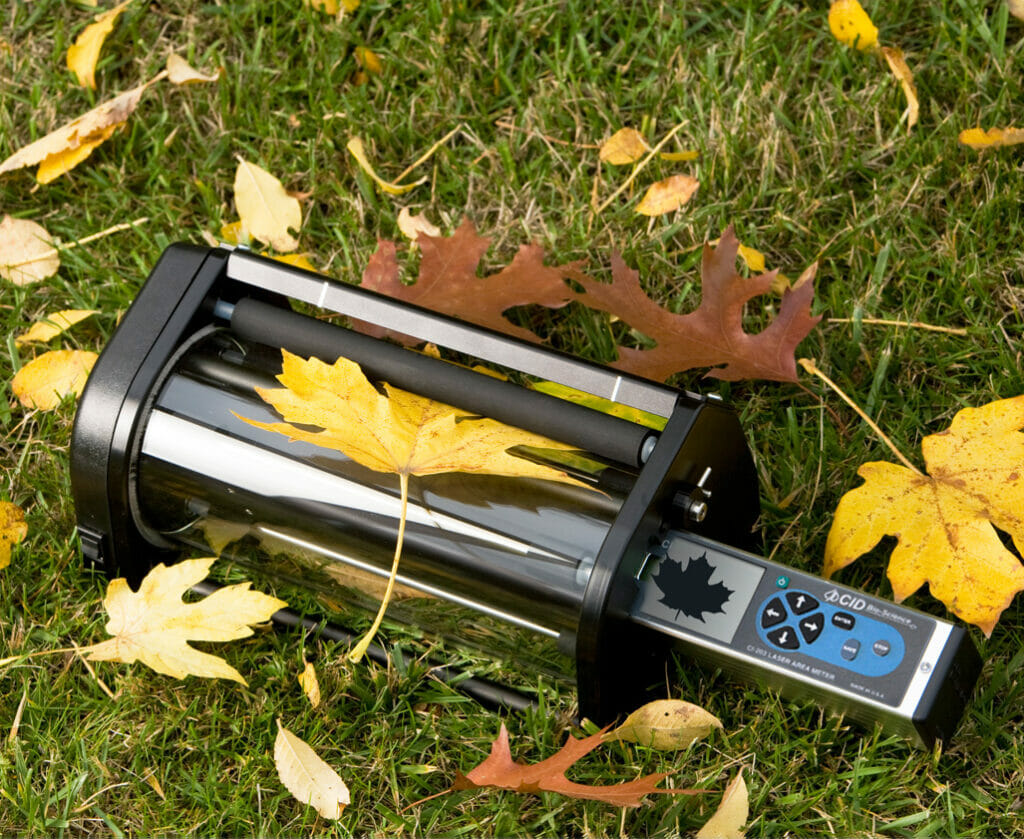
Similarly, the CI-202 Portable Laser Leaf Area Meter delivers 0.01 cm² resolution and stores up to 8,000 measurements directly on the device .
This level of detail supports plant canopy analysis in several ways:
-
Parameterizing canopy architecture models
-
Tracking phenotypic variation across genotypes
-
Linking leaf shape to gas exchange performance
-
Validating remote sensing outputs
Rather than relying solely on indirect canopy metrics, researchers are building stronger bottom-up datasets. CID Bio-Science instruments are designed specifically for this type of field-ready, non-destructive precision.
#03 Coupling Canopy Structure with Gas Exchange
A third emerging trend in plant canopy analysis is the tighter coupling of structural data with physiological measurements. Measuring canopy density without understanding photosynthetic performance leaves critical gaps in interpretation.
The CI-340 Handheld Photosynthesis System reflects this integrated approach. It measures photosynthesis, respiration, transpiration, stomatal conductance, PAR, and internal CO2 in a compact, single-handed unit. Direct chamber connection to the CO2 and H2O gas analyzer reduces delay and enables rapid gas exchange measurements.
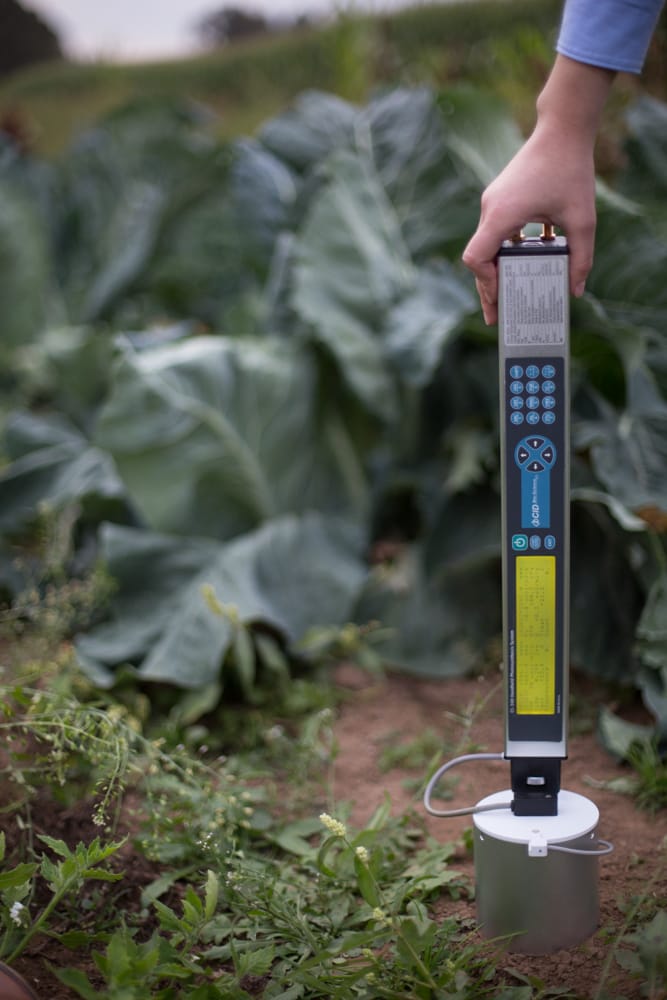
With optional modules, researchers can:
-
Adjust light intensity for response curves
-
Control temperature in the leaf chamber
-
Manipulate CO2 and H2O concentrations
-
Measure chlorophyll fluorescence alongside gas exchange
In practical terms, this means plant canopy analysis no longer stops at LAI. Researchers can directly relate canopy density and architecture to leaf-level physiological responses under controlled environmental conditions.
This trend is especially important for:
-
Drought stress research
-
Heat tolerance screening
-
Genotype comparisons in breeding trials
-
Seasonal photosynthetic performance studies
Integrated physiology and canopy analysis provides a more complete understanding of crop performance under real-world stress.
#04 Real-Time Spectral Insight for Stress Detection
Spectral data is becoming central to plant canopy analysis. Researchers increasingly rely on reflectance, absorbance, and transmittance measurements to detect nutrient deficiencies, pigment changes, and stress responses before visible symptoms appear.
The CI-710s SpectraVue Leaf Spectrometer covers a wide wavelength range from 360 to 1100 nm and measures reflectance, transmittance, and absorbance simultaneously. It includes onboard analysis software and allows users to apply preloaded or custom indices in real time.
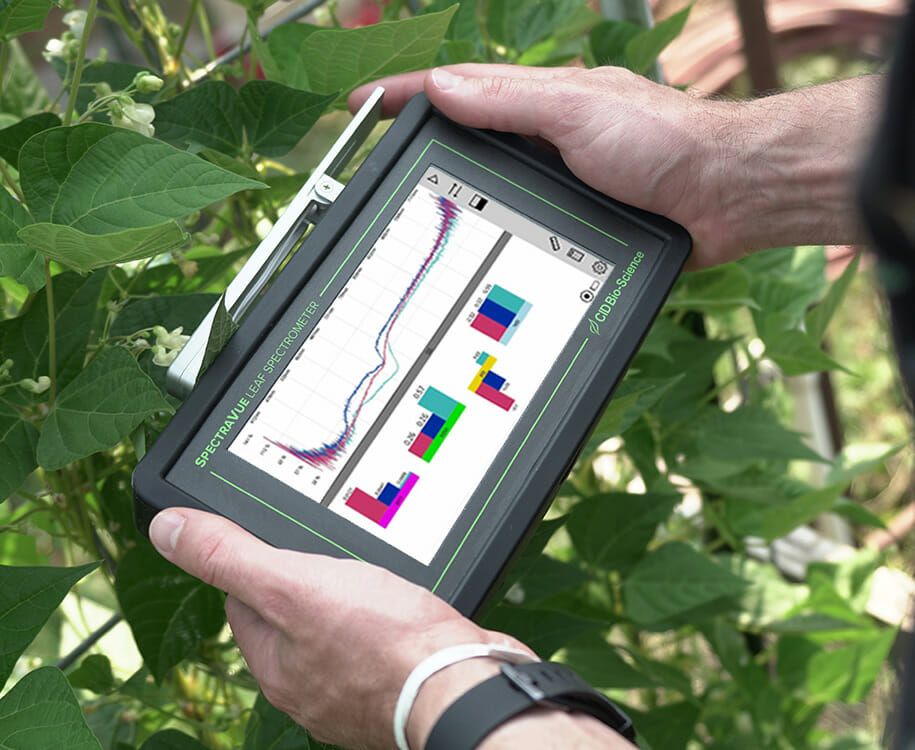
Important capabilities include:
-
Visible and near-infrared measurements
-
Real-time nutrient and pigment quantification
-
Support for chemometric techniques such as PLS modeling
-
GPS-enabled data logging
For plant canopy analysis, spectral data bridges the gap between structure and biochemistry. Researchers can correlate canopy density with pigment composition or stress markers, creating multidimensional datasets that improve predictive models.
The trend toward portable spectroscopy also reduces dependence on lab-based analysis. Field decisions can be made immediately, which is critical in breeding and precision agriculture.
#05 Data Integration and Field-Ready Design
The final trend shaping plant canopy analysis in 2025 is the emphasis on integrated data logging, GPS tagging, and intuitive field interfaces.
Across CID Bio-Science instruments, several consistent features stand out:
-
GPS-enabled measurements for spatial mapping
-
Touchscreen interfaces for in-field review
-
Built-in data storage with USB export
-
Lightweight, battery-powered systems designed for remote sites
Researchers are spending less time managing cables, calibrating devices, or transferring partial datasets between systems. Instead, they are collecting synchronized structural, physiological, and spectral data that can be exported for advanced modeling.
This field-ready design philosophy supports:
-
Large-scale breeding trials
-
Multi-location ecological studies
-
Precision agriculture research
-
Long-term environmental monitoring
Plant canopy analysis is no longer confined to controlled lab conditions. It is fully mobile and increasingly autonomous.
Why This Matters for 2025 Research
Climate variability, tighter research budgets, and increased pressure for rapid cultivar development are reshaping experimental design. Researchers must extract more insight from each plot, each leaf, and each field visit.
The emerging trends in plant canopy analysis share three core themes:
-
Non-destructive measurement
-
Real-time analysis
-
Integrated datasets
CID Bio-Science instruments align directly with these priorities. From canopy imaging to gas exchange and spectroscopy, the tools are built to work together in real field conditions. That integration reduces uncertainty and strengthens conclusions.
The Bottom Line
If your team is planning canopy studies for 2025, now is the time to evaluate whether your current workflow supports integrated plant canopy analysis. Explore the full line of canopy, leaf area, photosynthesis, and spectral instruments at CID Bio-Science. Contact the team at www.cid-inc.com to discuss how these tools can support your next research project.
Related Products
Most Popular Articles
- Transpiration in Plants: Its Importance and Applications
- Leaf Area – How & Why Measuring Leaf Area…
- How to Analyze Photosynthesis in Plants: Methods and Tools
- Plant Respiration: Its Importance and Applications
- The Forest Canopy: Structure, Roles & Measurement
- Stomatal Conductance: Functions, Measurement, and…
- Forest & Plant Canopy Analysis – Tools…
- Root Respiration: Importance and Applications
- 50 Best Universities for Plant Science
- The Importance of Leaf Area Index (LAI) in…