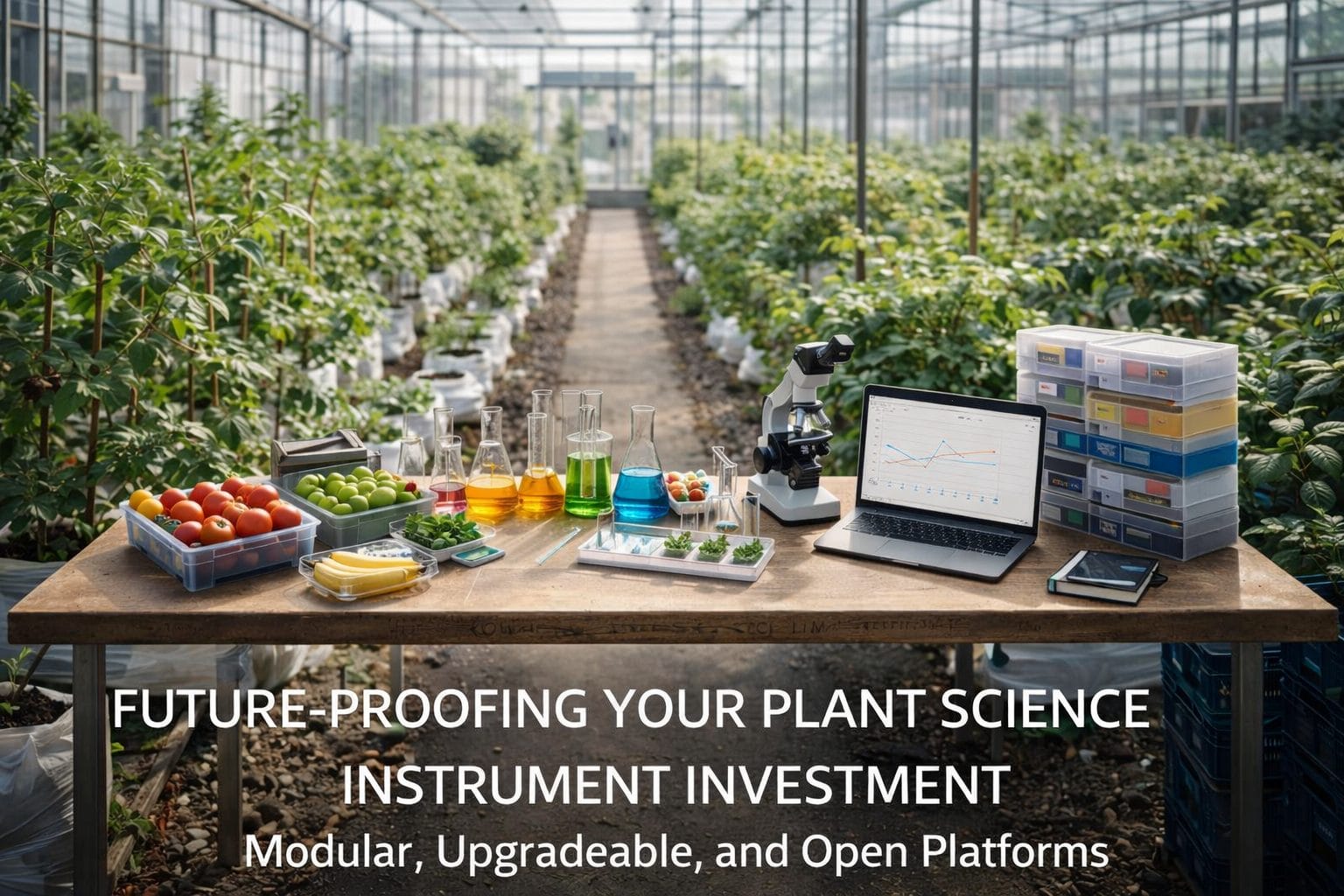
Future-Proofing Your Plant Science Instrument Investment: Modular, Upgradeable, and Open Platforms

Scott Trimble

January 5, 2026 at 7:48 pm | Updated January 6, 2026 at 5:50 pm | 5 min read
Investing in future-proof plant science instruments is no longer just about measurement accuracy. Researchers now expect tools that adapt as projects evolve, funding cycles change, and new methods emerge.
A system that locks users into fixed hardware or closed software quickly becomes a liability. Modular design, upgradeable components, and open data workflows are what separate long-term platforms from short-lived purchases.
This is where CID Bio-Science has built a strong reputation among plant scientists who need instruments that grow with their research.
Subscribe to receive our monthly round-up of articles.
Why Future-Proofing Matters in Plant Research
Plant science rarely stands still. A project that begins with simple leaf area measurements can quickly expand into canopy structure, physiological response, or spectral analysis. When instruments are rigid, researchers end up replacing entire systems instead of extending them.
Future-proof plant science instruments reduce this risk by supporting:
-
Hardware expansion instead of replacement
-
Software and firmware updates that add capability
-
Open data formats that integrate with new analysis tools
-
Field and lab flexibility across multiple research disciplines
These principles show up clearly across the CID Bio-Science instrument lineup.
Modular Hardware That Expands with Your Research
Modularity is one of the most practical ways to protect an instrument investment. Instead of purchasing a new system for each experimental direction, researchers can add components only when needed.
Modular Photosynthesis Measurement
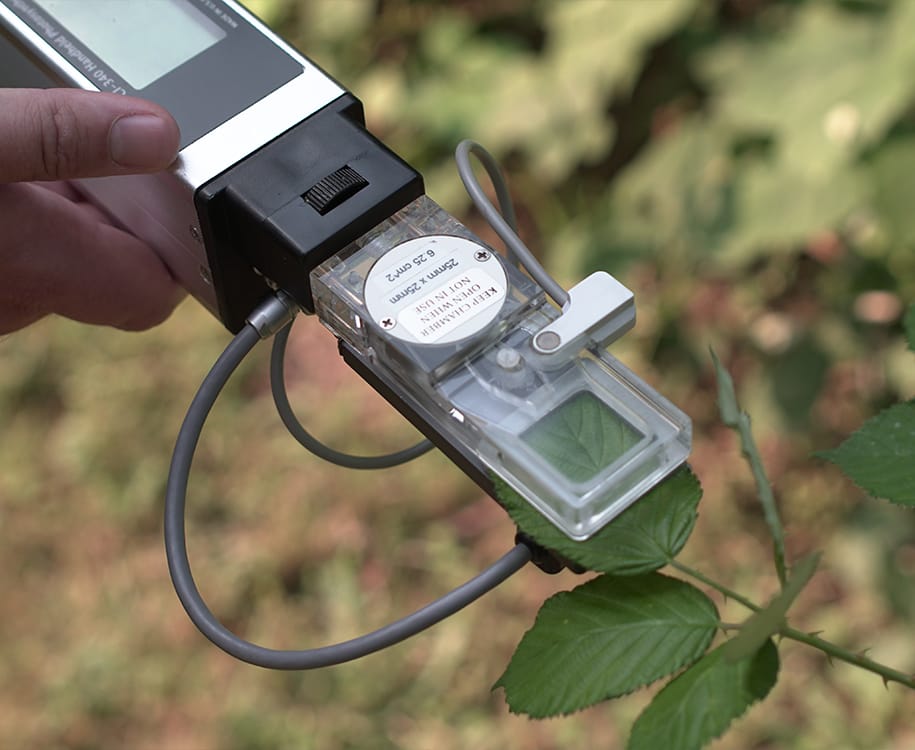
The CI-340 Handheld Photosynthesis System is designed around modular control units and interchangeable chambers. Researchers can begin with core gas exchange measurements and later add control modules for light, temperature, CO2, H2O, or chlorophyll fluorescence.
Multiple leaf chambers support everything from broad leaves to conifer needles and cacti, which eliminates the need for separate systems as study species change.
This modular approach means the same instrument can support:
-
Seasonal ecophysiology studies
-
Crop stress and water use research
-
Advanced photosynthetic efficiency analysis
Instead of replacing hardware, users extend capability.
Adaptable Leaf Area Measurement
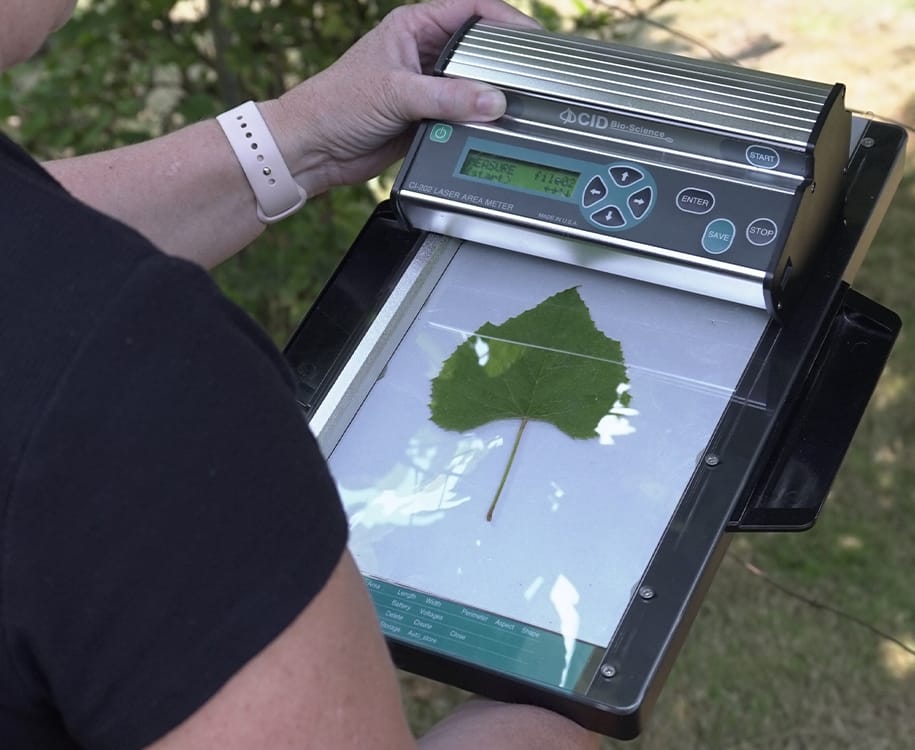
Leaf area meters from CID Bio-Science follow a similar philosophy. The CI-203 Handheld Laser Leaf Area Meter supports optional conveyor attachments for high-throughput detached samples while remaining fully capable of non-destructive field measurements. The CI-202 offers durable, self-contained operation with internal data logging for field or lab use .
For future-proof plant science instruments, this matters because workflows change. A single instrument can move between:
-
Field phenotyping
-
Controlled environment experiments
-
Large sample processing in the lab
No redesign required.
Upgradeable Electronics and Software
Hardware modularity only works if the underlying electronics and software keep pace with research needs. Upgradeability ensures that instruments remain relevant as standards and expectations evolve.
Canopy Imaging with Built-In Flexibility
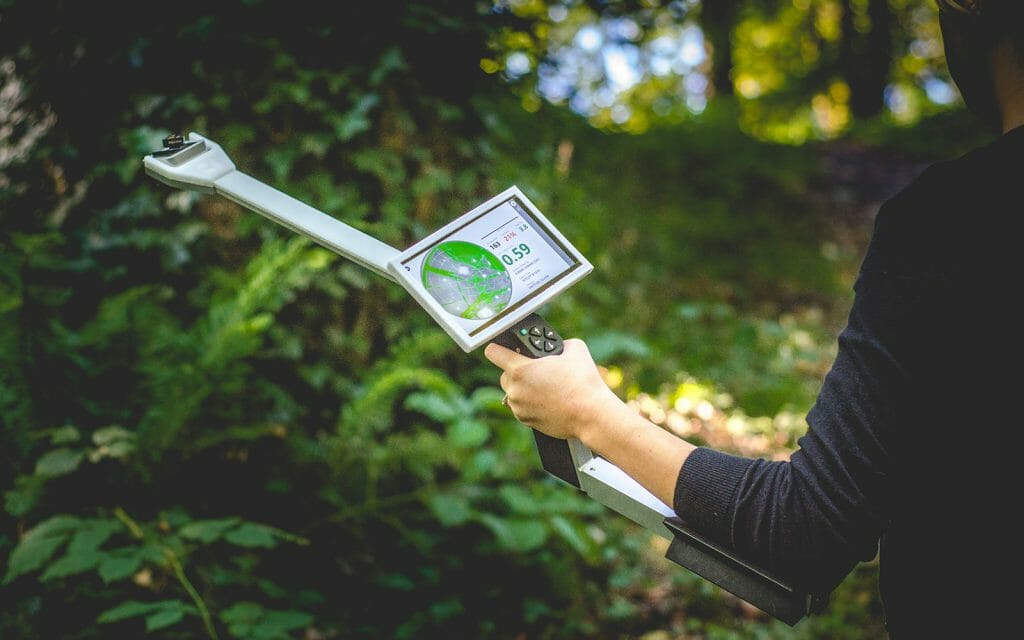
The CI-110 Plant Canopy Imager integrates hemispherical imaging with PAR sensing to calculate LAI and canopy structure in real time.
Researchers can adjust thresholds, filters, and analysis settings directly on the device. Firmware and software updates allow new analytical approaches without changing the instrument itself.
Because canopy studies often span multiple seasons or locations, having an upgradeable system reduces variability and preserves consistency over time.
Spectral Analysis That Evolves with Methods
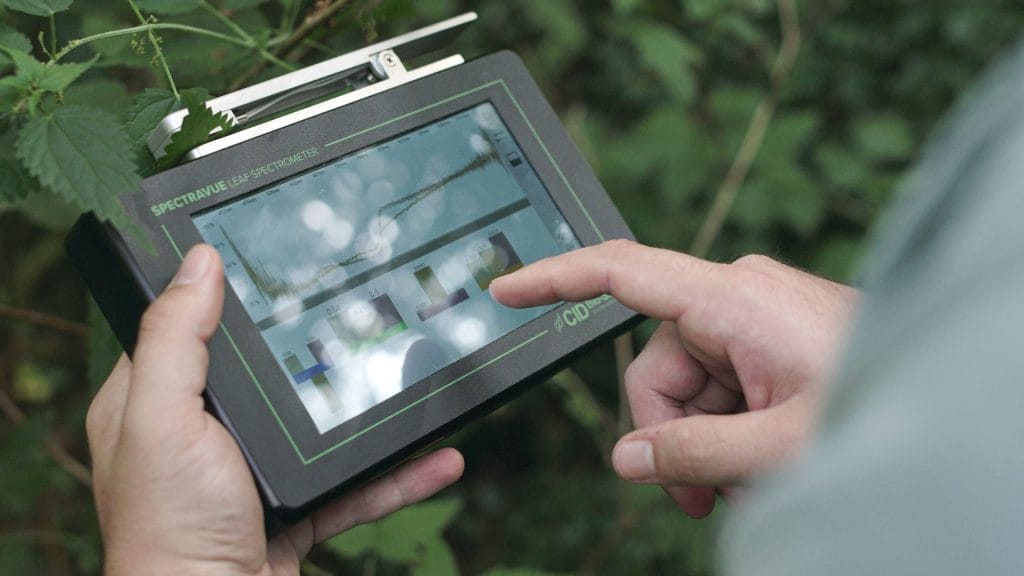
The CI-710s SpectraVue Leaf Spectrometer reflects the same future-proof mindset. Its onboard software supports both predefined vegetation indices and user-defined custom indices. Raw spectral data can be exported for advanced chemometric modeling, including PLS approaches, ensuring compatibility with evolving analytical pipelines .
As spectral methods advance, researchers are not limited by proprietary black-box calculations.
Open Platforms and Data Portability
A future-proof plant science instrument must fit into a broader research ecosystem. Closed data formats and limited export options create friction and slow collaboration.
CID Bio-Science instruments emphasize:
-
Standard data exports via SD card or USB
-
Compatibility with common statistical and modeling tools
-
GPS tagging for spatial analysis and long-term datasets
This openness allows researchers to integrate measurements into custom workflows rather than adjusting research questions to fit the instrument.
Related Products
Most Popular Articles
- Transpiration in Plants: Its Importance and Applications
- Leaf Area – How & Why Measuring Leaf Area…
- How to Analyze Photosynthesis in Plants: Methods and Tools
- Plant Respiration: Its Importance and Applications
- The Forest Canopy: Structure, Roles & Measurement
- Stomatal Conductance: Functions, Measurement, and…
- Forest & Plant Canopy Analysis – Tools…
- Root Respiration: Importance and Applications
- 50 Best Universities for Plant Science
- The Importance of Leaf Area Index (LAI) in…
Related Reading