Selecting the Right Root Imager: Depth, Resolution, Cover, and Cost

Scott Trimble

January 6, 2026 at 5:51 pm | Updated January 6, 2026 at 5:51 pm | 5 min read
Choosing the right root imager is one of those decisions that can quietly shape the quality of an entire research program. Roots are dynamic, heterogeneous, and difficult to observe without disturbing the system you are trying to measure. A good root imager lets you work around that problem by balancing depth, resolution, spatial cover, and cost in a way that fits your specific questions.
Root imaging is not a one-size-fits-all exercise. Measuring fine root turnover in a perennial system looks very different from tracking seasonal root growth in annual crops. Understanding the tradeoffs involved helps narrow the field quickly.
Understanding What a Root Imager Actually Measures
Before comparing instruments, it helps to clarify what information you expect to extract. Most modern root imager systems rely on minirhizotron-style imaging. A transparent tube is installed in the soil, and a camera captures images of roots growing along the tube wall over time. This approach is non-destructive and repeatable, which makes it especially valuable for longitudinal studies.
Subscribe to receive our monthly round-up of articles.
However, not all root imagers deliver the same type of data. Differences in optical resolution, tube diameter, and camera design influence whether you can reliably distinguish fine roots, quantify branching, or detect subtle changes in root lifespan. These technical details matter more than marketing language.
Depth: How Far Into the Soil Profile You Need to See
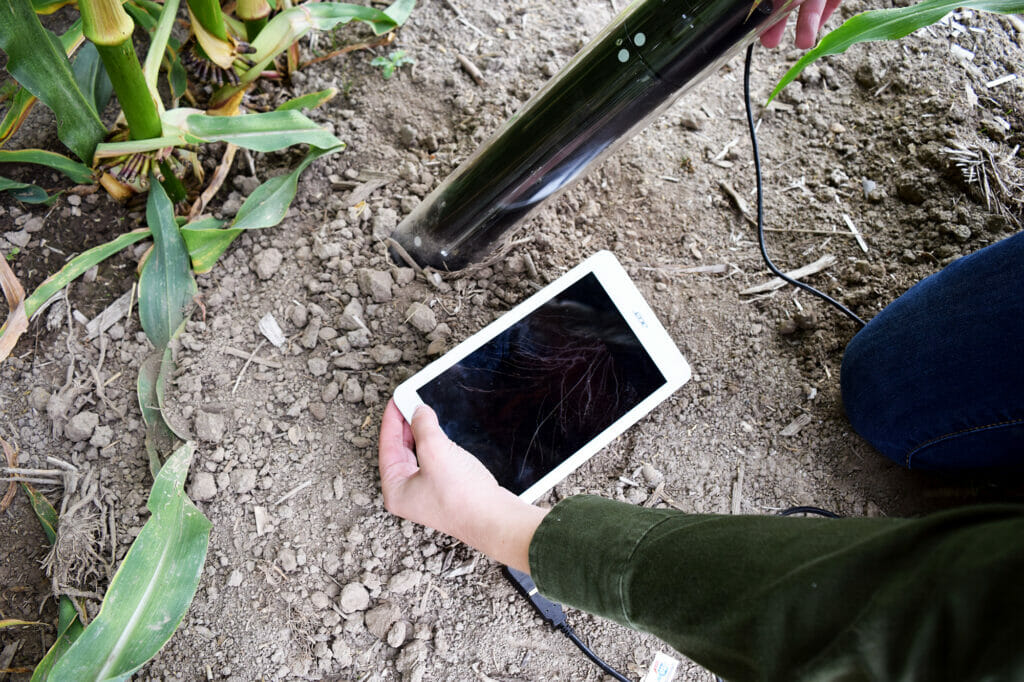
Depth is often the first filter researchers apply when selecting a root imager. Some studies focus on shallow roots that respond quickly to moisture and nutrient availability. Others require access to deeper layers where long-term water acquisition and storage occur.
A wider-diameter system typically allows for deeper installation while maintaining image stability. Instruments like the CI-600 In-Situ Root Imager are designed to image roots across a broad soil profile, making them well suited for studies that span multiple depth horizons. This is particularly useful in forestry, perennial cropping systems, and ecological research where deep roots play a critical role.
In contrast, narrower systems trade depth potential for flexibility. The CI-602 Narrow Gauge Root Imager is designed for sites where soil disturbance must be minimized or where installation space is limited. This can include greenhouse studies, high-density plots, or rocky soils where larger tubes are impractical.
When evaluating depth, also consider the practical side. Deeper installations take more time, more effort, and sometimes specialized equipment. The best root imager is not the one with the greatest theoretical depth, but the one you can deploy consistently across replicates.
Resolution: Seeing Fine Roots Clearly
Resolution determines what level of biological detail you can actually analyze. For many studies, especially those focused on nutrient uptake or root turnover, fine roots are the primary interest. These roots can be only a few tenths of a millimeter in diameter, and poor resolution quickly limits your ability to quantify them accurately.
Higher optical resolution allows researchers to distinguish overlapping roots, identify branching points, and track the appearance and disappearance of individual roots across time. Both the CI-600 and CI-602 are designed to deliver consistent, high-resolution images suitable for quantitative analysis rather than just visual inspection.
It is worth noting that higher resolution also means larger data files and longer processing times. This is rarely a dealbreaker, but it does affect workflow. A root imager that produces clear, analyzable images with minimal post-processing often ends up saving time overall, even if the raw data volume is larger.
Cover: Spatial Coverage and Sampling Strategy
Cover refers to how much of the soil environment you can realistically sample. A single tube only represents a very small volume of soil, so most studies rely on multiple installations. Here, tube diameter and system portability start to matter.
Larger systems can capture more root surface area per image, which can reduce the total number of tubes needed. This can be an advantage in long-term field experiments where installation is labor-intensive. The CI-600 is often chosen in these scenarios because its design supports repeated imaging over large experimental plots.
Smaller diameter systems, like the CI-602, make it easier to increase replication. Installing more tubes across treatments can improve statistical power and capture spatial variability. In practice, many researchers prefer this approach, especially in heterogeneous soils where root distribution is patchy.
When thinking about cover, also consider how often you plan to image. A portable, easy-to-handle root imager encourages more frequent data collection, which can be more valuable than occasional high-coverage sampling.
Cost: Balancing Budget With Data Quality
Cost is unavoidable in any equipment decision, but it should be evaluated in terms of data return rather than sticker price. A less expensive root imager that limits resolution or repeatability can quickly become costly if it compromises your results.
CID Bio-Science root imagers are designed to occupy a practical middle ground. They deliver research-grade data without requiring the infrastructure or maintenance burden associated with larger, more complex imaging systems. This balance is one reason they are widely used in both academic and applied research.
It is also worth factoring in long-term costs. Durability, ease of use, and data compatibility all influence how long an instrument remains useful. A root imager that integrates smoothly into existing workflows and analysis pipelines often proves more economical over the lifespan of a project.
Matching the Root Imager to Your Research Goals
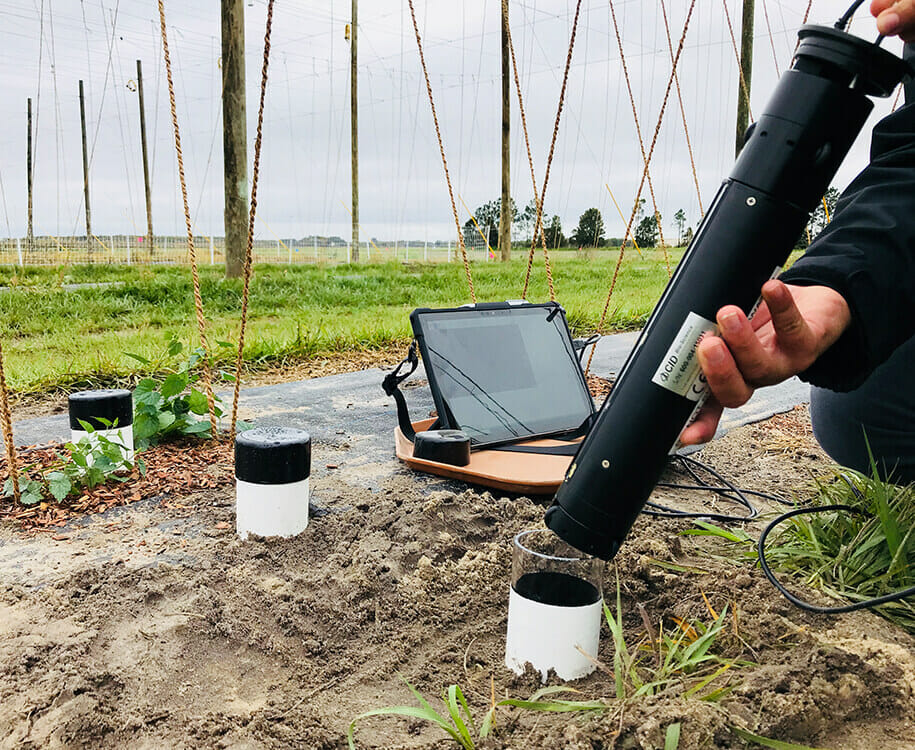
Selecting the right root imager is ultimately about aligning technical specifications with biological questions. If your study emphasizes deep rooting patterns and long-term monitoring, a robust system like the CI-600 In-Situ Root Imager is a strong fit. If your priority is high replication, minimal disturbance, or work in constrained environments, the CI-602 Narrow Gauge Root Imager offers a practical alternative.
Both systems support non-destructive, repeatable measurements that are difficult or impossible to achieve with traditional root excavation. That alone often justifies the investment, especially in studies where temporal dynamics matter.
Conclusion: Making a Confident Choice
A root imager is more than a piece of hardware. It becomes part of your experimental design. Thinking carefully about depth, resolution, cover, and cost upfront helps avoid compromises later.
CID Bio-Science has built its root imaging systems around the realities of field and lab research, not just ideal conditions. If you are planning a new study or upgrading existing methods, take a closer look at the CI-600 In-Situ Root Imager and the CI-602 Narrow Gauge Root Imager. Both offer reliable, high-quality root imaging that supports serious research without unnecessary complexity. Exploring these options is a practical next step toward collecting better root data with confidence.
Frequently Asked Questions
What Is the Main Difference Between the CI-600 and CI-602 Root Imager?
The CI-600 uses a wider tube that supports deeper installation and greater image area, while the CI-602 uses a narrow gauge tube designed for minimal soil disturbance and high replication.
How Often Can Roots Be Imaged With a Minirhizotron System?
Roots can be imaged as frequently as needed, from daily to seasonal intervals, depending on research goals and logistical constraints.
Is Root Imaging Suitable for Both Field and Controlled Environment Studies?
Yes. Root imagers from CID Bio-Science are used in field plots, greenhouses, growth chambers, and ecological sites, provided installation is done correctly.
Related Products
Most Popular Articles
- Transpiration in Plants: Its Importance and Applications
- Leaf Area – How & Why Measuring Leaf Area…
- How to Analyze Photosynthesis in Plants: Methods and Tools
- Plant Respiration: Its Importance and Applications
- The Forest Canopy: Structure, Roles & Measurement
- Stomatal Conductance: Functions, Measurement, and…
- Forest & Plant Canopy Analysis – Tools…
- Root Respiration: Importance and Applications
- 50 Best Universities for Plant Science
- The Importance of Leaf Area Index (LAI) in…