Selecting Leaf Area, Canopy, and Spectral Instruments for Major Crop Types

Scott Trimble

January 6, 2026 at 6:04 pm | Updated January 6, 2026 at 6:04 pm | 6 min read
Choosing the right crop measurement instruments is one of the most important decisions researchers make before beginning a new project. Each crop type presents its own structural, physiological, and environmental challenges.
Leaf size, canopy density, growth habit, and pigment composition all influence what tools will deliver accurate and repeatable data.
CID Bio-Science designs instruments that adapt to these differences, which makes selection easier once you understand how each device aligns with specific crop characteristics. This article breaks down practical choices for leaf area, canopy, and spectral measurements across major crop groups.
Subscribe to receive our monthly round-up of articles.
Understanding Variability Across Crop Types
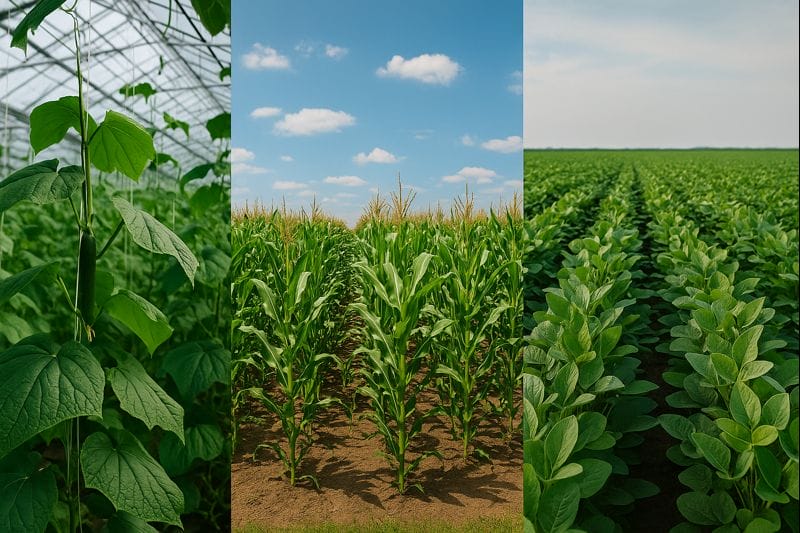
Crop architecture plays a central role in determining which crop measurement instruments are appropriate.
Broadleaf species like soybean and cotton are straightforward to measure because their leaves flatten easily and scanners capture their shape with precision. Narrow leaf crops such as wheat or barley require instruments capable of handling long and thin blades without distortion.
Crops with tall or complex canopies such as maize, sorghum, or orchard species demand tools that assess canopy level behavior instead of focusing only on individual leaves.
Pigment variability also matters. Stress responses appear differently in cereals than in fruit trees, and spectral shifts occur at different wavelengths depending on crop physiology. Instruments that allow customizable indices or raw spectra analysis offer more flexibility than those that only output predefined metrics.
By matching instrument capability to crop structure and physiology, researchers can avoid poor fits and gather cleaner data.
Leaf Area Instruments for Broadleaf and Narrow Leaf Crops
Leaf area data remains one of the most fundamental plant measurements. It links directly to photosynthetic potential, crop vigor, and yield development. CID Bio-Science provides two core tools for this task, each with use cases across crop types.
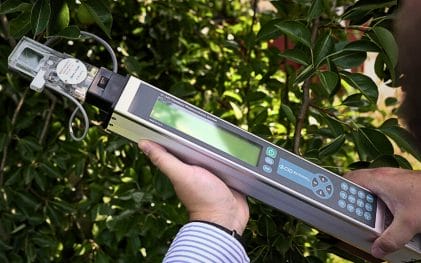
CI-203 Handheld Laser Leaf Area Meter
The CI-203 is ideal for large leaf crops such as tobacco, cotton, sunflower, and many vegetable crops. Its sweeping laser measurement system records area, width, length, perimeter, shape factor, ratio, and void count.
It stores virtually unlimited data on an SD card and requires no calibration in the field. It also flattens curled leaves for higher accuracy. These traits make it a strong choice for crops with leaf textures that do not always lie flat.
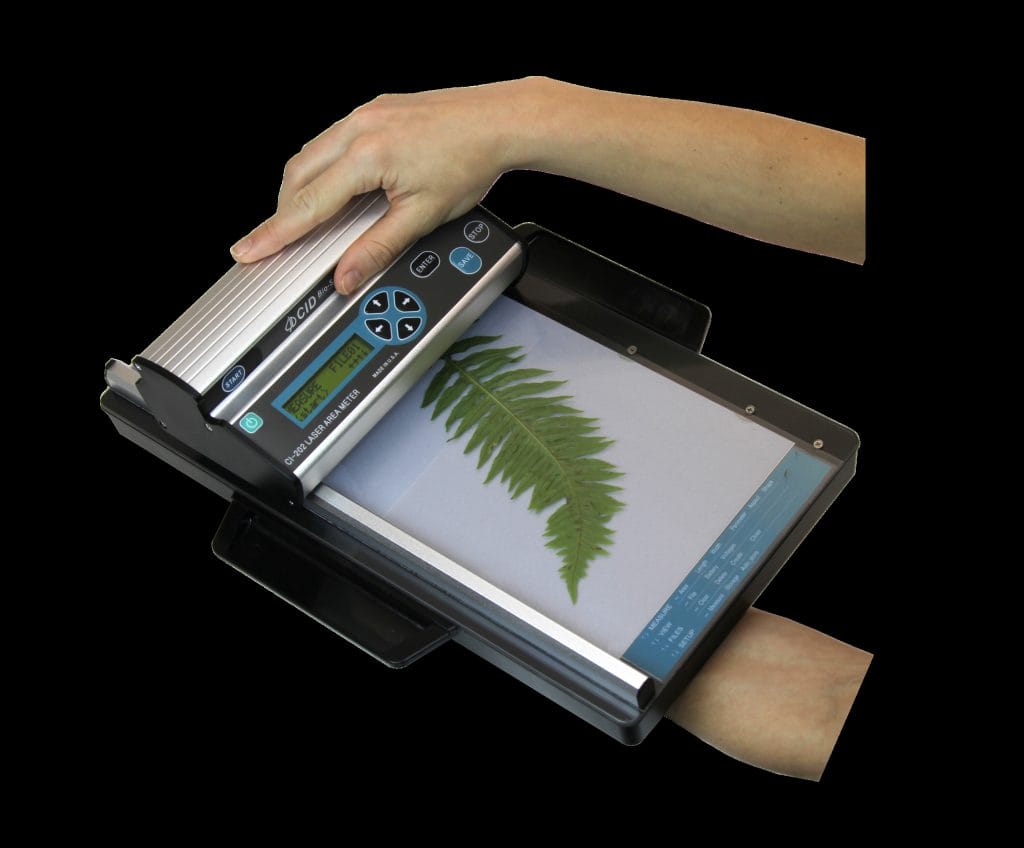
CI-202 Portable Laser Leaf Area Meter
For researchers working with cereals, grasses, or smaller leaves, the CI-202 offers a compact scanning surface with a .01 cm² resolution. Because it stores more than 8000 measurements and is lightweight, it is commonly used in breeding trials or dense field plots where samples must be collected rapidly. It also flattens narrow or curled blades, ensuring consistent results across many replicates.
Choosing Between the Two
Use the CI-203 when:
-
Leaves exceed 150 mm width
-
Curved leaves need flattening during scans
-
You need multipurpose output including shape factors and void counts
Use the CI-202 when:
-
Working with narrow or linear leaves
-
Collecting high volume measurements in small plots
-
You need a compact, self contained scanner with built in data logging
Both are non destructive and portable, which makes them effective crop measurement instruments for breeding programs, physiology trials, and ecological studies.
Canopy Instruments for Row Crops, Orchards, and Dense Vegetation
Canopy level traits inform yield potential, light distribution, and management decisions. Leaf area index, gap fraction, radiation distribution, and canopy structure influence how efficiently crops use available resources.
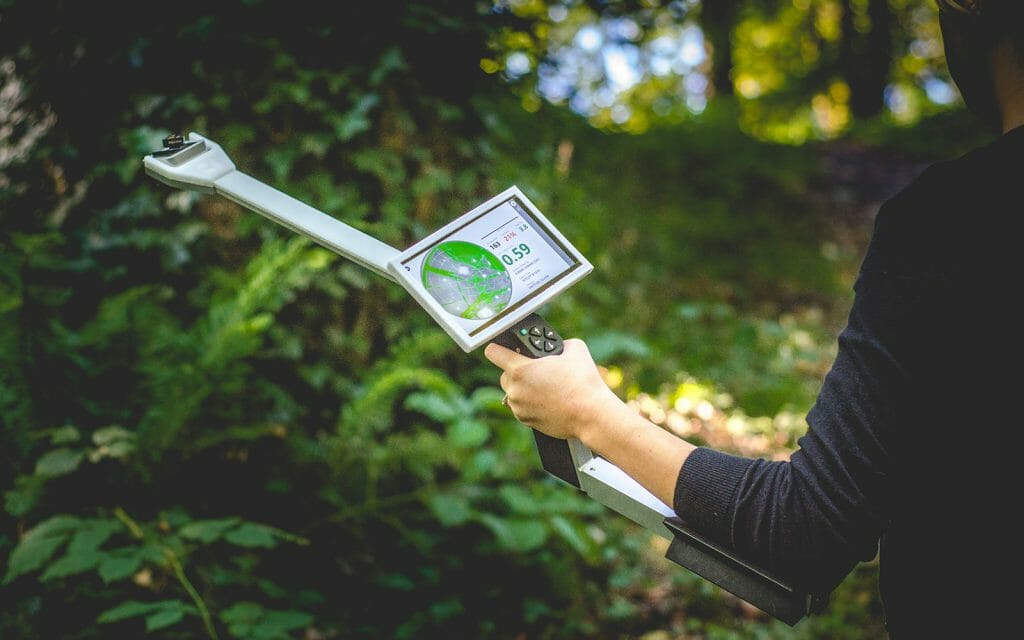
CI-110 Plant Canopy Imager
The CI-110 captures hemispherical canopy images and calculates LAI, gap fraction, extinction coefficients, leaf angle distribution, and sunfleck patterns.
Because it performs measurements under any sky condition and uses a self leveling digital camera, it adapts well to uneven field terrain. It also includes PAR sensors that generate alternative LAI estimates when image based measurements are not ideal.
Best Uses by Crop Type
Row crops such as maize, sorghum, and sunflower benefit from detailed LAI assessments across plant density treatments. Orchard crops including apples, pears, and citrus require canopy imaging at different heights and angles, which the CI-110 handles well due to adjustable focus and wide viewing angle.
Vegetable crops with mixed canopy layers, such as tomatoes or peppers, gain value from side angle imaging and the ability to use thresholding methods tailored to different leaf structures.
The ability to store raw images for later analysis also supports remote and long term trials.
Spectral Instruments for Monitoring Crop Stress and Pigment Changes
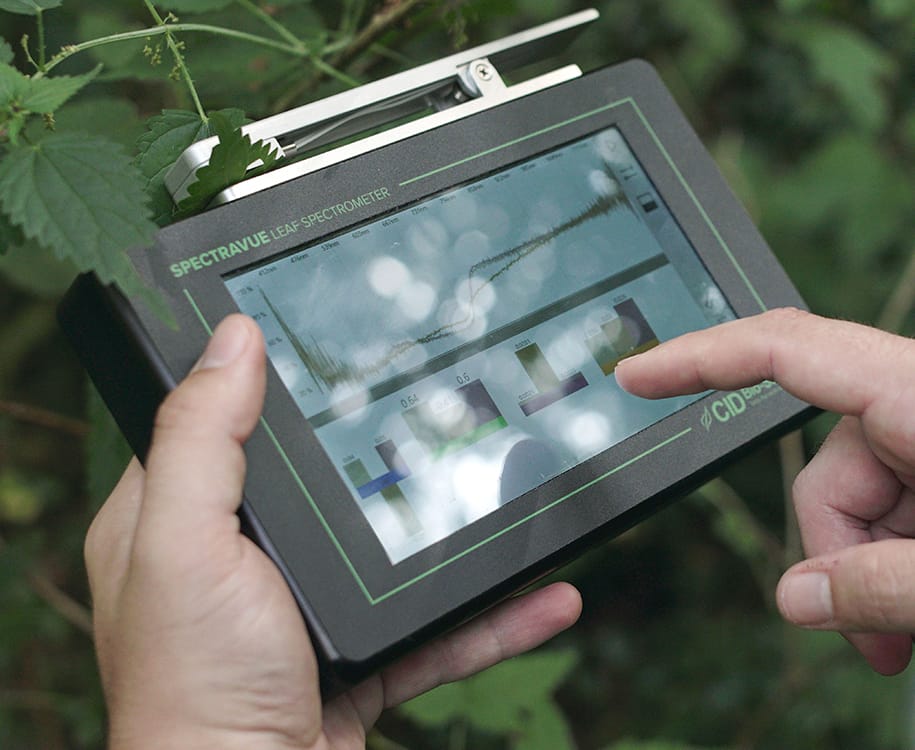
Spectral data allows rapid assessment of stress, nutrient status, pigment concentration, and environmental responses. Crop differences affect reflectance behavior, which means flexibility in wavelength analysis is key.
CI-710s SpectraVue Leaf Spectrometer
The CI-710s measures reflectance, absorbance, and transmittance from 360 to 1100 nm. It provides raw spectra, customizable indices, and onboard analysis, which makes it adaptable across crop types with varying pigment signatures.
Whether examining anthocyanin shifts in fruit crops, nitrogen effects in cereals, or stress indicators in leafy vegetables, this instrument offers precision without requiring lab conditions.
Crop Specific Benefits
- Cereals: Narrow leaves reflect light differently at specific angles, and the CI-710s can capture those signals with high resolution.
- Leafy vegetables: Rapid assessment of nitrogen and chlorophyll levels helps guide nutrient management during fast growth cycles.
- Fruit trees: Stress detection across seasons depends on subtle pigment changes that customizable indices can isolate.
- Oilseed crops: Changes in cuticle thickness and pigment composition show up clearly in NIR regions covered by the CI-710s.
Its portability also makes it a suitable choice for large field trials where repeated measurements are necessary.
Integrating Leaf, Canopy, and Spectral Data by Crop Type
Combined measurement strategies strengthen crop studies by capturing different layers of plant behavior.
For cereals and grasses
-
Use CI-202 for precise narrow leaf area measurements
-
Use CI-110 for canopy density and LAI patterns across planting densities
-
Use CI-710s for nitrogen and stress mapping
For broadleaf crops
-
Use CI-203 for large leaf area monitoring
-
Use CI-110 for canopy structural changes through development
-
Use CI-710s for tracking pigment and nutrient responses
For orchards and perennial crops
-
Use CI-203 or CI-202 depending on leaf size
-
Use CI-110 for multi height canopy imaging
-
Use CI-710s for long term pigment and stress tracking
For vegetable crops
-
Combine CI-203 leaf data with CI-710s spectral measurements to manage stress
-
Use CI-110 to evaluate canopy closure during peak growth periods
Matching crop measurement instruments to crop architecture improves dataset completeness and supports stronger agronomic conclusions.
Practical Considerations Before Selecting Instruments
Before choosing tools, researchers should evaluate:
-
Leaf size and shape
-
Canopy complexity
-
Need for nondestructive methods
-
Volume of measurements required
-
Environmental variability across field sites
-
Whether spectral, canopy, or leaf traits drive the research objectives
CID Bio-Science instruments cover these needs by offering portability, accuracy, and flexible data output.
Conclusion: Build a Toolkit That Matches Your Crops
Selecting the right crop measurement instruments begins with understanding plant structure and choosing tools that complement those traits. Leaf area meters, canopy imagers, and spectral sensors each reveal different layers of crop performance. When combined, they offer a complete view of plant development, stress, and productivity.
To equip your research program with reliable tools designed for real crop diversity, explore the full line of CID Bio-Science instruments at cid-inc.com or connect with our team for guidance on matching instruments to your specific crops.
FAQs
How do I know which leaf area instrument is best for my crop type?
Leaf size and shape are the biggest indicators. Broadleaf crops generally pair well with the CI-203 because it handles large or curled leaves easily. Narrow leaf cereals and grasses fit the CI-202 more naturally because it offers high resolution scanning for long and thin blades.
Can the same canopy instrument be used for both row crops and orchard systems?
Yes. The CI-110 Plant Canopy Imager adapts well across different canopy architectures. Its adjustable focus, wide angle camera, and PAR sensors allow it to capture structural data in tall orchard canopies, row crops, and mixed vegetable canopies.
When should I use spectral instruments instead of leaf area or canopy tools?
Spectral instruments are best when you need information about pigments, nutrient status, or stress before visual symptoms appear. Tools like the CI-710s provide detailed reflectance and absorbance data across a wide wavelength range, which helps diagnose issues that leaf area or canopy measurements cannot directly detect.
Can I combine leaf area, canopy, and spectral data in the same study?
Yes. Many researchers integrate all three because each measurement type reveals a different layer of plant behavior. Leaf area shows growth, canopy tools reveal structure and light use, and spectral data detects stress or pigment shifts. Together, they provide a more complete understanding of crop performance.
Are these instruments suitable for large breeding programs?
Absolutely. CID Bio-Science instruments are designed for rapid, nondestructive field use, long battery life, and efficient data storage. Tools like the CI-202, CI-203, and CI-710s are commonly used in breeding stations where high throughput measurements are required.
What if my field conditions vary widely throughout the season?
CID instruments are built for real field environments. For example, the CI-110 handles any sky condition, the CI-203 and CI-202 require no calibration, and the CI-710s provides consistent spectral readings across diverse light conditions using controlled measurement geometry.
Related Products
Most Popular Articles
- Transpiration in Plants: Its Importance and Applications
- Leaf Area – How & Why Measuring Leaf Area…
- How to Analyze Photosynthesis in Plants: Methods and Tools
- Plant Respiration: Its Importance and Applications
- The Forest Canopy: Structure, Roles & Measurement
- Stomatal Conductance: Functions, Measurement, and…
- Forest & Plant Canopy Analysis – Tools…
- Root Respiration: Importance and Applications
- 50 Best Universities for Plant Science
- The Importance of Leaf Area Index (LAI) in…