Why Does Instrument Price Vary So Much Between Models?


Scott Trimble

April 9, 2026 at 6:32 pm | Updated April 9, 2026 at 6:32 pm | 6 min read
When researchers compare instrument price across plant science tools, the spread can look surprisingly wide. One model may seem straightforward and affordable, while another costs much more even though both belong to the same general category. In practice, instrument price reflects far more than the basic act of taking a measurement. It usually tracks the complexity of the measurement itself, the number of sensors involved, the precision required, the software built into the device, and how much flexibility the instrument gives you in the field.
CID Bio-Science’s lineup is a good example of this. Some instruments are designed for fast, focused measurements, while others combine multiple sensing systems, onboard analysis, and modular hardware to support much broader research demands.
Price usually follows measurement complexity
A simple way to think about instrument price is to ask a basic question: what exactly is the instrument being asked to do?
Subscribe to the CID Bio-Science Weekly article series.
By submitting this form, you are consenting to receive marketing emails from: . You can revoke your consent to receive emails at any time by using the SafeUnsubscribe® link, found at the bottom of every email. Emails are serviced by Constant Contact
A handheld leaf area meter such as the CI-203 is built to deliver quick, non-destructive leaf measurements with one-touch operation. It captures parameters like area, width, length, perimeter, shape factor, ratio, and void count, while remaining lightweight and easy to use in the field. That is a highly valuable tool, but it is also focused on a specific measurement task.
The CI-202 occupies a similar space. It measures area, length, width, and perimeter, calculates shape factor and ratio, and stores thousands of measurements in a self-contained, battery-powered system. It is durable, field-ready, and intentionally straightforward. Instruments like these are priced around targeted utility. You are paying for reliable measurement, portability, and speed, not for a long list of environmental controls or multi-system analysis.
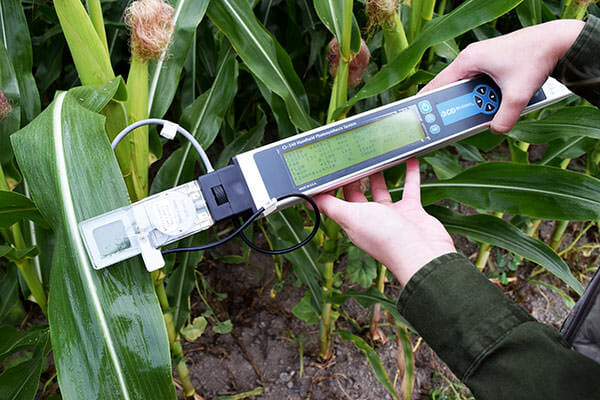
Now compare that with the CI-340 Handheld Photosynthesis System. This is not just a scanner or a meter. It measures photosynthesis, respiration, transpiration, stomatal conductance, PAR, and internal CO2. It also supports optional modules for light control, temperature control, H2O and CO2 control, and chlorophyll fluorescence. On top of that, it accommodates ten customized chambers for different leaf types and experimental setups. A system like that carries a higher instrument price because it solves a much more demanding research problem.
More hardware means more capability
One major driver of instrument price is hardware depth. Instruments that require more sensors, more optical components, more calibration stability, and more environmental control naturally cost more to design and build.
For example, the CI-110 Plant Canopy Imager combines hemispherical canopy photography with image analysis and PAR measurement. It includes a self-leveling digital camera, 24 photodiodes, GPS support across multiple satellite constellations, an internal compass, a 7-inch touchscreen, and filter options for different daylight conditions. That is a very different hardware package from a compact leaf area meter. The price difference reflects the fact that the instrument is collecting more data types and processing more variables in one workflow.
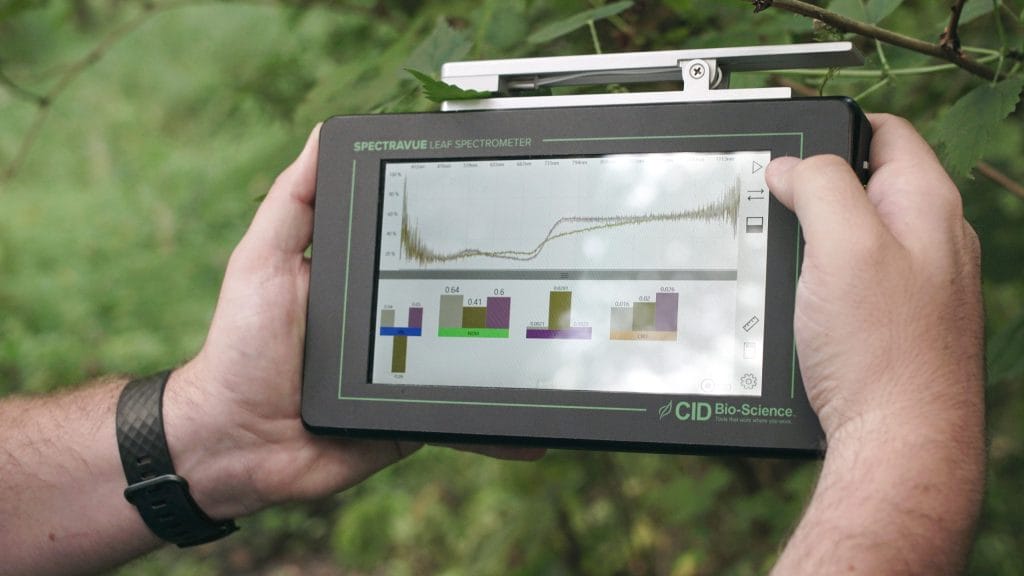
The same pattern appears with the CI-710s SpectraVue Leaf Spectrometer. This instrument works across a 360 to 1100 nm wavelength range, measures reflectance, transmittance, and absorbance, and supports onboard analysis for pigment, nutrient, and stress-related studies. It also offers raw spectra for chemometric modeling. That kind of spectroscopic capability requires more advanced optics, detector design, signal handling, and software integration than a tool built for geometric measurements alone. A higher instrument price in that case is tied directly to the sophistication of the sensing platform.
Software and onboard analysis matter more than many buyers expect
Researchers sometimes focus on physical hardware and overlook the value of software. But software is often one of the biggest reasons two instruments in the same general category can be priced very differently.
CID Bio-Science instruments are built to do more than collect raw numbers.
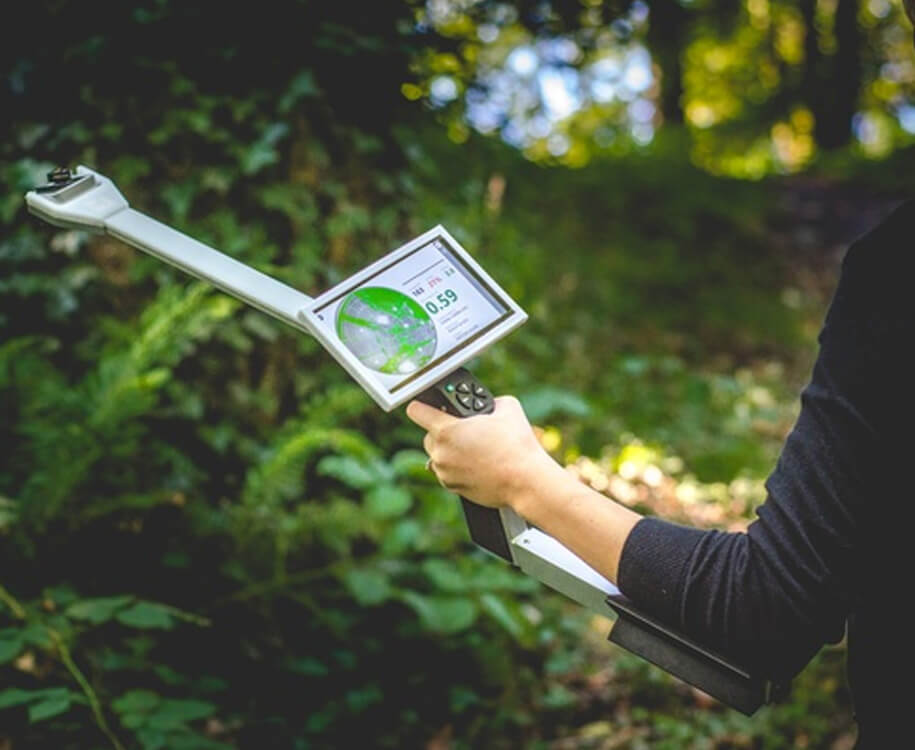
The CI-110 can calculate leaf area index, canopy gap fraction distribution, leaf angle distribution, extinction coefficients, and sunflecks. It also supports selectable thresholding methods and field-visible image and data review. That means researchers can move from capture to interpretation much faster, without depending on a patchwork workflow of third-party tools.
The CI-710s follows the same logic. It includes a full suite of built-in analysis software and lets users work with preloaded indices or create custom indices in the field. That is a serious productivity advantage.
When an instrument can analyze data at the point of collection, it reduces delay, lowers handling errors, and improves decision-making during experiments. Those gains are part of the product value, and they influence instrument price.
Modularity changes the pricing conversation
Another reason instrument price varies so much is that some systems are modular by design.
The CI-340 is a clear example.
A lab may start with the core handheld photosynthesis system, then add modules for light-response curves, temperature manipulation, H2O and CO2 control, or simultaneous chlorophyll fluorescence. It can also use different chambers depending on leaf type, including broad leaves, conifer needles, large leaves, and cacti.
This approach is useful because researchers do not have to buy a one-size-fits-all package that includes features they will never use. Instead, they can match the system to their application.
That flexibility affects price in two ways:
- The entry point can remain more manageable than a fully loaded system
- The total cost can scale upward as research needs become more advanced
This is actually one of the more practical differences between CID Bio-Science and many competing setups.
A lower-priced instrument is not always the better value if it locks the user into a narrow workflow. Likewise, a higher-priced system may be the smarter buy if it can expand with your research instead of being replaced later.
Durability, portability, and field use also carry value
Price is not only about what an instrument measures. It is also about where and how it works.
CID Bio-Science tools are built for field and lab use, which adds real engineering demands. The CI-202 is battery-powered, self-contained, and designed for field collection. The CI-203 offers single-handed operation, GPS tagging, SD card storage, and a lightweight build. The CI-110 is designed to perform under any sky condition. The CI-710s is portable enough for remote operation while still supporting serious spectral work.
That matters because dependable field performance is not a minor feature. For many researchers, it is the difference between collecting usable data in real conditions and losing an entire sampling window.
How to think about instrument price more realistically
Instead of asking why one model costs more than another, a better question is this: what research capability are you actually buying?
A useful checklist looks like this:
- What parameters does the instrument measure?
- Does it combine multiple measurement modes?
- Does it include onboard analysis and data storage?
- Can it be used in the field without extra equipment?
- Is it modular or expandable for future experiments?
- Does it reduce labor, training time, or repeat measurements?
Once you frame instrument price around capability, workflow, and longevity, the differences between models start to make sense.
A better comparison is value per research outcome
This is where CID Bio-Science stands out. The product range is broad enough that researchers can choose a focused tool like the CI-202 or CI-203 for efficient leaf measurements, or move into more advanced systems like the CI-110, CI-340, or CI-710s when the work demands canopy analysis, gas exchange, or spectral data.
That kind of lineup helps users avoid overbuying or underbuying. It also makes pricing more rational because each model is built around a clear measurement job instead of inflated feature lists.
Talk to CID Bio-Science about the right fit
If you are comparing instrument price across models, focus on the total research value, not just the upfront number. CID Bio-Science offers instruments that scale from fast, targeted measurements to advanced physiological and spectral analysis, so you can choose a system that matches your actual work.
For help selecting the right instrument for your application, contact CID Bio-Science and discuss your measurement goals, field conditions, and data requirements with the team. The right fit usually saves more time and money than simply choosing the lowest-priced option.
Related Products
Most Popular Articles
- Transpiration in Plants: Its Importance and Applications
- Leaf Area – How & Why Measuring Leaf Area…
- How to Analyze Photosynthesis in Plants: Methods and Tools
- Plant Respiration: Its Importance and Applications
- The Forest Canopy: Structure, Roles & Measurement
- Stomatal Conductance: Functions, Measurement, and…
- Forest & Plant Canopy Analysis – Tools…
- Root Respiration: Importance and Applications
- The Importance of Leaf Area Index (LAI) in…
- 50 Best Universities for Plant Science
Related Reading