What’s the Difference Between Gap‑Fraction and PAR Methods in Canopy Analysis?

Scott Trimble

April 9, 2026 at 6:45 pm | Updated April 9, 2026 at 6:45 pm | 5 min read
When researchers compare canopy analysis methods, the conversation usually comes down to one practical question: do you want to estimate canopy structure from images of the canopy itself, or from the light that makes it through the canopy? That is the core difference between gap-fraction and PAR methods.
Both are used to estimate leaf area index, or LAI, and both can be useful in the right setting. But they do not describe the canopy in exactly the same way, and they do not ask the same thing of your field workflow. CID Bio-Science’s CI-110 Plant Canopy Imager stands out because it supports both approaches in one instrument, which gives researchers more flexibility than systems limited to a single method.
Start with what both methods are trying to do
At a high level, both methods are trying to characterize canopy structure, especially LAI, which is commonly used to describe how much leaf surface area is present over a unit of ground area. In practice, researchers use LAI and related canopy metrics to understand crop vigor, light interception, canopy development, treatment effects, and stand uniformity.
Subscribe to the CID Bio-Science Weekly article series.
By submitting this form, you are consenting to receive marketing emails from: . You can revoke your consent to receive emails at any time by using the SafeUnsubscribe® link, found at the bottom of every email. Emails are serviced by Constant Contact
The difference is in how the instrument gets there. One method analyzes visible sky gaps in a canopy image. The other measures photosynthetically active radiation, or PAR, passing through the canopy.
What gap-fraction methods actually measure
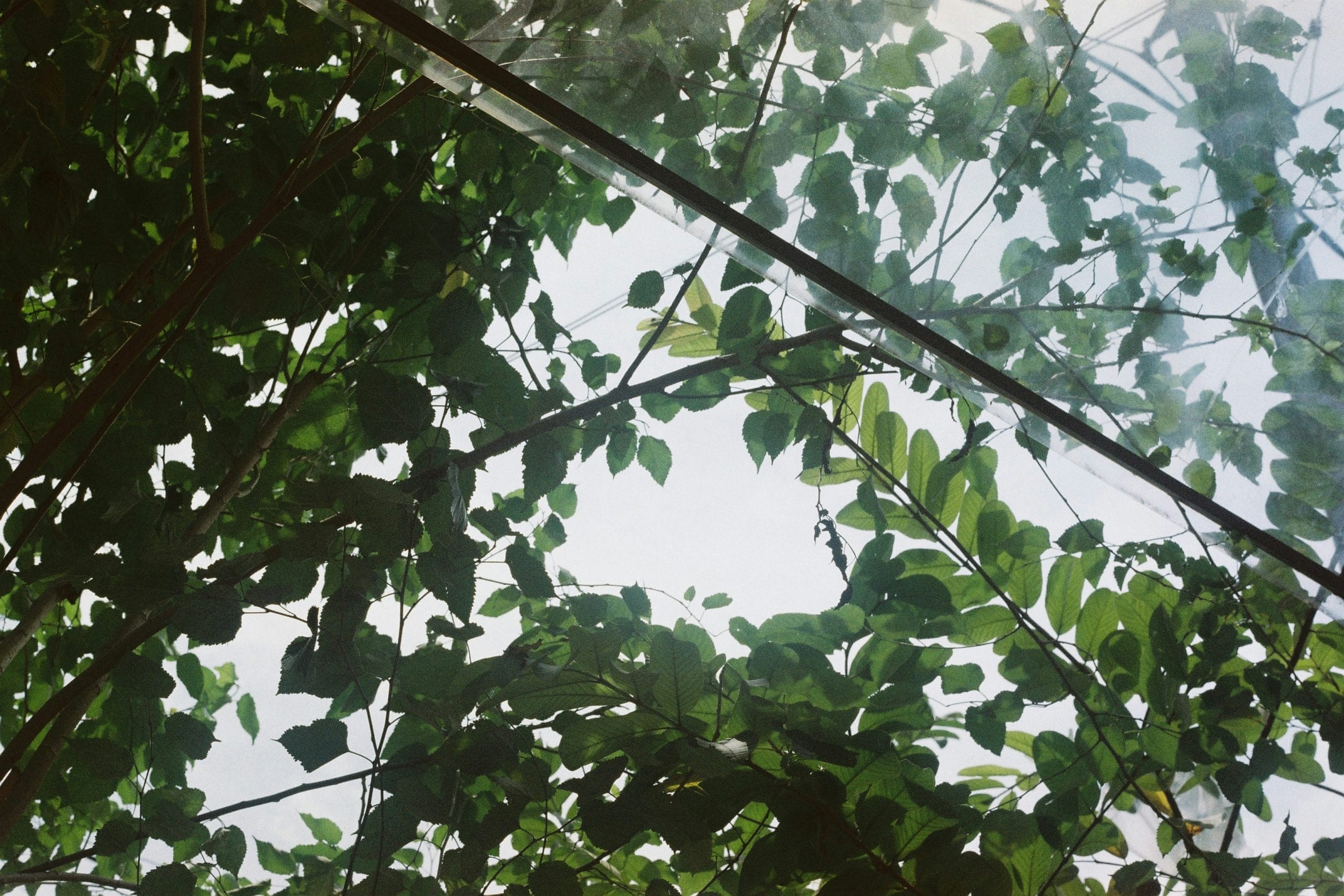
Gap-fraction analysis is based on canopy openness. A hemispherical image is taken from beneath the canopy, then software divides the image into zenith and azimuth sectors and calculates how much sky is visible in each sector.
CID describes this as assigning a value between 0 and 1, where 0 means no visible sky and 1 means the area is entirely open sky. From those sector-by-sector sky fractions, the software computes canopy transmission, sky view factor, leaf angle related metrics, and extinction coefficients.
That matters because gap-fraction methods do more than produce a single LAI number. They can also reveal canopy gap distribution, leaf angle distribution, and extinction behavior, which gives researchers a fuller picture of canopy architecture.
The CI-110 documentation specifically highlights these outputs, along with user-selectable zenith and azimuth ranges and thresholding methods such as Otsu and entropy crossover. That level of control is valuable when you want to tailor analysis to crop type, canopy height, or site conditions instead of accepting a one-size-fits-all output.
What PAR methods actually measure
PAR methods work from transmitted light rather than image pixels. Instead of asking how much sky is visible, they ask how much photosynthetically active radiation reaches a point beneath the canopy. As the canopy intercepts light, transmitted PAR changes. That attenuation can then be used to estimate LAI or characterize light environments within the stand.
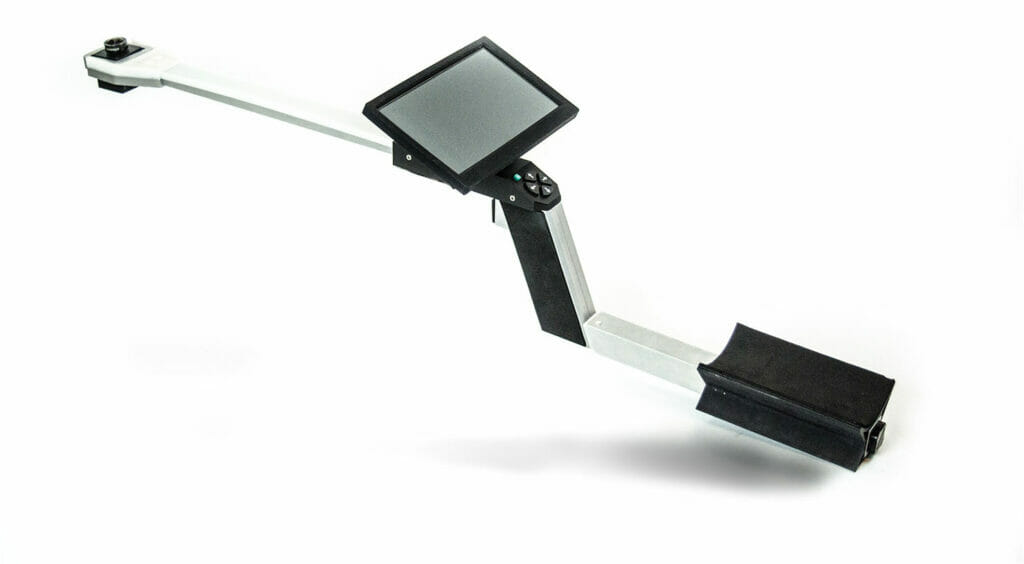
The CI-110 includes 24 PAR photodiodes in the arm of the instrument, which CID says can be used for an alternative LAI measurement, for assessing current radiation levels, and for evaluating sunflecks.
This makes PAR especially useful when your question is tied closely to canopy light climate. If you care about radiation penetration, understory light availability, or sunfleck dynamics, PAR is not just a workaround for LAI. It is directly relevant to the process you are studying. In crop trials, for example, that can be helpful when you want to connect canopy structure to interception efficiency rather than only describe canopy openness visually.
The practical difference in the field
The cleanest way to think about gap-fraction vs PAR methods is this:
-
Gap-fraction methods are image-driven
-
PAR methods are light-driven
-
Gap-fraction is often stronger for structural interpretation
-
PAR is often stronger for direct radiation context
-
The best choice depends on canopy type, field conditions, and the question you are asking
Gap-fraction workflows are attractive because they can be highly informative without requiring above-canopy reference readings in the CI-110’s gap-fraction LAI mode. That simplifies logistics, especially when moving through many plots or working in places where separate reference measurements are inconvenient.
CID explicitly notes that no above-canopy reference readings are required for gap-fraction LAI on the CI-110.
PAR methods, on the other hand, can be appealing when you want fast light-based readings and when the changing light environment is part of the dataset you want to capture. But because PAR is tied directly to incident light, the field protocol matters. Shifting sun angle, passing clouds, and timing can influence readings, so operators typically need to be disciplined about measurement consistency.
When gap-fraction has the edge
Gap-fraction tends to be the better fit when you need a richer structural readout from a canopy. Since the method is image-based, it can support more nuanced canopy interpretation than a single transmitted-light value alone. That is one reason hemispherical imaging remains useful in forestry, ecology, and crop phenotyping. CID’s implementation adds practical benefits such as a self-leveling digital camera, a 150° field of view, visible in-field images, included neutral density filters, and software controls for masking and thresholding. Those details reduce friction in real field conditions and make the method easier to use well.
There is one important caveat. The CI-110 manual notes that the gap-fraction computation assumes random leaf distribution, and non-uniform canopies with pronounced gaps can lead to overestimation of transmission and underestimation of LAI. CID also notes that grape canopies on vertical trellises are not accurately measured with the gap-fraction approach. That kind of transparency matters, because it shows the method is powerful, but not universal.
When PAR has the edge
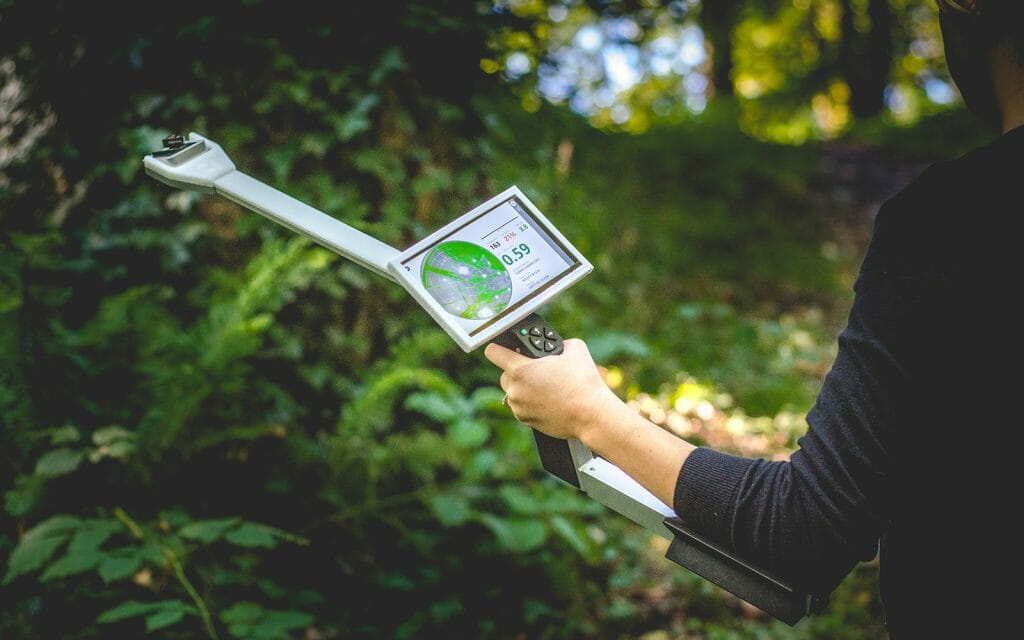
PAR methods are strong when the study is fundamentally about light penetration through the canopy. In those cases, transmitted radiation is not just a route to LAI. It is part of the biological story. That includes work on shading, understory light environments, canopy interception, and sunfleck behavior. With 24 photodiodes built into the CI-110 arm, CID gives users the ability to collect that information without switching to a separate instrument, which is a meaningful workflow advantage.
Why having both methods in one instrument matters
This is where CID Bio-Science has a strong argument. A lot of canopy workflows force a choice early. You commit to an imaging workflow or a light-based workflow, and if the study evolves, you may need extra equipment or a second pass through the field. The CI-110 is more flexible. It lets researchers use gap-fraction analysis when they want canopy architecture and image-based LAI, then use PAR when they want light environment data or an alternative LAI estimate. In other words, it matches the way research actually changes once a project is underway.
That flexibility is probably the simplest answer to the title question. Gap-fraction and PAR methods are not rivals in the abstract. They are different tools for describing the same canopy from different angles. The real advantage is having access to both without adding complexity, and that is exactly where the CI-110 is well positioned.
Takeaway
If your work depends on reliable canopy analysis methods, take a closer look at the CID Bio-Science CI-110 Plant Canopy Imager. It gives you both gap-fraction and PAR workflows in one field-ready platform, along with fast in-field analysis, flexible software controls, and canopy metrics that go well beyond a single LAI value.
Related Products
Most Popular Articles
- Transpiration in Plants: Its Importance and Applications
- Leaf Area – How & Why Measuring Leaf Area…
- How to Analyze Photosynthesis in Plants: Methods and Tools
- Plant Respiration: Its Importance and Applications
- The Forest Canopy: Structure, Roles & Measurement
- Stomatal Conductance: Functions, Measurement, and…
- Forest & Plant Canopy Analysis – Tools…
- Root Respiration: Importance and Applications
- The Importance of Leaf Area Index (LAI) in…
- 50 Best Universities for Plant Science
Related Reading