Selecting Instruments for Teaching vs Research Labs: Key Differences

Scott Trimble

January 5, 2026 at 7:51 pm | Updated January 5, 2026 at 7:51 pm | 5 min read
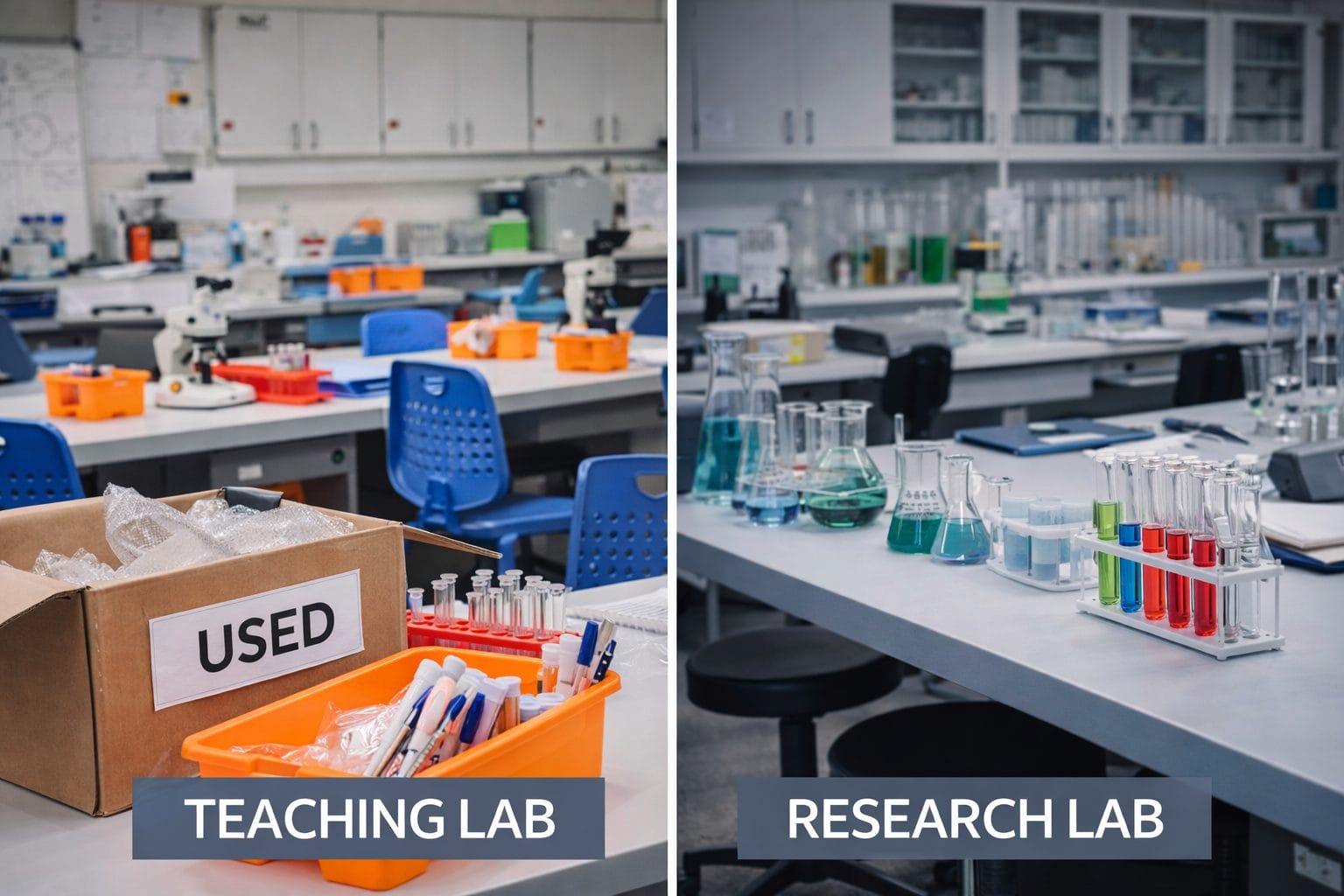
Choosing the right tools for a laboratory depends heavily on whether the space is designed for instruction or for active research. While both environments may study the same biological processes, their priorities differ. Teaching labs focus on clarity, durability, and repeatable demonstrations. Research labs demand flexibility, data depth, and field readiness. Understanding these differences is essential when selecting teaching vs research lab instruments, especially in plant science where measurements often happen outside controlled indoor spaces.
CID Bio-Science has built its instrument line with this distinction in mind. Many of its systems work well in both settings, but they shine for different reasons depending on how they are used.
Below is a practical breakdown of how instrument needs differ between teaching and research labs, with examples drawn from common plant science workflows.
Subscribe to the CID Bio-Science Weekly article series.
By submitting this form, you are consenting to receive marketing emails from: . You can revoke your consent to receive emails at any time by using the SafeUnsubscribe® link, found at the bottom of every email. Emails are serviced by Constant Contact
Core Differences Between Teaching and Research Labs
Before looking at individual instruments, it helps to clarify how the two environments differ in practice.
Teaching labs typically prioritize:
-
Simple setup and operation
-
Clear visual feedback for students
-
Rugged design that withstands frequent handling
-
Consistent results across repeated use
-
Short learning curves
Research labs typically prioritize:
-
Measurement precision and resolution
-
Configurability and modular design
-
Advanced data export and analysis options
-
Field portability
-
Support for experimental variability
The same instrument can often serve both roles, but how well it fits depends on which of these priorities matter most.
Leaf Area Measurement in Instructional Settings
Leaf area is one of the most approachable plant traits to teach. Students quickly grasp how size, shape, and perimeter relate to physiology and growth.
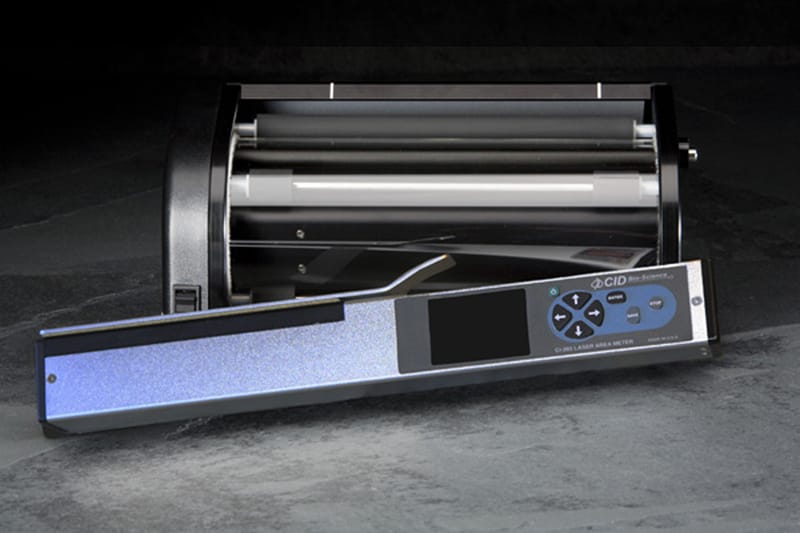
For teaching labs, handheld laser leaf area meters are ideal. Instruments like the CI-203 allow students to scan a leaf in seconds and immediately see results on screen. Because the measurements are non-destructive and require no calibration, instructors can focus on concepts rather than troubleshooting. The graphic outline display also helps students visually confirm that the scan was successful, reinforcing confidence in the data.
The CI-202 serves a similar role but leans slightly more toward structured lab exercises. Its straightforward interface and onboard storage make it easy to run repeated student labs without managing external devices. Resolution is high enough to support detailed comparisons while remaining simple to operate .
In research labs, these same instruments support high-throughput sampling across treatments, genotypes, or time points. Conveyor attachments and large data capacity allow researchers to scale up measurements without sacrificing consistency.
Photosynthesis Systems for Teaching vs Research
Gas exchange measurement is often where the divide between teaching and research becomes most visible.
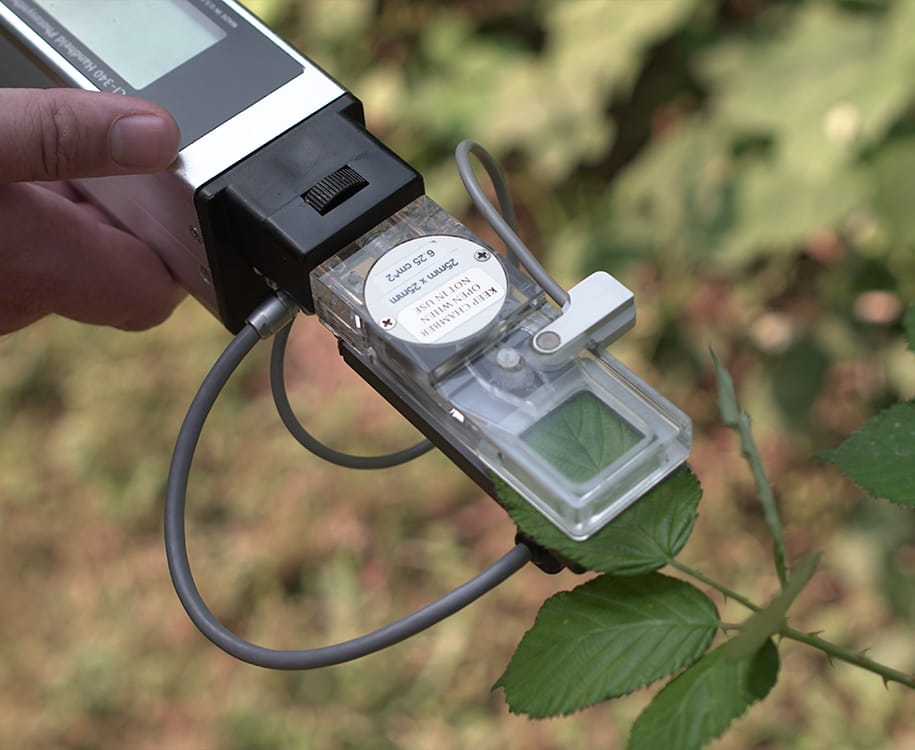
In teaching labs, the goal is to show how photosynthesis responds to light, temperature, or water stress. A portable system like the CI-340 allows instructors to demonstrate these relationships clearly without overwhelming students. Single-handed operation and direct chamber connections reduce setup time, making it feasible to run demonstrations within a class period.
For research labs, the same system becomes a modular platform. Optional control modules allow precise manipulation of CO2, humidity, light intensity, and temperature. Multiple chamber designs support diverse plant types, from broadleaf crops to conifers and cacti. This flexibility is critical when experiments move beyond demonstration into hypothesis testing and field deployment.
This dual-use design is a good example of how teaching vs research lab instruments can overlap when built thoughtfully.
Canopy Analysis and Class Demonstrations
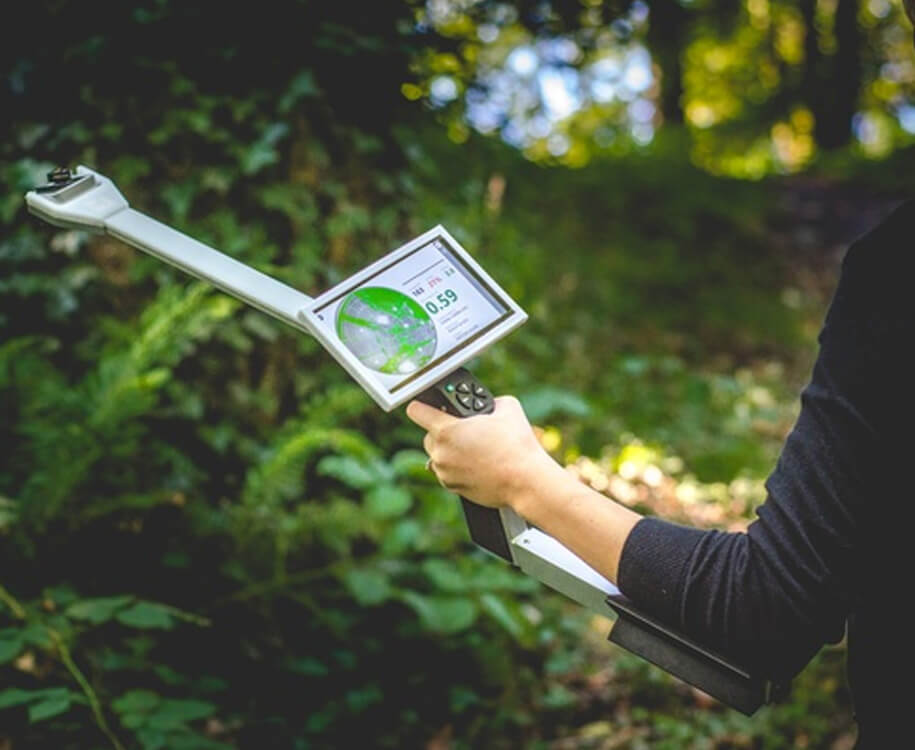
Canopy structure and light interception are complex topics that benefit from strong visual tools. The CI-110 Plant Canopy Imager works especially well in teaching labs because it turns abstract canopy metrics into images students can interpret immediately. Hemispherical photography paired with real-time Leaf Area Index calculations bridges the gap between theory and observation.
Instructors can take students outdoors, collect canopy images, and discuss how gap fraction, sunflecks, and PAR relate to plant productivity. The self-leveling camera and touchscreen interface reduce technical barriers, which is important when many users are learning simultaneously.
In research settings, the CI-110 supports long-term monitoring across sites and seasons. GPS tagging, selectable thresholding methods, and robust data storage allow researchers to standardize measurements and integrate canopy data into larger ecological models.
Root Imaging in Teaching and Research Contexts
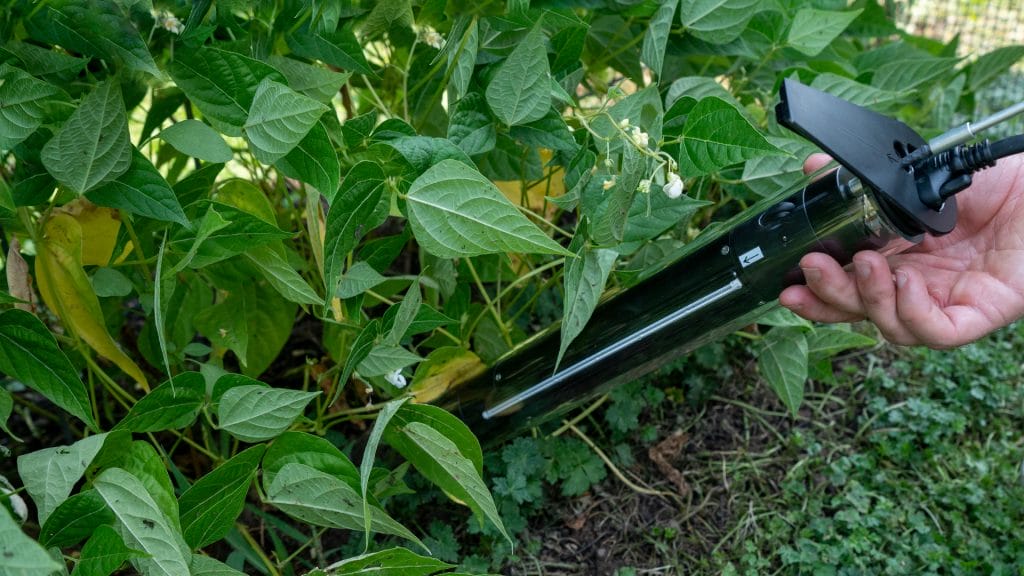
Root systems are notoriously difficult to teach because they are hidden from view. In teaching labs, in situ root imaging systems provide a rare opportunity for students to observe root growth without excavation. Seeing roots develop over time helps reinforce concepts related to resource allocation and plant competition.
For research labs, root imagers like the CI-600 and narrow-gauge CI-602 become powerful tools for longitudinal studies. Researchers can monitor root dynamics across soil depths, treatments, and seasons with minimal disturbance. This level of detail is rarely required for teaching but is essential for belowground research.
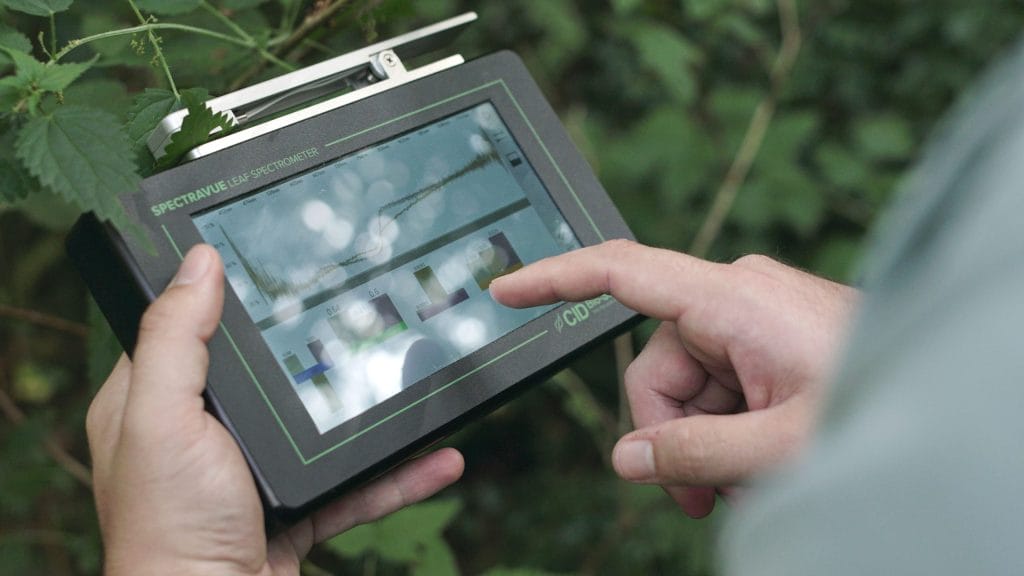
Spectroscopy for Learning and Advanced Analysis
Related Products
Most Popular Articles
- Transpiration in Plants: Its Importance and Applications
- Leaf Area – How & Why Measuring Leaf Area…
- How to Analyze Photosynthesis in Plants: Methods and Tools
- Plant Respiration: Its Importance and Applications
- The Forest Canopy: Structure, Roles & Measurement
- Stomatal Conductance: Functions, Measurement, and…
- Forest & Plant Canopy Analysis – Tools…
- Root Respiration: Importance and Applications
- The Importance of Leaf Area Index (LAI) in…
- 50 Best Universities for Plant Science