Budgeting for Plant Physiology Equipment: Total Cost of Ownership Explained


Scott Trimble

January 6, 2026 at 6:05 pm | Updated January 6, 2026 at 6:05 pm | 5 min read
Researchers often focus on the upfront price of plant physiology equipment, but the long term picture is shaped by maintenance, usability, reliability, and operational efficiency. Understanding the total cost of ownership is essential for making informed decisions, especially when equipment will be used for multi year projects, field campaigns, or collaborative studies.
In this article, we will do a practical discussion on how different factors influence budgeting and why CID Bio Science instruments remain cost effective across their lifespan.
What Total Cost of Ownership Means in Plant Research
The total cost of ownership (TCO) goes beyond the purchase price. It includes everything required to operate, maintain, and support the instrument throughout its life. When evaluating plant physiology equipment cost, researchers often overlook several hidden expenses that can add up quickly.
Subscribe to the CID Bio-Science Weekly article series.
By submitting this form, you are consenting to receive marketing emails from: . You can revoke your consent to receive emails at any time by using the SafeUnsubscribe® link, found at the bottom of every email. Emails are serviced by Constant Contact
Key components of TCO include:
-
Purchase price
-
Accessories or required peripherals
-
Calibration and maintenance
-
Software access or subscription fees
-
Replacement parts
-
Training and onboarding
-
Downtime due to repairs or technical issues
-
Data handling or exporting requirements
Planning for these factors early helps labs stay within their budgets, avoid unexpected disruptions, and choose tools that remain reliable in the long run.
CID Bio Science instruments are known for keeping these costs low through design choices like self calibration, integrated displays, and field ready durability.
Cost Efficiency Through Usability and Design
One of the biggest contributors to long term plant physiology equipment cost is usability. The more intuitive and self contained the instrument is, the fewer resources a lab needs for training and troubleshooting.
Examples from Leaf Area Measurement Tools

The CI 202 Portable Laser Leaf Area Meter provides straightforward operation, internal data storage, and no user calibration requirements. This eliminates recurrent annual maintenance and minimizes operator error. It stores up to 8000 measurements on board and transfers data through USB without any external accessories or software fees.
The CI 203 Handheld Laser Leaf Area Meter also offers one touch measurements, unlimited data storage via SD card, and GPS tagging. There are no calibration consumables or software licenses needed, and the optional conveyor attachment speeds up sample processing without requiring an entirely separate system.
Features like these keep training time low and reduce the need for external tools or support staff, all of which lowers total cost of ownership.
Cost Factors in Canopy and Light Measurement
Canopy measurement systems can often incur additional expenses for image correction, data processing, or specialized light sensors. The CI 110 Plant Canopy Imager bundles these capabilities into one platform.
It includes:
-
Hemispherical imaging
-
GPS and multi constellation satellite support
-
PAR sensor array
-
Built in analysis software
-
Adjustable filters
-
Self leveling camera
All functions operate on the integrated touchscreen interface, allowing users to complete full LAI and canopy structure assessments without external software or complex calibration workflows.
For budgeting purposes, this reduces:
-
Software licensing
-
External light sensor purchases
-
Maintenance of separate systems
-
Data processing time
The overall plant physiology equipment cost remains controlled because the system performs all tasks in a single, durable unit.
Gas Exchange Systems: Managing Complexity Without Increasing Cost
Gas exchange measurements are often the most expensive area in plant physiology due to sensor calibration, environmental control modules, and system maintenance. The CI 340 Handheld Photosynthesis System is designed to minimize long term ownership costs while supporting advanced physiological research.
It measures photosynthesis, respiration, transpiration, stomatal conductance, PAR, and internal CO2 in one portable unit. Modular add ons allow environmental manipulations such as CO2, H2O, temperature, and light control. These modules eliminate the need for separate equipment and reduce lab infrastructure requirements. Because the analyzers are stable and the chambers are directly connected to the measurement system, the workflow avoids delays and reduces user error.
From a cost perspective, the system offers:
-
Fewer consumables
-
Reduced recalibration
-
Lower training burden
-
Adaptability without buying multiple instruments
The flexibility allows labs to expand capabilities gradually, spreading costs over time.
Cost Considerations in Spectral Analysis
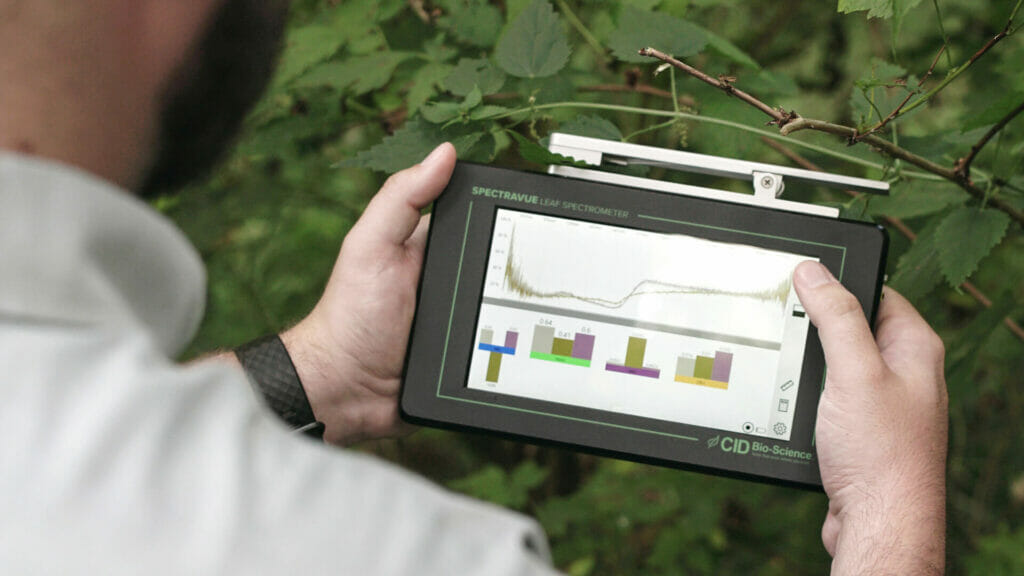
Spectroscopy instruments can accumulate hidden costs through software subscriptions or external calibration tools. The CI 710s SpectraVue Leaf Spectrometer avoids many of these issues.
It integrates a powerful spectrometer, leaf probe, analysis software, and touchscreen interface in a single unit. The system stores data internally, supports custom index creation, and measures reflectance, transmittance, and absorbance simultaneously across 360 to 1100 nm. The inclusion of GPS, built in analysis tools, and multi mode measurement reduces the need for external computing resources.
For TCO planning, this reduces:
-
Software fees
-
Laptop dependency
-
Compatibility issues
-
Spectral processing time
This makes the plant physiology equipment cost more predictable over the full lifespan.
Durability and Field Use: A Major Cost Driver
Field ready instruments significantly reduce the total cost of ownership because they are less likely to require repairs or replacement after exposure to weather, dust, or transport stress.
Key durability advantages across CID Bio Science tools include:
-
Solid construction for outdoor environments
-
Hard shell carrying cases included with leaf area meters
-
Self leveling or internally stabilized sensors
-
Rechargeable batteries
-
USB or SD card data management instead of fragile external interfaces
For example, the rugged housing of the CI 202 and CI 203 helps protect the laser scanners during field transport.
The CI 110 and CI 710s are engineered for consistent performance across variable lighting and environmental conditions.
Durability translates directly to fewer repairs, less downtime, and lower replacement costs.
Planning for Long Term Value
When assessing plant physiology equipment cost, research groups should map out needs across the lifespan of a project.
Important questions include:
What data types are needed?
If multiple measurements are required, an expandable system like the CI 340 may reduce overall costs compared to buying several single task devices.
How often will the tool be used?
High throughput projects benefit from the simplicity of tools like the CI 202 or CI 203, which reduce per measurement labor.
Who will operate the equipment?
User friendly interfaces lower training time and reduce measurement errors that could require repeat visits.
Will it be used in the field?
Durable, battery powered systems lower the risk of costly failures far from the lab.
Are there recurring expenses?
CID Bio Science instruments help avoid subscription fees and repeated calibration costs that can inflate long term budgets.
The Bottom Line
Budgeting for plant physiology equipment goes far beyond the upfront purchase price. Total cost of ownership includes training time, maintenance, calibration, accessories, and system reliability.
CID Bio Science instruments consistently minimize these costs through integrated design, durable construction, onboard data processing, and minimal calibration requirements. Whether measuring leaf area, canopy structure, gas exchange, or spectral properties, these tools help researchers control expenses while improving data quality.
FAQs
How do modular instruments affect total cost of ownership?
Modular instruments allow labs to expand capabilities gradually rather than purchasing multiple standalone devices, which spreads cost and improves long term value.
Are calibration expenses common in plant physiology equipment?
Many instruments require periodic calibration, but CID Bio Science tools like the CI 202, CI 203, and CI 110 minimize or eliminate user calibration to reduce ongoing expenses.
What is the best way to estimate long term equipment costs?
Calculate the expected lifespan, required training, maintenance, accessories, and software needs, then compare these with the instrument’s ease of use and durability.
Related Products
Most Popular Articles
- Transpiration in Plants: Its Importance and Applications
- Leaf Area – How & Why Measuring Leaf Area…
- How to Analyze Photosynthesis in Plants: Methods and Tools
- Plant Respiration: Its Importance and Applications
- The Forest Canopy: Structure, Roles & Measurement
- Stomatal Conductance: Functions, Measurement, and…
- Forest & Plant Canopy Analysis – Tools…
- Root Respiration: Importance and Applications
- The Importance of Leaf Area Index (LAI) in…
- 50 Best Universities for Plant Science