Buying Used vs New Instruments: Risks, Savers and What to Watch

Scott Trimble

January 5, 2026 at 7:53 pm | Updated January 5, 2026 at 7:53 pm | 5 min read
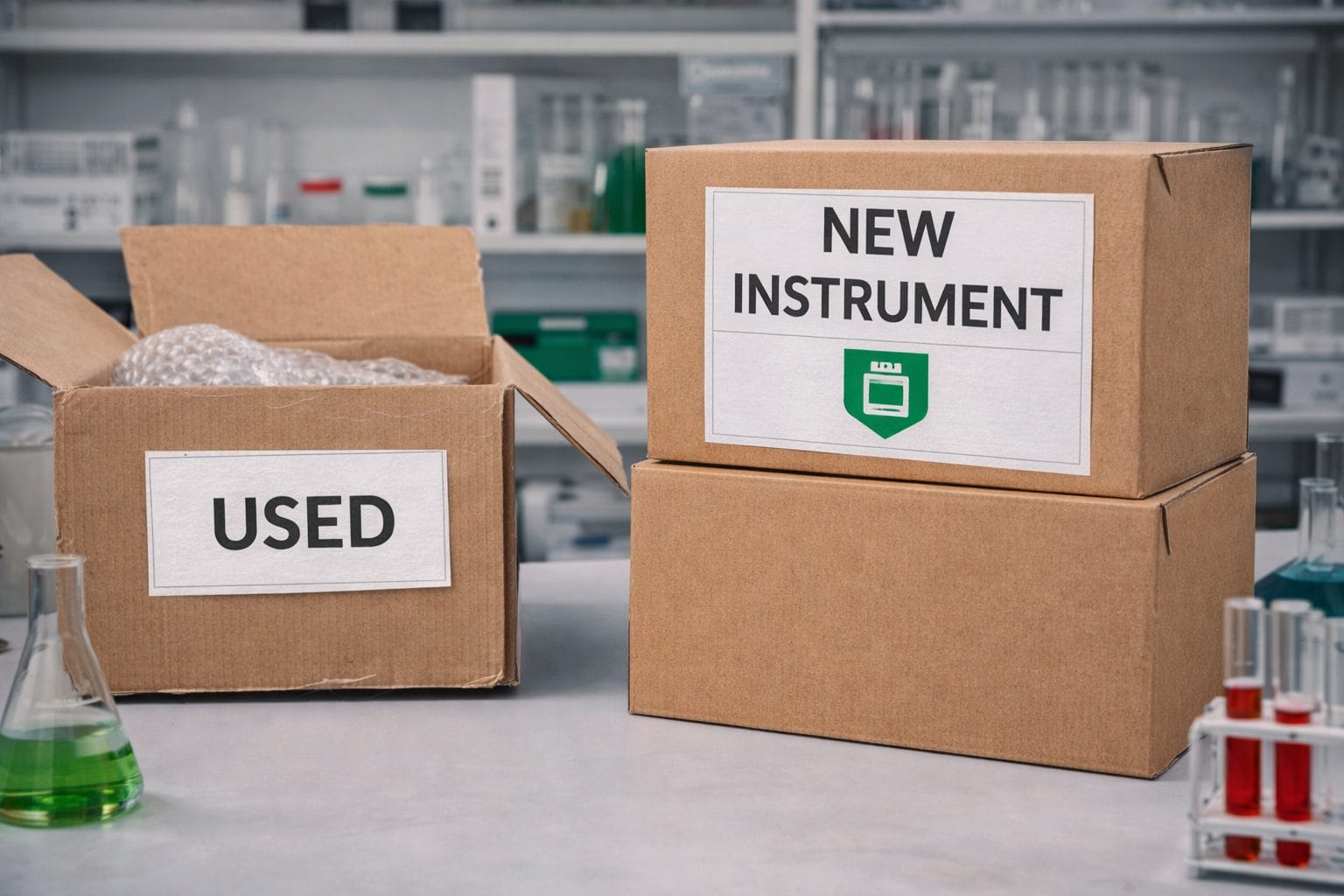
Buying used scientific instruments is a topic that comes up often in plant science labs, field research groups, and teaching programs working within tight budgets. The appeal is obvious. Used equipment can lower upfront costs and stretch limited grant funding. At the same time, buying used scientific instruments introduces risks that are not always visible at first glance. The decision between used and new rarely comes down to price alone. Reliability, data quality, long-term support, and total cost of ownership matter just as much.
This article breaks down the real tradeoffs involved in buying used versus new plant research instruments, with practical guidance on what to watch for and where cost savings are real or misleading.
Why Researchers Consider Buying Used Scientific Instruments
There are several common reasons labs look at used equipment.
Subscribe to the CID Bio-Science Weekly article series.
By submitting this form, you are consenting to receive marketing emails from: . You can revoke your consent to receive emails at any time by using the SafeUnsubscribe® link, found at the bottom of every email. Emails are serviced by Constant Contact
Budget pressure is real
Field-capable instruments for photosynthesis, leaf area, canopy analysis, spectroscopy, and root imaging represent a significant investment. When funding cycles are short or equipment needs scale quickly, used instruments can seem like an efficient workaround.
Short-term or pilot studies
For exploratory projects or short-duration studies, researchers sometimes feel that buying used scientific instruments reduces risk. The thinking is simple: if the project ends quickly, the instrument does not need to last a decade.
Familiarity with older platforms
Some researchers are comfortable with older hardware and software versions. If a lab has standardized workflows built around previous generations of instruments, buying used units of the same model can feel convenient.
These motivations make sense. The challenge is that scientific instruments are not interchangeable commodities. Condition, calibration, firmware, and support matter far more than appearance.
The Hidden Risks of Buying Used Equipment
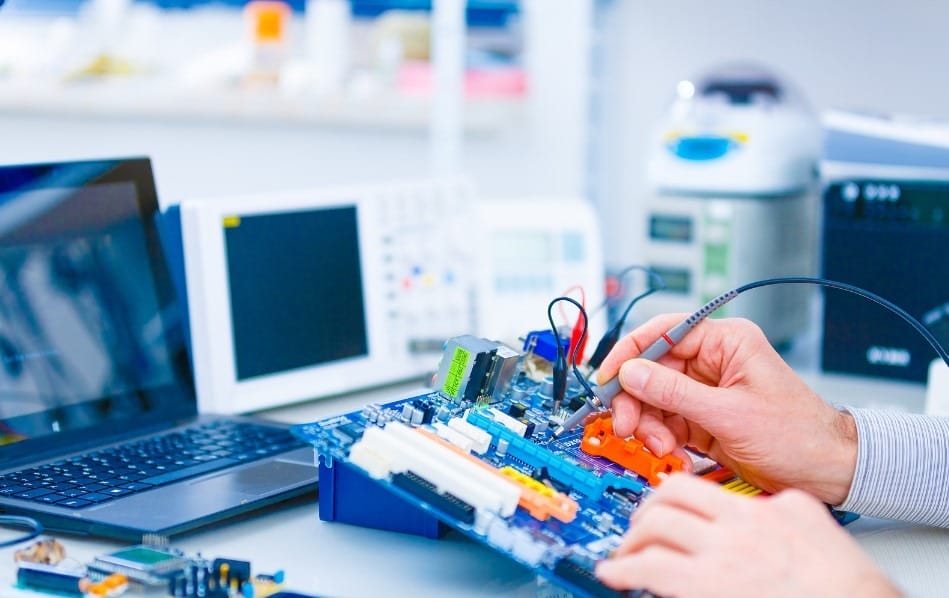
Used instruments rarely fail immediately. The real risks often show up months into data collection.
Unknown calibration history
Most plant science instruments rely on precise optical, gas, or sensor calibration. When buying used scientific instruments, there is often limited documentation of calibration drift, environmental exposure, or previous misuse. A photosynthesis system or spectrometer that looks functional can still produce biased data that is difficult to detect without reference checks.
Wear on critical components
Portable instruments experience vibration, dust, moisture, and temperature swings. Laser scanners, infrared gas analyzers, PAR sensors, and imaging optics all degrade over time. In many cases, these components are the most expensive parts to replace.
Obsolete firmware and software
Older instruments may run firmware that is no longer supported or compatible with current operating systems. This creates long-term workflow issues, especially when exporting data, integrating GPS information, or maintaining consistent metadata across projects.
No warranty or limited service access
Buying used scientific instruments often means no factory warranty and uncertain access to replacement parts. Even if a repair is possible, turnaround times can disrupt field seasons or greenhouse experiments.
Where Buying Used Can Make Sense
Used equipment is not always the wrong choice. The key is understanding where risk is manageable.
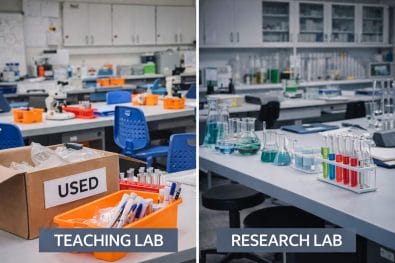
Teaching labs and demonstrations
In instructional settings where absolute precision is less critical, used instruments can still deliver value. Demonstration units that introduce concepts like leaf area measurement or canopy structure may not require the latest sensors.
Non-critical measurements
If an instrument is used for relative comparisons rather than absolute values, and calibration checks are feasible, buying used scientific instruments can work in specific cases.
Manufacturer-refurbished units
Some manufacturers offer refurbished instruments with verified performance, updated firmware, and limited warranties. This is very different from purchasing equipment through third-party resale channels.
Why New Instruments Reduce Long-Term Risk
For many research programs, new instruments offer benefits that outweigh the higher initial cost.
Data confidence from day one
New instruments arrive factory-calibrated with documented specifications. This matters for gas exchange systems, spectrometers, and imaging tools where small measurement errors compound across datasets.
For example, modern handheld photosynthesis systems integrate stable analyzers, direct chamber connections, and modular controls that reduce measurement delay and uncertainty .
Improved durability and field readiness
Design updates over time are not cosmetic. Newer leaf area meters flatten curled leaves more effectively, store larger datasets internally, and eliminate user calibration steps, reducing operator error in the field.
Integrated GPS and metadata
Current-generation instruments often include built-in GPS and expanded data logging. This simplifies large-scale field studies and ensures consistent spatial tracking without external devices.
Manufacturer support and training
Buying new provides access to documentation, training resources, and technical support. When instruments are deployed across seasons and users, this support becomes part of the instrument’s value.
Case Examples from Plant Science Research
Different instrument categories carry different levels of risk when purchased used.
Photosynthesis systems
Gas exchange instruments depend on stable CO2 and H2O analyzers, leak-free chambers, and accurate environmental control. Buying used scientific instruments in this category carries higher risk because sensor degradation is difficult to detect without extensive validation.
Leaf area meters
Laser-based leaf area meters are relatively robust, but optical alignment, scan windows, and internal logging systems still wear over time. Newer handheld designs improve speed, storage capacity, and usability while reducing operator fatigue .
Canopy imaging systems
Hemispherical canopy imagers rely on precise optics, self-leveling cameras, and PAR sensors. New models integrate faster capture, improved filters, and multi-constellation GPS that older systems simply do not offer .
Root imaging systems
In situ root imagers face harsh underground conditions. Wear on camera housings, connectors, and cables is common. New systems are designed to withstand repeated deployments with consistent image quality.
Leaf spectroscopy
Spectrometers evolve rapidly. Expanded wavelength ranges, higher resolution detectors, and onboard analysis software make new units far more capable for pigment, nutrient, and stress analysis than older versions.
What to Watch for When Buying Used Scientific Instruments
If buying used is unavoidable, there are several steps that reduce risk.
-
Request full service and calibration records
-
Verify firmware version and software compatibility
-
Confirm availability of replacement parts
-
Test the instrument under real measurement conditions
-
Budget for recalibration or refurbishment
Without these steps, apparent savings often disappear after the first repair or failed dataset.
Total Cost of Ownership Matters More Than Sticker Price
The most common mistake when buying used scientific instruments is focusing only on purchase price. Downtime, data loss, recalibration costs, and delayed field seasons all have real financial consequences.
A new instrument that performs reliably for years often costs less over its lifetime than a used unit that requires frequent service or produces questionable data.
Choosing a Reliable Partner
Working directly with an established manufacturer reduces uncertainty. CID Bio-Science designs instruments specifically for field and lab researchers, with an emphasis on durability, intuitive operation, and long-term support. From handheld photosynthesis systems to canopy imagers, root imaging platforms, and leaf spectrometers, our tools are built to generate defensible data across environments and seasons.
Conclusion: When New Is the Safer Investment
Buying used scientific instruments can make sense in limited scenarios, but it always carries hidden risks. For core measurements that define experimental outcomes, new instruments provide confidence, consistency, and support that used equipment often cannot match.
If your research depends on accurate, repeatable plant measurements, investing in new instrumentation is often the more economical choice in the long run. To explore modern, field-ready plant science tools backed by manufacturer support, visit CID Bio-Science and talk with our team about selecting the right instrument for your application.
Frequently Asked Questions
Is Buying Used Scientific Instruments Ever Recommended for Field Research?
It can work for non-critical measurements or teaching applications, but field research often exposes weaknesses in older equipment. Environmental stress and data reliability are key concerns.
How Much Money Can I Realistically Save Buying Used?
Savings vary widely. After recalibration, repairs, and lost time are considered, the difference between used and new is often smaller than expected.
Do New Instruments Really Improve Data Quality?
Yes. Advances in sensors, firmware, and integrated data handling significantly reduce error and improve consistency, especially in photosynthesis, spectroscopy, and imaging applications.
Related Products
Most Popular Articles
- Transpiration in Plants: Its Importance and Applications
- Leaf Area – How & Why Measuring Leaf Area…
- How to Analyze Photosynthesis in Plants: Methods and Tools
- Plant Respiration: Its Importance and Applications
- The Forest Canopy: Structure, Roles & Measurement
- Stomatal Conductance: Functions, Measurement, and…
- Forest & Plant Canopy Analysis – Tools…
- Root Respiration: Importance and Applications
- The Importance of Leaf Area Index (LAI) in…
- 50 Best Universities for Plant Science