Is It Worth Buying the Laser Leaf Area Meter (CI‑202) for Small‑Scale Breeding Trials?

Scott Trimble

April 9, 2026 at 6:38 pm | Updated April 9, 2026 at 6:38 pm | 5 min read
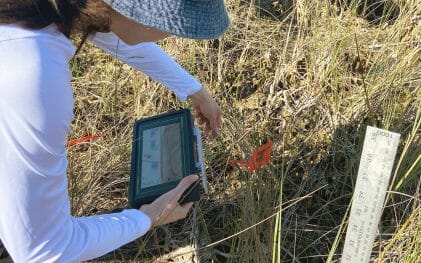
When evaluating tools for breeding work, the question often comes down to efficiency versus cost. A laser leaf area meter is one of those instruments that can either streamline your workflow or feel like overkill, depending on your scale. For researchers running small-scale breeding trials, the CI-202 portable laser leaf area meter sits in an interesting middle ground. It offers precision and portability without the complexity of larger systems, making it a strong candidate for field-based phenotyping.
This article takes a closer look at whether investing in a laser leaf area meter like the CI-202 makes sense for smaller breeding programs, and where it clearly stands out.
Why Leaf Area Still Matters in Breeding Trials
Even in small trials, leaf area remains a core metric. It connects directly to photosynthetic capacity, biomass accumulation, and stress response. In breeding programs, subtle differences in leaf morphology can signal meaningful genetic variation.
Subscribe to receive our monthly round-up of articles.
The challenge is not whether to measure leaf area, but how to do it efficiently. Traditional methods like tracing or image analysis can be slow and inconsistent, especially when working outdoors or across multiple plots.
This is where a laser leaf area meter changes the workflow.
What the CI-202 Brings to the Table
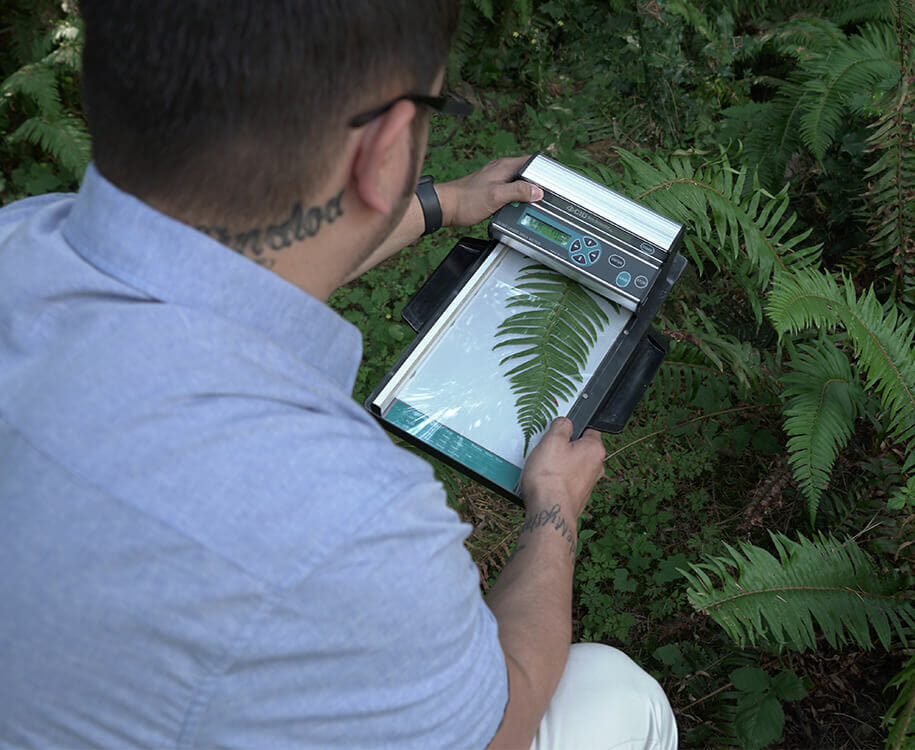
The CI-202 is designed as a portable, self-contained system for measuring leaf area in real time. It uses a high-resolution laser scanner to capture leaf dimensions with minimal setup.
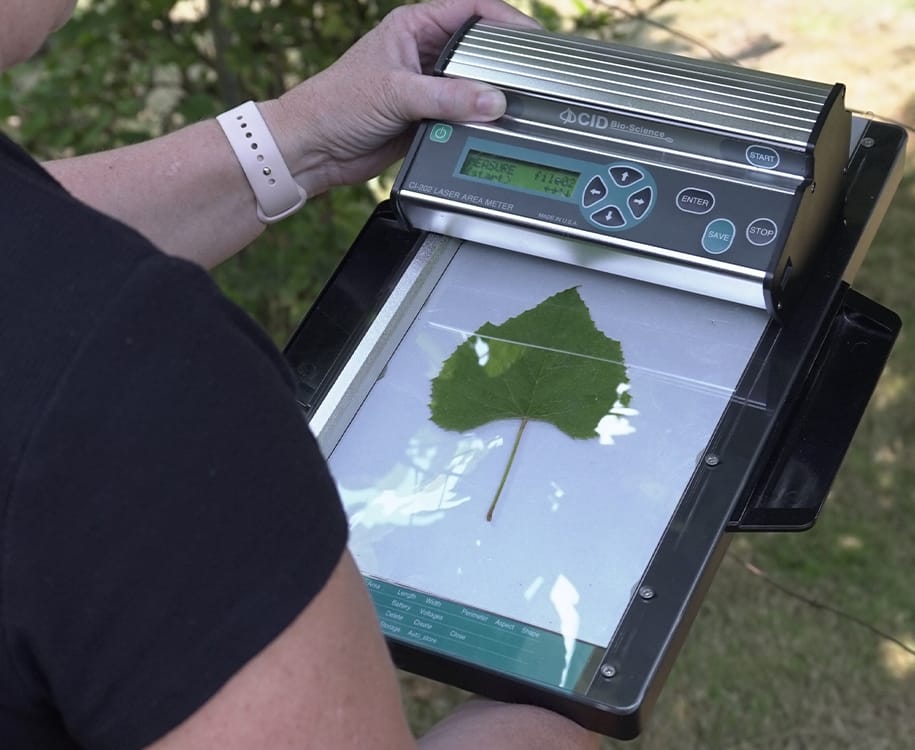
Some key capabilities include:
- Measurement of area, length, width, and perimeter
- Calculation of shape factor and ratios
- Resolution down to 0.01 cm²
- Storage for up to 8,000 measurements
- Lightweight, battery-powered operation
- No calibration required
These features are not just convenience upgrades. They directly impact how quickly and reliably you can collect data in a breeding trial setting. According to the CI-202 brochure, the device is built to handle a wide range of samples, from leaves to seeds, making it more versatile than many alternatives.
Where It Excels in Small-Scale Trials
1. Field Portability Without Compromise
Small-scale trials often happen in distributed plots, greenhouses, or remote field sites. Carrying bulky equipment or relying on lab-based imaging systems creates friction.
The CI-202 solves this by being fully portable and self-contained. You can move from plant to plant without needing additional setup or external power.
That matters more than it sounds. Reducing setup time per sample adds up quickly when you are measuring dozens or hundreds of plants.
2. Consistency Across Measurements
Manual methods introduce variability. Even digital imaging workflows can vary depending on lighting, angle, and processing steps.
A laser leaf area meter standardizes measurement. The CI-202 flattens curled leaves and scans them directly, which improves repeatability across samples.
For breeding trials, where you are comparing subtle differences between genotypes, this level of consistency is critical.
3. Speed of Data Collection
Speed is often underestimated in small trials. Even with fewer plants, time constraints still exist, especially during peak measurement windows.
The CI-202 uses a simple scanning process with immediate output. There is no need for post-processing or image correction. Data is stored directly on the device and can be exported later.
This allows researchers to focus on sampling rather than data handling in the field.
4. Non-Destructive Measurements
Maintaining plant integrity can be important in breeding trials, particularly when tracking growth over time.
The CI-202 supports non-destructive measurements, allowing repeated sampling on the same plants. This opens the door to longitudinal studies without increasing plant count.
Where Some Might Hesitate
1. Scale of the Trial
If your trial is extremely small, for example fewer than 20 plants, a laser leaf area meter may feel like a significant investment. However, even at small scales, the value often comes from data quality rather than volume. If your work depends on accurate phenotyping, the tool still makes sense.
2. Throughput Needs
For very high-throughput workflows involving detached leaves, a system like the CI-203 with a conveyor attachment may be more efficient. But for small-scale breeding trials focused on in situ measurements, the CI-202 strikes a better balance between speed and flexibility.
3. Budget Constraints
Budget is always a factor. The key question is whether the time saved and data quality gained justify the cost. In most cases, the answer depends on how often leaf area is measured and how critical it is to your selection criteria.
Comparing to Alternative Methods
Manual Tracing
- Low cost
- Time-consuming
- Prone to human error
Image-Based Analysis
- Flexible
- Requires controlled conditions
- Additional processing time
Laser Leaf Area Meter (CI-202)
- Fast and consistent
- Field-ready
- Minimal processing required
The CI-202 stands out because it removes bottlenecks without introducing complexity. It is a tool that fits naturally into field workflows.
Integration with Other Measurements
Leaf area rarely exists in isolation. It is often paired with physiological data such as photosynthesis or spectral analysis.
For example:
- Pairing with gas exchange measurements using systems like the CI-340 helps connect leaf size with function
- Combining with spectral data from tools like the CI-710 provides insight into pigment and nutrient status
This integration is where CID Bio-Science instruments tend to stand out. Each tool complements the others, allowing researchers to build a more complete dataset without switching between incompatible systems.
Practical Use Cases in Breeding
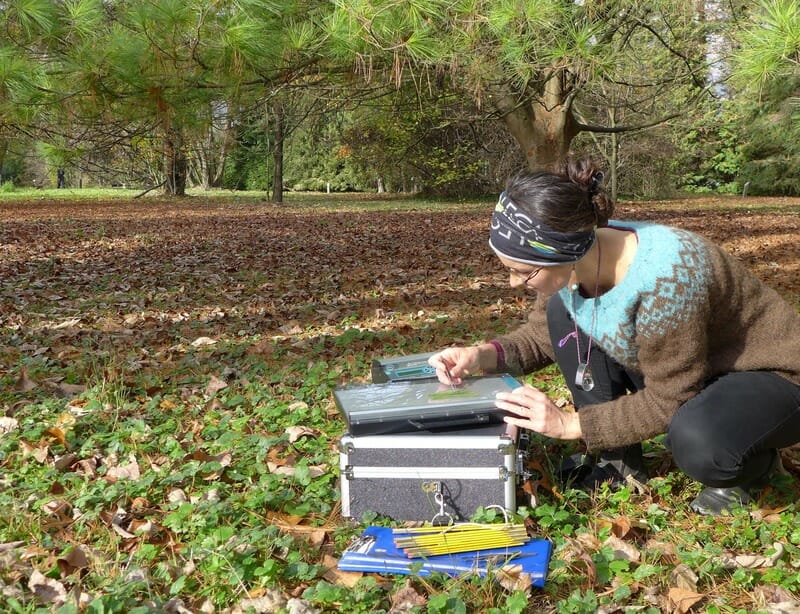
Here are a few scenarios where the CI-202 proves especially useful:
- Screening genotypes for drought tolerance using leaf size as an indicator
- Measuring morphological variation across breeding populations
- Tracking growth rates over time in controlled trials
- Evaluating treatment effects in small experimental plots
In each case, the combination of portability and precision makes the workflow smoother.
Is It Worth It?
For small-scale breeding trials, the CI-202 is not just a convenience tool. It is a way to improve data quality and reduce measurement time without adding complexity.
If your work involves regular leaf area measurements and you value consistency, the investment is justified.
If leaf area is only an occasional metric, you might rely on simpler methods. But even then, the time savings can quickly offset the initial cost.
The key takeaway is this: a laser leaf area meter like the CI-202 is most valuable when accuracy and efficiency both matter, which is often the case in breeding work.
Why Choose CID Bio-Science
CID Bio-Science instruments are designed with field researchers in mind. The CI-202 reflects that approach with its straightforward operation, durable design, and reliable data output.
Unlike some competitors that require extensive setup or calibration, the CI-202 works out of the box. That simplicity is a real advantage when working in variable field conditions.
Ending Note
If you are running breeding trials and want to improve your data collection workflow, take a closer look at the CI-202 portable laser leaf area meter. Visit CID Bio-Science to explore specifications, request a quote, or speak with a product specialist about how it fits your research setup.
Related Products
Most Popular Articles
- Transpiration in Plants: Its Importance and Applications
- Leaf Area – How & Why Measuring Leaf Area…
- How to Analyze Photosynthesis in Plants: Methods and Tools
- Plant Respiration: Its Importance and Applications
- The Forest Canopy: Structure, Roles & Measurement
- Stomatal Conductance: Functions, Measurement, and…
- Forest & Plant Canopy Analysis – Tools…
- Root Respiration: Importance and Applications
- 50 Best Universities for Plant Science
- The Importance of Leaf Area Index (LAI) in…
Related Reading