8 Reasons Root Imaging Tech is Gaining Importance in Plant Science

Scott Trimble

June 18, 2026 at 5:15 pm | Updated June 18, 2026 at 5:15 pm | 5 min read
Root imaging technology is quickly becoming a central tool in plant science. For decades, researchers focused heavily on aboveground measurements such as leaf area, canopy structure, gas exchange, and spectral reflectance. Those metrics still matter. But more scientists now recognize that understanding what happens belowground is just as critical. Roots drive nutrient uptake, water acquisition, carbon allocation, and overall plant resilience. As research questions become more complex, root imaging technology is stepping in to provide practical, field-ready answers.
Below are eight reasons why root imaging technology is gaining importance and how CID Bio-Science is helping researchers capture reliable belowground data.
#01 Non-destructive access to root systems
Traditionally, studying roots meant digging them up. Excavation is destructive, time-consuming, and often alters root architecture before measurements can even begin. Root imaging technology changes that.
Subscribe to receive our monthly round-up of articles.
With in situ systems like the CI-600 In-Situ Root Imager, researchers can monitor root growth and morphology directly in the soil profile without disturbing the plant. The CI-600 captures high-resolution images underground, allowing repeated measurements over time. This supports longitudinal studies where root development, turnover, and response to stress need to be tracked consistently.
Non-destructive root imaging allows researchers to study living systems as they function naturally, which leads to more reliable datasets.
#02 Better insight into plant stress responses
Environmental stress rarely shows up first in the leaves. In drought, salinity, or nutrient-deficient conditions, roots respond early by altering branching patterns, elongation rates, and biomass allocation.
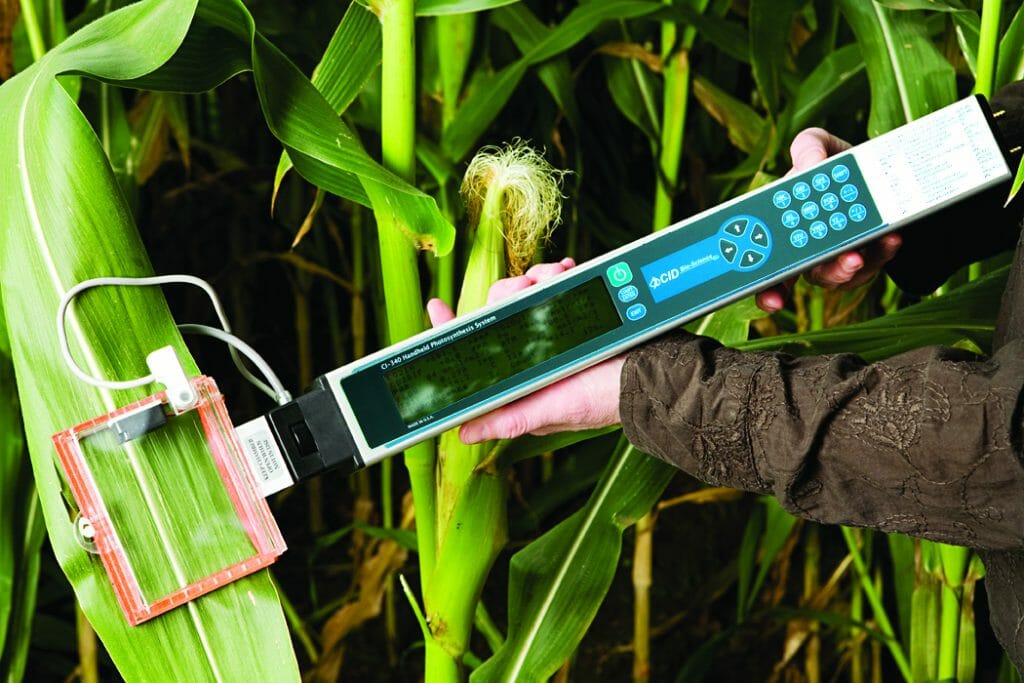
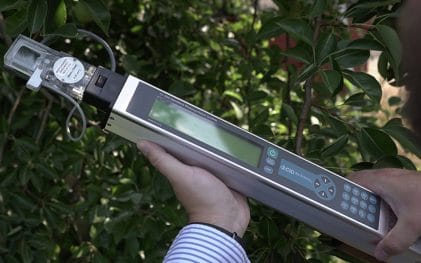
Root imaging technology provides a way to quantify these changes directly. Instead of relying solely on canopy measurements or photosynthesis rates, researchers can now pair belowground data with aboveground physiology. For example, combining CI-600 root images with gas exchange data from the CI-340 Handheld Photosynthesis System allows scientists to correlate root development with changes in stomatal conductance and CO2 assimilation .
This integrated approach offers a more complete picture of plant stress.
#03 Support for breeding and phenotyping programs
Modern breeding programs rely on high-throughput phenotyping. Root traits such as depth, density, angle, and branching patterns are now recognized as key determinants of yield and drought tolerance.
Root imaging technology makes it possible to quantify these traits in real soil conditions. Instead of guessing how root architecture contributes to performance, breeders can measure it. This reduces uncertainty and strengthens selection criteria.
CID Bio-Science instruments are built for field conditions. Portable systems allow breeders to gather data directly from research plots, rather than transporting samples back to a lab. That flexibility is critical when working across multiple genotypes and environmental treatments.
#04 Increased demand for sustainable agriculture
Sustainable agriculture depends on efficient water and nutrient use. Roots control both. To improve nitrogen use efficiency or irrigation management, researchers need to understand how roots explore soil.
Root imaging technology provides measurable parameters such as root length density and growth rates at specific soil depths. These insights help agronomists refine fertilizer placement, irrigation scheduling, and soil management practices.
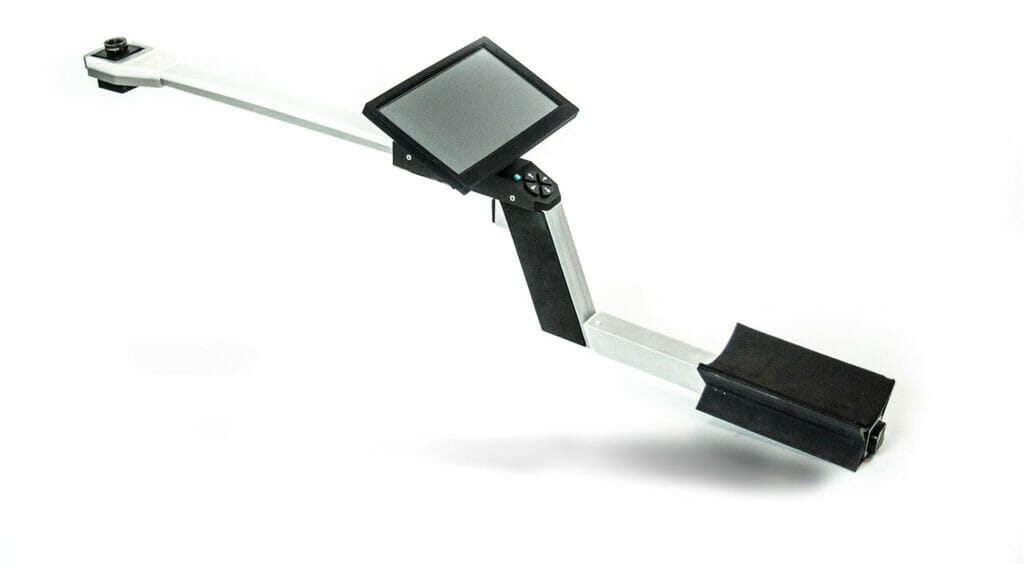
When paired with canopy measurements from the CI-110 Plant Canopy Imager, which calculates leaf area index and PAR levels , researchers can link belowground structure with light interception and productivity. This systems-level perspective supports more sustainable decision-making.
#05 Improved image resolution and data processing
Earlier root observation methods often relied on manual tracing or low-resolution cameras. That limited accuracy and increased analysis time.
Modern root imaging technology integrates high-resolution optics with specialized software for measuring root length, diameter, area, and branching. The CI-600 system is designed to capture detailed underground images that can be analyzed quantitatively .
Better image quality leads to better measurements. And because the system is engineered specifically for root research, it avoids many of the calibration and alignment issues seen in improvised setups.
#06 Compatibility with multi-parameter research
Plant science is increasingly multidisciplinary. Researchers rarely measure just one variable. Instead, they collect datasets spanning canopy structure, leaf area, gas exchange, pigment content, and soil characteristics.
Root imaging technology fits naturally into this framework. For instance:
-
Leaf area can be quantified with the CI-202 Portable Laser Leaf Area Meter, which measures area with 0.01 cm² resolution and stores up to 8,000 measurements .
-
High-resolution leaf scans can also be performed with the CI-203 Handheld Laser Leaf Area Meter, offering rapid, non-destructive measurements and GPS tagging .
-
Photosynthetic performance can be assessed with the CI-340 .
-
Spectral data on pigments and stress can be collected with the CI-710s SpectraVue Leaf Spectrometer, covering a 360 to 1100 nm wavelength range .
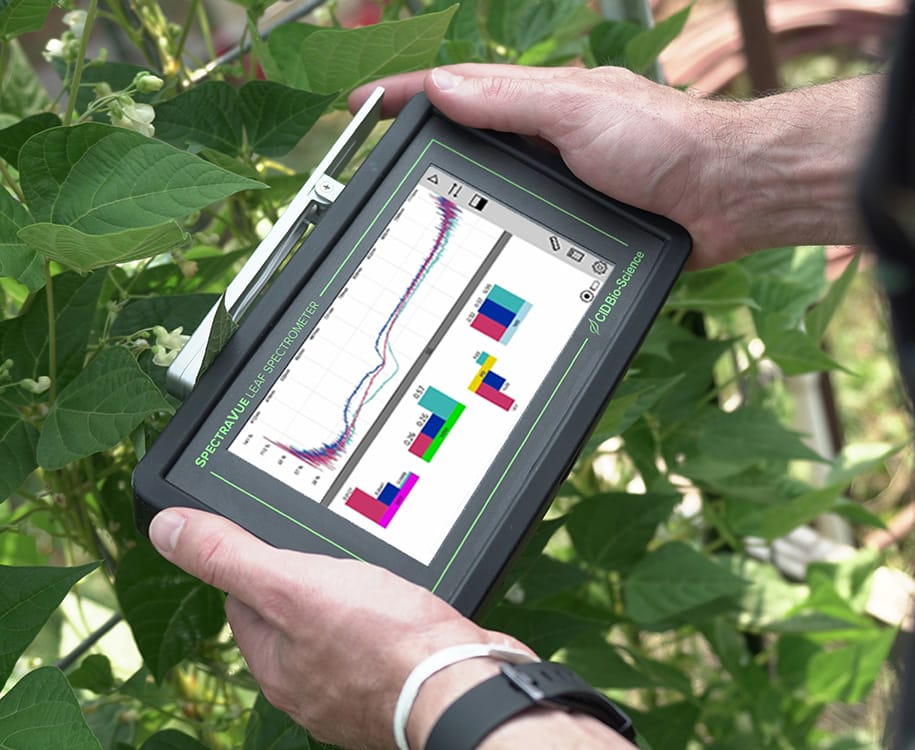
When root imaging technology is integrated with these tools, researchers gain synchronized aboveground and belowground data. That alignment strengthens statistical models and improves interpretation.
#07 Growing interest in carbon cycling and climate research
Roots play a major role in soil carbon dynamics. Root exudates, turnover, and biomass allocation influence microbial activity and long-term carbon sequestration.
As climate research intensifies, belowground processes are receiving more attention. Root imaging technology enables repeated measurements of root growth and mortality, which are essential inputs for carbon modeling.
Because CID Bio-Science instruments are portable and durable, they can be deployed across experimental forests, agricultural systems, and ecological gradients. That flexibility supports climate-related field research in real-world environments.
#08 Field-ready, researcher-focused design
One of the reasons root imaging technology is gaining importance is practical usability. Instruments must perform outside controlled laboratory conditions.
CID Bio-Science designs tools for field scientists. The CI-600 system is portable and built for in situ installation . Data can be collected repeatedly without re-excavation. Aboveground tools in the CID lineup share the same philosophy. The CI-110 delivers instant LAI and PAR measurements under varying sky conditions. The CI-340 offers modular control of CO2, H2O, light, and temperature.
This consistency across instruments matters. Researchers benefit when hardware, software, and data export workflows align. It reduces training time and simplifies multi-instrument studies.
Why CID Bio-Science Stands Out
Many research tools claim portability or precision. CID Bio-Science delivers both, with instruments purpose-built for plant scientists. Root imaging technology from CID integrates seamlessly with canopy, leaf, gas exchange, and spectral systems. Instead of piecing together solutions from multiple vendors, researchers can rely on a unified platform.
CID instruments are made in the USA and designed around real research applications. From agronomy to ecology to plant physiology, the product line reflects decades of collaboration with scientists in the field.
If your research depends on understanding plant performance from the soil up, root imaging technology should be part of your workflow.
Takeaway
Ready to upgrade your belowground research? Explore the CI-600 In-Situ Root Imager and the complete line of CID Bio-Science plant measurement tools at www.cid-inc.com. Connect with the CID team to discuss how root imaging technology can strengthen your next project.
Related Products
Most Popular Articles
- Transpiration in Plants: Its Importance and Applications
- Leaf Area – How & Why Measuring Leaf Area…
- How to Analyze Photosynthesis in Plants: Methods and Tools
- Plant Respiration: Its Importance and Applications
- The Forest Canopy: Structure, Roles & Measurement
- Stomatal Conductance: Functions, Measurement, and…
- Forest & Plant Canopy Analysis – Tools…
- Root Respiration: Importance and Applications
- 50 Best Universities for Plant Science
- The Importance of Leaf Area Index (LAI) in…
Related Reading