5 Important Research on Crop Water Use Efficiency in 2025

Dr. Vijayalaxmi Kinhal


January 20, 2026 at 5:25 pm | Updated January 20, 2026 at 5:25 pm | 11 min read
- In 2025, findings on changes in crop production and water-use efficiency (WUE) under the current climate-change-driven drought scenario were a dominant trend.
- Many studies also focused on future-proofing crop production by improving WUE in different climate change scenarios.
- The number of variables considered is increasing to fill knowledge gaps and identify potential synergistic effects on WUE.
- WUE Research is no longer focused solely on major crops and is expanding to cover vegetables and medicinal crops.
Crop water use efficiency (WUE) is the yield/biomass accumulated per unit of water used. WUE depends on soil water availability and plant water uptake and loss on the one hand, and on carbon fixation and respiration on the other. In 2025, several advances in crop WUE were made across these angles and strategies, addressing current needs and future climate change conditions. Some of the primary individual experiments and meta-analyses are discussed below.
-
Optimizing WUE Under Increased CO₂
Climate change threatens food security due to rising temperatures and the increased frequency of drought, which affect crucial plant physiological processes, including photosynthesis, water relations, and productivity. However, carbon dioxide fertilization (eCO2) also offers opportunities to increase WUE, as shown by past studies. However, a generalization of eCO2 effects across crops and environmental conditions was missing, as was research on C4 plants, which focused mainly on C3 plants.
The Meta-analysis
Therefore, Mokhtar et al. (2025) studied how WUE will change under eCO₂ across crops (cereals, legumes, vegetables, fruits, trees, perennials, etc.), soil types, photosynthetic pathways, and growing methods, including greenhouse (GH), growth chambers (GC), open-top chambers (OTCs), and open/free-air CO₂ enrichment (FACE). They used 124 studies from 1979 to 2024, with 1474 observations, of different crops and eco-regions. Effects of increasing CO2 on plant parameters, including gas exchange, yield WUE (WUEᵧ), and plant WUE (WUEₚ), were measured. Soil properties such as water-holding capacity, wilting point, and pH were also tested.
Subscribe to receive our monthly round-up of articles.
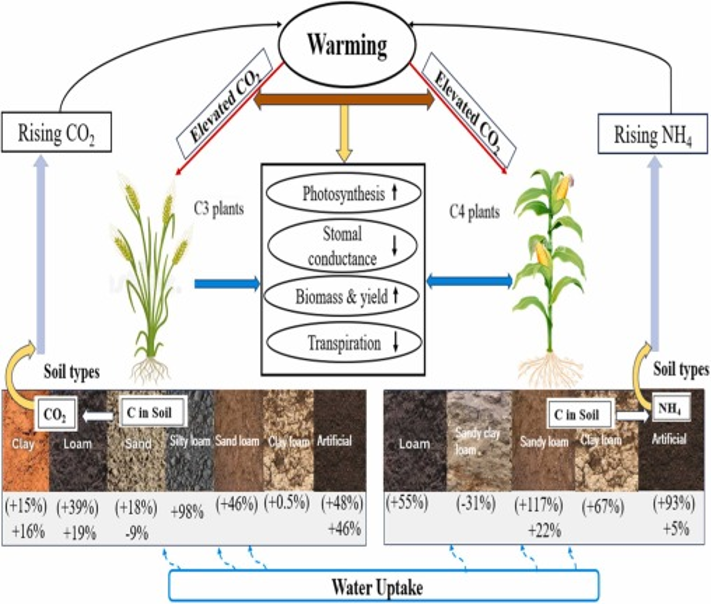
Figure 1: “A consistent positive WUE response of crops grown in clay soils under eCO₂ for both C₃ and C₄ plants occurs by facilitating water and nutrient availability, which sustains photosynthesis even under limited water conditions. The values in brackets are the percentage change of the WUEp and others are for WUEy. “+” represents a positive response, and “-” represents a negative response,” Mokhtar et al. (2025). (Image credits: https://www.sciencedirect.com/science/article/pii/S0378377425000265)
The results of the meta-analysis can be summarized as follows:
Growing Methods: Increasing CO2 has a greater positive impact on WUE in closed controlled growing environments, such as GH, GC, and OTCs, than in the open FACE. Plant WUE increased by 69.5 % and 51.4 % in GH and GC, respectively. FACE crops showed a 50.4% increase in plant WUE, but only a 12.7% increase in yield WUE. Controlled conditions in closed growing methods provide a stable environment, eliminating fluctuations that could restrict photosynthesis and increase transpiration.
Photosynthetic pathways: Generally, C4 plants have higher WUE as photorespiration reduces carbon fixation and increases water loss in C3 plants. Under eCO2, in C3 plants, carbon fixation increases and photorespiration is reduced, albeit at higher temperatures. Hence, due to increased CO2, WUE increases more in C3 than in C4 plants without additional water. The C3 plants with the highest WUE are tomatoes and potatoes, with effect sizes of 13.96 and 7.02, respectively, compared with C4 plants like maize. The C4 plants maintain photosynthetic efficiency and boost WUE in water-limited areas by reducing stomatal conductance and transpiration losses. The improvement in WUE can vary depending on the extent of the CO2 increase:
- At current CO₂ levels of 400 ppm, both C3 and C4 plants exhibit moderate improvements in WUE, especially in clay soils.
- At CO2 levels below 600 ppm, WUE increases by 40-50% in C3 crops such as wheat and tomatoes in clay and clay-loam soils.
- At levels below 800 ppm, WUE improvements are mostly for cereals and vegetables in areas with good water retention, for example, due to clay soils.
Soil type: Clay soils with high water-retention capacity lead to higher plant and yield WUE. Sandy soils have the lowest WUE. Soil moisture has a moderate effect on WUE, as shown in Figure 1.
Takeaway: The results of the meta-analysis can be used by policymakers and stakeholders in the food supply chain. C3 plants should be planted in water-scarce areas. Clay soils will respond best to eCO2. Future research should integrate insights from controlled greenhouse and growth-chamber conditions, as well as FACE experiments that reflect real-world conditions, to develop strategies to improve WUE.
-
Remote-sensing for Monitoring WUE
Winter wheat is a widely cultivated food crop whose yield is affected primarily by water and fertilizer management. Most research on water and fertilizer management focuses either on yield or WUE, but does not integrate both in a framework. Moreover, the single indicators used, such as NDVI (normalized difference vegetation index), are unable to capture the complex crop responses to nutrient management.
Experiment
Zahi et al. (2025) addressed these gaps by exploring the effect of different water and fertilizer treatments on winter wheat yield and WUE, and also used NDVI in combination with Contrast, a textural feature, to optimize management strategies.
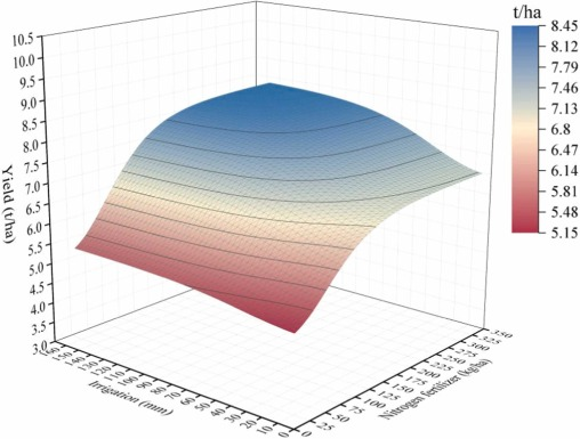
Figure 2: “Fitted surface of irrigation level with nitrogen application level and yield,” Zhai et al. (2025). (Image credits: https://doi.org/10.1016/j.agwat.2025.109390
The experiment was conducted in Henan Province, China, which has hot and humid summers and cold, dry winters. The various water treatments given through sprinklers were: W1: 0 mm, W2: 50 mm, W3: 100 mm, W4: 150 mm; and the nitrogen fertilizer options were N1: 0 kg/ha, N2: 90 kg/ha, N3: 210 kg/ha, N4: 330 kg/ha. Multispectral data were collected via drone (UAV) flights and stitched using DJI Terra software before analysis for spectral (NDVI) and textural (Contrast) features.
The main findings showed that increasing irrigation up to 120 mm and nitrogen applications to 225 kg/ha increased yield. However, higher increases in irrigation and nitrogen did not improve yield. Increasing irrigation at a given nitrogen level reduced WUE, whereas reducing irrigation improved WUE. Similarly, increasing nitrogen applications at a specific irrigation level initially improved WUE, but further increases beyond moderate fertilizer applications had no further beneficial effect on WUE. So, the scientists concluded that moderate increases in irrigation optimize nitrogen absorption and use. N3W3 with 210 kg/ha of nitrogen and 100 mm of both moderate amounts of applications, gave the best WUE of 1.28 kg/m³, agronomic efficiency of 13.33 kg/kg, and fertilizer benefits of 5961.30 RMB/ha.
NDVI was helpful for monitoring crop growth and identifying areas where plants are suffering nutrient deficiencies, enabling water and fertilizer management throughout the growth period. However, at high planting densities, it is less sensitive to canopy variations. Contrast was able to identify canopy variations even at these high densities, providing information on uneven development that was useful for adjusting water and fertilizer applications to achieve a uniform canopy. For example, at lower irrigation and nitrogen applications, high Contrast values indicated restricted and uneven growth, which can be corrected with nutrient management. Thus, using multiple vegetation indicators can optimize crop management and improve WUE.
Takeaway: The study provided a data-driven method to identify a strategy that reduces resource use (irrigation and nitrogen application) to maximize yield using NDVI and Contrast for precision management.
-
Biochar And Organic Manure Improve Soil Properties, WUE, And Yield
Organic manures are gaining popularity over conventional fertilizers, which increase yield but also lead to soil degradation and surface and subsurface contamination. Organic mature, in contrast, can be eco-friendly. One possibility is biochar made from rice husks, which is slow to decompose. However, information gaps remain regarding the influence of biochar combined with organic manure (OM) on soil health and crop production in subtropical Inceptisols.
Experiment
A team of Indian scientists decided to test the synergistic effects of rice husk biochar combined with farmyard manure (FYM) and vermicompost (VC) on soil properties, WUE, and net returns to identify an optimal approach to improving radish cultivation.
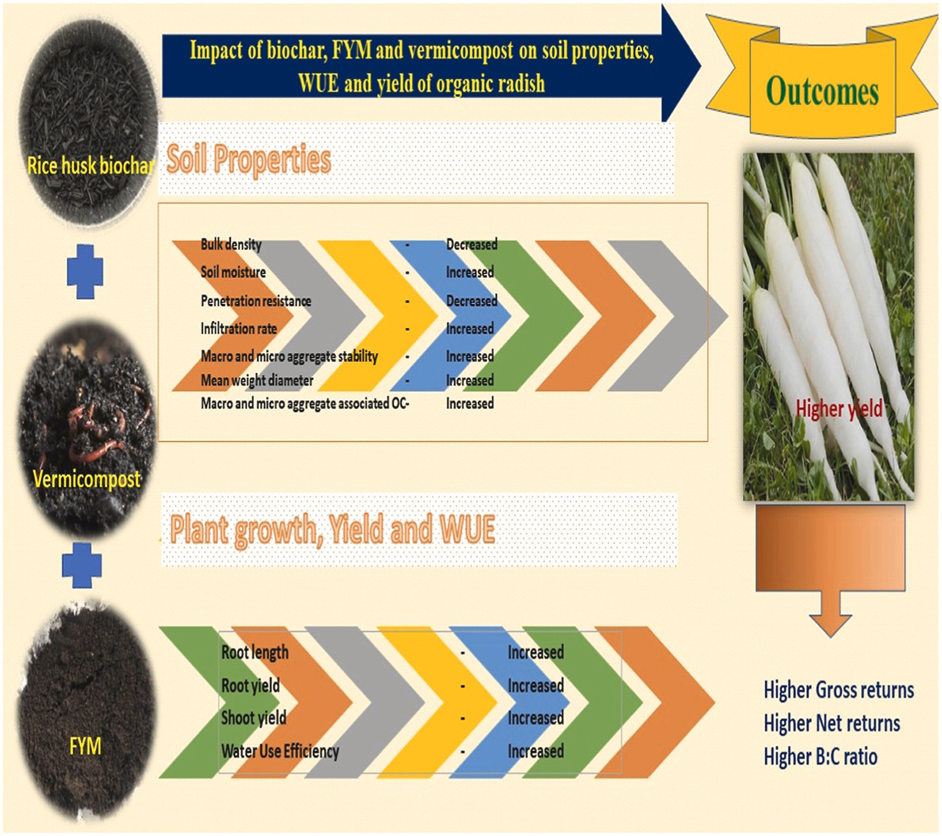
Figure 3: Graphic abstract of the experiment, Sharma et al. (2025). (Image credits: https://doi.org/10.1016/j.jenvman.2024.123673)
The field study tests sole applications of two levels of biochar (0 t ha 1 and 3 t ha 1) and four levels in combination with FYM and vermicompost (control, FYM, VC, and FYM + VC). The parameters that were tested were soil aggregation, carbon associated with aggregation, WUE, yield, and economic benefits.
The experiment’s findings showed that biochar increased macroaggregate stability by 3.1%, mean weight diameter, and soil carbon. As a result, soil moisture, infiltration rate, and WUE increased by 9.2%, 20.8%, and 13.6%, respectively, compared with controls that received no biochar applications. Biochar increases carbon through decomposition and reduces bulk density and penetration resistance (PR), due to its inherent high porosity.
WUE was also improved in treatments with biochar in combination with FYM and VC, due to increased photosynthesis and reduced transpiration losses, as manures also increase soil water retention capacity.
Whereas only biochar applications increased yield by 16%, the FYM and VC treatments increased yield by 30.9%.
However, the best economic results were obtained by applying biochar (3 t ha 1) in combination with FYM and VC, yielding a benefit-to-cost ratio of 1:5. This treatment accelerated nutrient availability through rapid manure decomposition and reduced nutrient leaching. Root length was also maximum in the combined application due to less PR.
Takeaway: It is possible to use waste rice husks to provide a sustainable solution to increase yield and profits in organic radish cultivation, as a supplement to FYM and VC, to improve soil properties and WUE.
-
Irrigation Frequency Influence on WUE of Panax notoginseng
- notoginseng is a traditional medicinal, perennial herb cultivated for over 400 years. Its growing economic prospects have attracted attention to improving its yield. However, scientific information on irrigation regulation and its effects on the crop is lacking.
Experiment
Huang et al. (2025) investigated the effects of micro-sprinklers, as previous research had shown that they outperformed drip irrigation in P. notoginseng cultivation. The study focused on the impacts of irrigation frequencies combined with organic fertilizers on the growth, nutrient accumulation (nitrogen (N), phosphorus (P), and potassium (K)), root hydraulic conductivity, water use efficiency, and yield of 2-year-old P. notoginseng. In addition, changes in soil water content and soil nutrients in the 0~40 cm soil layer were considered. Root characteristics were studied using a minirhizotron to determine total root length, surface area, and volume.
The four micro-sprinkler fertilization (water and fertilizer) treatments were applied once every 3 days (IF1), once every 5 days (IF2), once every 7 days (IF3), and once every 9 days (IF4).
The results showed that root volume and surface area of P. notoginseng increased under medium frequency (IF2), whereas root diameter increased under less irrigation (IF3). The most extended total root length was observed at IF4. Frequent irrigation could deprive the plant’s shallow roots of oxygen, affecting growth. When the frequency was lowered, and the soil water content was less, root length increased. IF2 was identified as the best treatment for root growth, with total root surface area (67.49 cm2 plant-1) and total root volume (3.79 cm3 plant-1).
In addition to affecting water distribution, the frequency also affected the accumulation of available NPK. When irrigation frequency was high, the resulting significant increase in soil water content was unfavorable for nutrient absorption. However, very few irrigations created drought—like conditions and affected the growth of leaves, stems, and roots. Different frequencies were favorable for various nutrients in plants- increased N (271.98 mg
plant-1), IF2 treatment enhanced phosphorus (27.82 mg plant-1) and potassium (408.38 mg plant-1).
IF2 produced the highest yield of 702 kg ha-1 and a good WUE of 29.2%. WUE for
IF1 and IF3 were 28.1% and 37.7% respectively, compared to less watering in IF4.
The economic benefits were also highest in IF2, and 66% higher than in frequent watering (IF1).
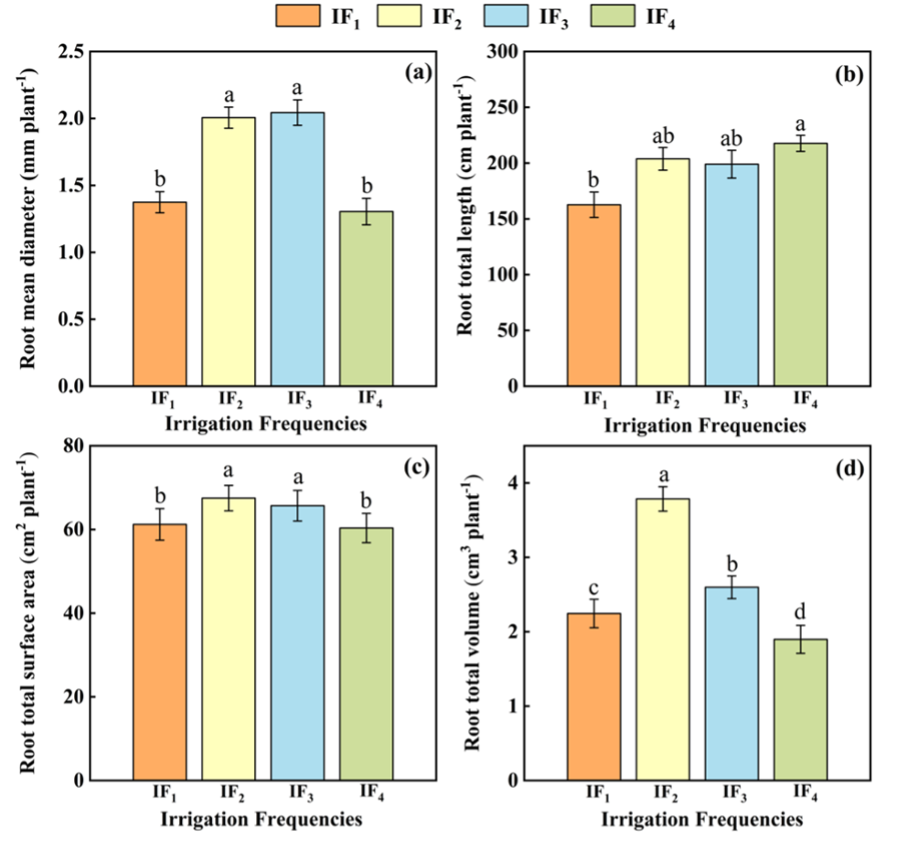
Figure 4. “(A) Effects of different irrigation frequencies on the root mean diameter of P. notoginseng. (B) Effects of different irrigation frequencies on the root total length of P. notoginseng. (C) Effects of different irrigation frequencies on the root total surface area of P. notoginseng. (D) Effects of different irrigation frequencies on the root total volume of P. notoginseng,” Huang et al. (2025). (Image credits: https://doi.org/10.3389/fpls.2025.1549506)
Takeaway: The scientists identified IF2 (irrigation once every 5 days) as the optimal strategy to improve root growth and nutrient accumulation in P. notoginseng, yielding the best yield and WUE.
-
Soil Tillage Effects on Water Stress
Global climate change-driven drought is reducing productivity in 70% of arable land. Water stress is expected to become more severe in areas such as the Mediterranean Basin, which are predicted to experience reduced precipitation. With higher temperatures, increased evapotranspiration is affecting crops.
Triticale (Triticale hexaploide L.), an intergeneric hybrid, is a vital source of food and feed, and more importantly, is more drought-resistant with only 8% yield reduction than wheat (54%). Therefore, a team of Spanish scientists studied the effects of stress on triticale to improve management and increase its yield and water-use efficiency.
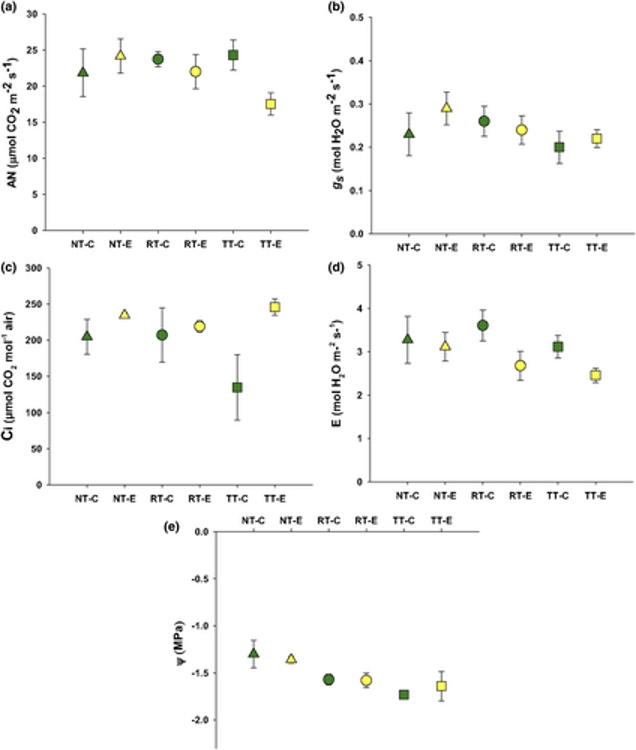
Figure 5: “(a) Maximum rates of photosynthesis (ANmax), (b) stomatal conductance (gs max), (c) intercellular concentration of carbon dioxide (Ci), (d) and transpiration rate (E) and (e) leaf water potential in the three tillage systems in control (green points) and exclusion rainfall (yellow points) plots (mean and SE),” Madejón et al. (2025). (Image credits: https://doi.org/10.1111/aab.12947)
Experiment
Madejón et al. (2025) sought to investigate an unknown aspect of management: whether conservation tillage, which involves fewer, less intensive tillage methods that increase soil water storage, can improve water-use efficiency in rainfed crops by enhancing drought resistance.
The tillage treatments tested were traditional tillage (TT), reduced tillage (RT), and no tillage (NT), with the legume-triticale rotation, typical in Mediterranean Spain, in a long-term experiment started in 2008. A drought or rainfall exclusion variable was added in 2020 to the three treatments that served as controls. The legume used was Vicia faba L. The variables tested were plant ecophysiological indices, root architecture, grain yield/productivity, and arbuscular mycorrhizal fungi (AMF) colonization over one crop cycle.
Results of the experiment showed that tillage type affects water infiltration and retention. No-tillage resulted in 16% more soil water storage than the reduced- and traditional-tillage methods. It indicates that litter from previous years provided enough mulch to reduce evapotranspiration. Moreover, no-tillage is known to build macropore connections, increasing percolation of rain into deeper soils.
Rainfall exclusion or drought reduced grain yield across all treatments, but the reduction was significantly greater (31%) in traditional tillage systems. Yields were highest in no-tillage, with results of 1.6, 1.3, and 1.5 t ha−1 in no-tillage, reduced tillage, and traditional tillage systems, respectively.
Gas exchange test results, depicted in Figure 5, showed that the maximum photosynthetic rates were reduced by 25% due to drought/rainfall exclusion in traditional tillage. Drought also affected root biomass, especially in reduced-tillage systems, resulting in a lower root:shoot ratio. However, tillage had more impact on mycorrhizal colonization than drought. No-tillage and reduced tillage have more AMF than traditional systems.
Takeaway: No-tillage systems yielded the best results in resisting drought effects.
Tools For Research
Scientists need precision tools to help with the ever-increasing breadth and depth of research topics. Tools that collect and analyze data in real time and are also non-destructive are necessary to enable long-term studies. CID Bio-Science Inc. produces several tools to support WUE studies. For example, the CI-340 Handheld Photosynthesis System is used for gas exchange studies. The CI-710s SpectraVue Leaf Spectrometer can be useful for field-level spectral data, and the CI-110 Plant Canopy Imager for canopy analysis. Minirhizotrons for measuring root length, diameter, area, volume, and root system architecture, as in experiments 3, 4, and 5.
Contact us at CID BioScience Inc. to find out more about your scientific tools for WUE research.
Sources
- Mokhtar, A., He, H., Attaher, S., Salem, A., & Alam, M. (2025). Optimizing water-use efficiency under elevated CO₂: A meta-analysis of crop type, soil modulation, and enrichment methods. Agricultural Water Management, 309, 109312.
- Zhai, W., Cheng, Q., Duan, F., Huang, X., & Chen, Z. (2025). Remote sensing-based analysis of yield and water- and fertilizer-use efficiency in winter wheat management. Agricultural Water Management, 311, 109390.
- Sharma, P., Abrol, V., Nazir, J., Samnotra, R. K., Gupta, S. K., Anand, S., … & Kumar, M. (2025). Optimizing soil properties, water use efficiency, and crop yield through biochar and organic manure integration in organic soil. Journal of Environmental Management, 373, 123673.
- Huang, H., Shi, Y., Luo, A., Xiao, Y., Liang, J., & He, Z. (2025). Effects of irrigation frequency on root growth, nutrients accumulation, yield, and water use efficiency of Panax notoginseng under micro-sprinkler irrigation. Frontiers in Plant Science, 16, 1549506. https://doi.org/10.3389/fpls.2025.1549506
Madejón, P., Fernández‐Boy, E., Madejón, E., Morales‐Salmerón, L., & Domínguez, M. T. (2025). Managing climate change impacts on crops: The influence of soil tillage on a triticale crop under water stress conditions. Annals of Applied Biology, 186(2), 143-156.
Related Products
Most Popular Articles
- Transpiration in Plants: Its Importance and Applications
- Leaf Area – How & Why Measuring Leaf Area…
- How to Analyze Photosynthesis in Plants: Methods and Tools
- Plant Respiration: Its Importance and Applications
- The Forest Canopy: Structure, Roles & Measurement
- Stomatal Conductance: Functions, Measurement, and…
- Forest & Plant Canopy Analysis – Tools…
- Root Respiration: Importance and Applications
- 50 Best Universities for Plant Science
- The Importance of Leaf Area Index (LAI) in…