Multi‑Crop Studies: Choosing Instruments that Adapt Across Species

Scott Trimble

January 5, 2026 at 7:49 pm | Updated January 5, 2026 at 7:49 pm | 5 min read
Multi-crop research instruments are essential when studies span cereals, horticultural crops, perennials, and native vegetation. The challenge is not learning new physiology for every species. It is finding tools that adjust to differences in leaf size, canopy structure, root architecture, and stress response without forcing changes to the experimental design.
In multi-crop trials, flexibility and consistency matter more than specialization. Instruments need to move easily from corn to soybeans, from orchard trees to native grasses, while maintaining comparable data quality.
CID Bio-Science has focused its instrument design around this reality. Rather than creating single-purpose tools, the company builds systems that adapt across species and environments. The result is a toolkit that supports multi-crop research instruments without adding unnecessary complexity or cost.
Subscribe to receive our monthly round-up of articles.
Why Adaptability Matters in Multi-Crop Research?
Multi-crop studies often evolve over time. A trial may start with annual row crops and later expand to include cover crops or perennials. In other cases, researchers compare cultivated species with wild relatives or invasive plants. Instruments that only function within narrow physical limits become obstacles.
Adaptable tools reduce three common problems:
-
Inconsistent data caused by switching platforms between species
-
Time lost recalibrating or re-learning new instruments
-
Compromised sampling when leaves or roots do not fit the device
When instruments adapt to plant morphology rather than forcing plants to fit the tool, data quality improves and protocols stay intact.
Leaf-Level Measurements Across Species
Leaf area is a core variable in crop physiology, ecology, and agronomy. In multi-crop work, leaves vary widely in thickness, curvature, and shape. CID Bio-Science addresses this with two laser-based options designed for non-destructive, species-agnostic measurements.
CI-203 Handheld Laser Leaf Area Meter
The CI-203 Handheld Laser Leaf Area Meter supports rapid leaf area measurement on living plants without detaching tissue. Its scanning approach works on broad leaves, narrow grasses, and irregular shapes. This makes it especially useful when a single study includes multiple crop types or mixed vegetation.
Key characteristics that support multi-crop research instruments include:
-
Non-destructive scanning for repeated measurements
-
Flattening mechanism for curled or uneven leaves
-
Measurement of area, length, width, perimeter, and shape parameters
-
GPS tagging to maintain spatial consistency across plots
Because the CI-203 does not require calibration between species, researchers can move from one crop to another in the same day without adjusting workflows.
CI-202 Portable Laser Leaf Area Meter
For studies that involve detached samples or high-throughput workflows, the CI-202 Portable Laser Leaf Area Meter provides a compact and durable option. It handles leaves, needles, seeds, and other flat objects with consistent resolution.
The CI-202 is often used when:
-
Sampling includes grasses, conifers, and broadleaf crops
-
Measurements occur both in field and lab settings
-
Leaf size varies significantly across treatments
Its ability to process diverse sample types without changing hardware reinforces its role as a reliable multi-crop research instrument.
Photosynthesis Measurements Across Plant Forms

Gas exchange is central to understanding crop performance, stress tolerance, and resource use. In multi-crop studies, differences in leaf thickness, orientation, and anatomy often limit traditional systems.
CI-340 Handheld Photosynthesis System
The CI-340 Handheld Photosynthesis System is designed to accommodate this diversity. With ten interchangeable chambers and both open and closed system capability, it adapts to crops ranging from broadleaf vegetables to conifer needles and succulents.
Features that support cross-species work include:
-
Chambers sized for small leaves, large leaves, needles, and cacti
-
Optional control modules for CO2, H2O, temperature, and light
-
Simultaneous measurement of photosynthesis and chlorophyll fluorescence
-
Lightweight design for field portability
Researchers conducting multi-crop trials benefit from using one system rather than multiple specialized analyzers. This consistency simplifies comparisons and reduces variability introduced by instrumentation changes.
Canopy-Level Measurements Across Crop Systems

Leaf-level data alone rarely capture whole-plant performance. In multi-crop research, canopy structure can differ dramatically between crops like wheat, maize, orchards, and vineyards.
CI-110 Plant Canopy Imager
The CI-110 Plant Canopy Imager measures leaf area index and canopy light environment without destructive sampling. Its hemispherical imaging and integrated PAR sensors allow consistent measurements across crop types and canopy architectures.
This instrument supports multi-crop research instruments by offering:
-
Non-destructive LAI estimation without above-canopy reference readings
-
Functionality under varying sky conditions
-
Adjustable focus for different canopy heights
-
GPS and compass integration for spatial standardization
By using the same canopy platform across annual crops, perennials, and mixed vegetation, researchers maintain continuity in experimental design.
Root Measurements Without Species Constraints
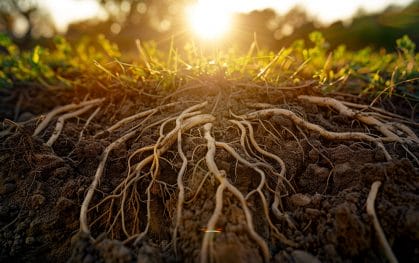
Roots are often the most difficult component to study in multi-crop trials. Excavation methods rarely scale across species or seasons.
CI-600 In-Situ Root Imager
The CI-600 In-Situ Root Imager allows non-destructive root observation through installed access tubes. This approach works across annual crops, perennials, and native vegetation without altering soil structure.
For multi-crop research instruments, this means:
-
Repeated measurements across growth stages
-
Direct comparison of root dynamics between species
-
Reduced disturbance in long-term trials
Root systems can be studied with the same methodology regardless of crop type, strengthening cross-species conclusions.
Spectral Analysis Across Diverse Crops

Plant stress and nutrient status often manifest differently across species. Spectral data help bridge these differences by focusing on physiological signals rather than visual symptoms.
CI-710s SpectraVue Leaf Spectrometer
Related Products
Most Popular Articles
- Transpiration in Plants: Its Importance and Applications
- Leaf Area – How & Why Measuring Leaf Area…
- How to Analyze Photosynthesis in Plants: Methods and Tools
- Plant Respiration: Its Importance and Applications
- The Forest Canopy: Structure, Roles & Measurement
- Stomatal Conductance: Functions, Measurement, and…
- Forest & Plant Canopy Analysis – Tools…
- Root Respiration: Importance and Applications
- 50 Best Universities for Plant Science
- The Importance of Leaf Area Index (LAI) in…