Ci‑203 vs Plant Imaging Systems: Handheld Meter vs Integrated Imaging Rig

Scott Trimble

January 7, 2026 at 7:13 pm | Updated January 7, 2026 at 7:13 pm | 6 min read
Understanding how leaf traits change across treatments, environments, and species is central to modern plant science. Choosing the right tool shapes data quality and workflow, and one decision researchers often face is whether to use a handheld device or invest in a larger integrated imaging system. Both approaches quantify leaf traits, yet they serve different roles and fit different research realities.
This article compares the CI-203 Handheld Laser Leaf Area Meter and large plant imaging systems to help you decide which is best for your work.
What the CI-203 Is Designed to Do
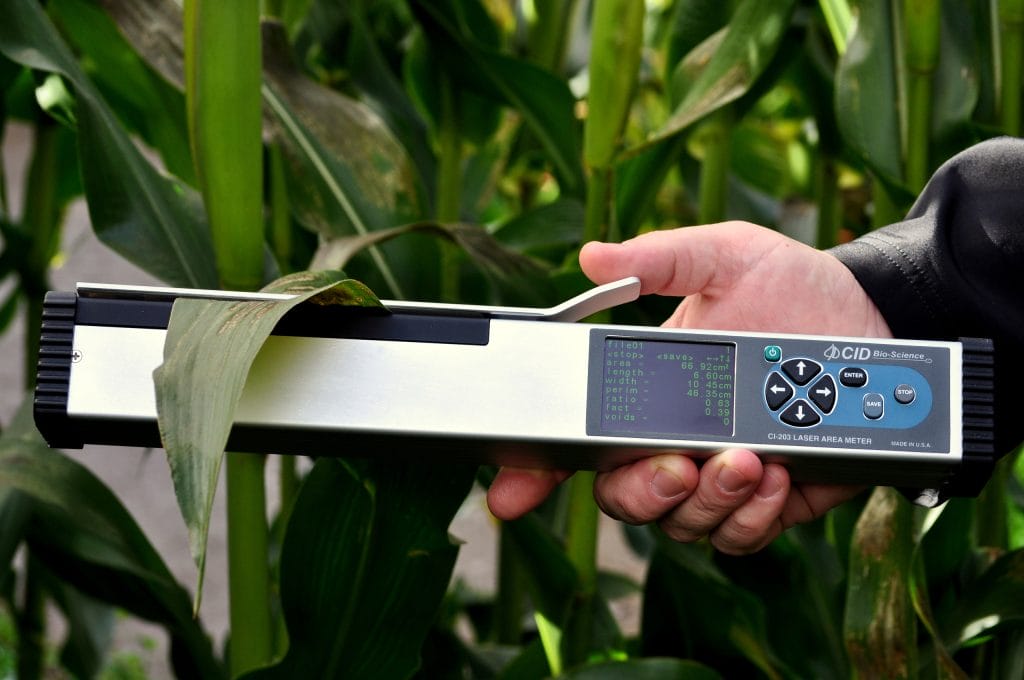
The CI-203 is a highly portable tool built specifically for rapid and accurate leaf area measurement. The instrument offers single-handed operation, a lightweight frame, and non destructive scanning of living leaves. A researcher sweeps the scanner over a leaf and instantly receives measurements including area, width, length, perimeter, shape factor, ratio, and void count. The device can flatten curled leaves for more precise scans and includes a graphic display that shows an outline of the leaf for verification before saving.
Subscribe to the CID Bio-Science Weekly article series.
By submitting this form, you are consenting to receive marketing emails from: . You can revoke your consent to receive emails at any time by using the SafeUnsubscribe® link, found at the bottom of every email. Emails are serviced by Constant Contact
Key benefits of the CI-203 for leaf area measurement include:
1. Portability
At just a few hundred grams, the CI-203 goes anywhere. Its design is ideal for field studies in remote locations, agricultural plots, or greenhouse benches where researchers need to move quickly between plants.
2. Non destructive measurement
The laser scanning approach preserves plant integrity. Leaves remain attached, physiological processes continue, and repeated measurements can occur over time without altering growth.
3. Fast workflow
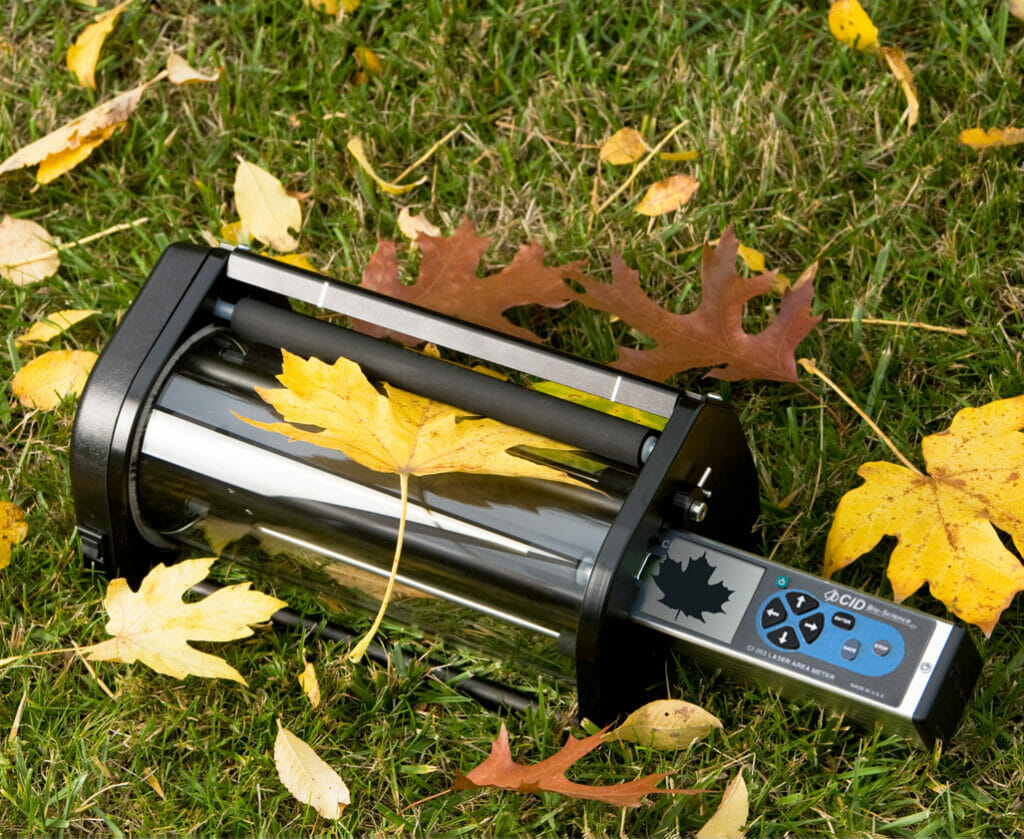
Measurements take seconds. The optional conveyor attachment allows rapid scanning of detached samples, turning the CI-203 into a high throughput device without added complexity.
4. Large measurement capacity
The device accepts samples up to 150 mm wide, 14 mm thick, and virtually unlimited in length. This flexibility suits long grass blades, large dicot leaves, and even some non leaf materials.
5. Intuitive operation
The built-in display, rechargeable battery, GPS tagging, and SD card storage create a simple workflow that requires no calibration. Data moves easily into statistical software for analysis.
Because of this mix of speed, clarity, and practicality, the CI-203 is often used by agronomists, plant physiologists, and ecologists who need trustworthy numbers without a long setup process.
What Integrated Plant Imaging Systems Provide
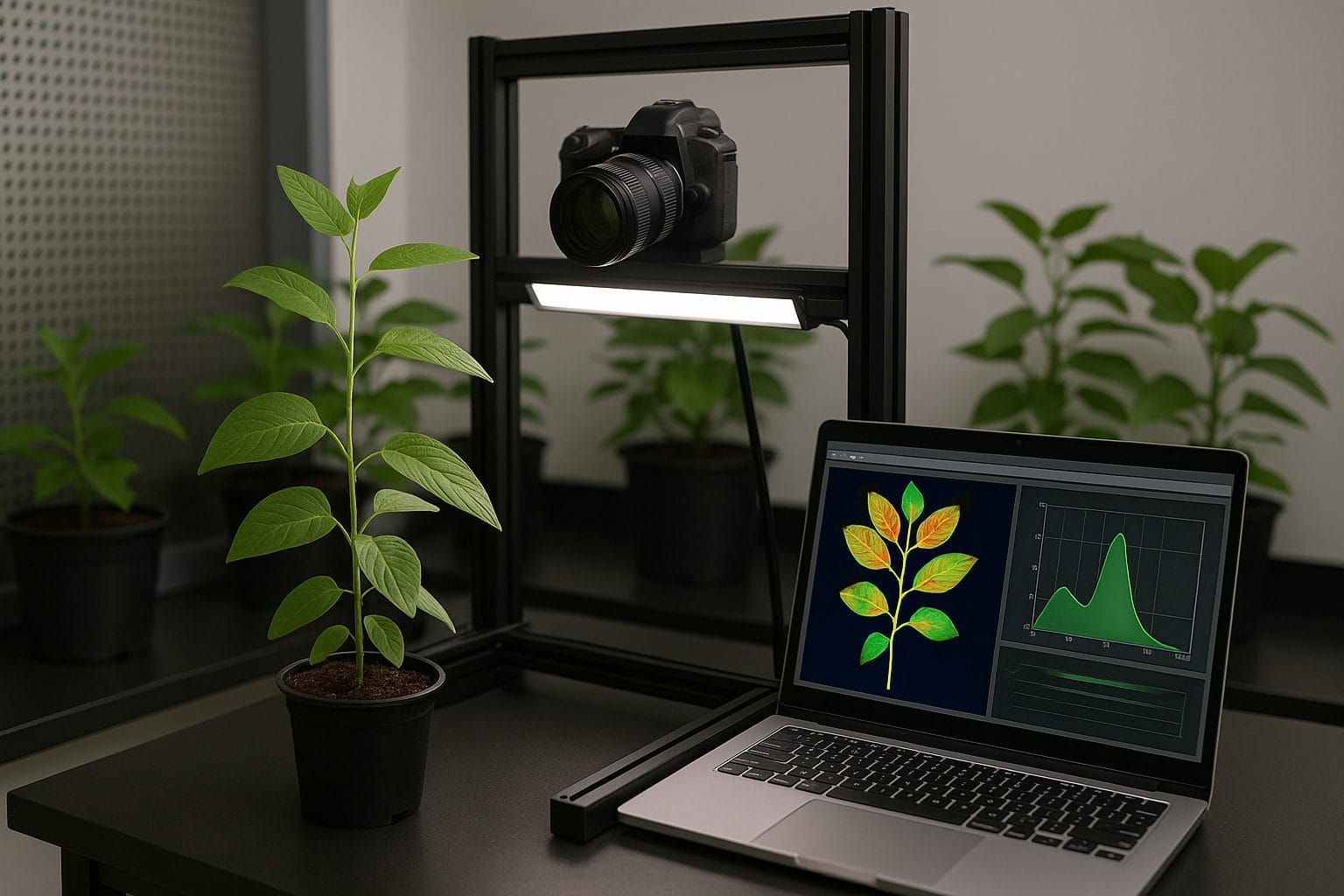
Integrated imaging rigs vary widely, but most share a few characteristics. They use high resolution cameras, controlled lighting, enclosed imaging chambers, and software pipelines to extract shape and spectral traits from leaves or whole plants. These systems measure leaf area, leaf shape, color, texture, and sometimes physiological indicators using multispectral or hyperspectral imaging.
Advantages of integrated imaging systems include:
-
Full digital image capture for advanced shape or color analysis
-
Stable lighting and background conditions
-
Potential for automated sample handling
-
Ability to integrate with spectral or 3D imaging technologies
-
High resolution datasets suitable for machine learning applications
These systems excel in controlled environments where throughput, image consistency, and multi trait data collection matter more than portability.
Key Differences Between the CI-203 and Imaging Systems
A handheld scanner and a full imaging rig may appear to serve similar roles, but their underlying workflows and research use cases differ significantly. When selecting a tool for leaf area measurement, several practical differences come into play.
Workflow Complexity
The CI-203 offers a direct action: scan a leaf and get immediate results. Integrated imaging systems require controlled lighting, calibration targets, image capture sequences, and post processing. In many ecological or agricultural studies, such complexity exceeds what is needed.
Portability and Setup
Here the contrast is sharp. The CI-203 fits in a backpack and operates anywhere. Integrated imaging systems often require power, level surfaces, stable light, and sometimes entire rooms dedicated to imaging.
Data Processing
CI-203 data is processed on the device at capture. Imaging systems often output raw image files that must be processed through custom or commercial software. While this allows advanced trait extraction, it also increases analysis time.
Specificity vs Versatility
The CI-203 is purpose built for leaf area measurement. It provides high precision and high reliability for that specific task. Integrated imaging systems can measure additional traits such as color indices, reflectance patterns, or shape descriptors, but not always with the same speed or simplicity.
Cost Difference
Integrated imaging rigs are significantly more expensive than handheld tools. For many research groups, a handheld meter provides all the necessary functionality at a fraction of the cost.
Field vs Lab Suitability
The CI-203 excels in dynamic environments where control is limited. Imaging systems excel in stable laboratory settings. For researchers studying natural variation across landscapes or treatments, the CI-203 saves both time and effort.
When to Choose the CI-203 for Leaf Area Measurement
The CI-203 is ideal when:
-
You need quick leaf area measurements across many plants
-
You are working in the field or moving between greenhouse and field plots
-
You require non destructive measurements that can be repeated
-
You want a tool that works immediately without calibration
-
You need measurements of long or irregular leaves
-
You prefer simple data output that moves easily into analysis
-
You value portability more than complex imaging capabilities
Researchers who monitor treatment effects on agricultural crops, track leaf development in ecological studies, or characterize phenotypic variation across environments will benefit from the CI-203’s fast, reliable workflow.
When to Choose an Integrated Imaging System
An imaging platform may be the better fit if:
-
You require color, texture, or multispectral traits in addition to area
-
You operate primarily in controlled environments
-
Automation or high throughput is essential
-
Machine learning pipelines form part of the research approach
-
You need pixel level image data for advanced shape analysis
In these cases, the additional setup and processing time can be justified by the broader array of extractable traits.
A Practical Comparison
| Feature | CI-203 Handheld Leaf Area Meter | Integrated Plant Imaging System |
| Primary use | Leaf area measurement | Multifaceted trait imaging |
| Portability | Very high | Low |
| Workflow speed | Seconds per sample | Slower, more steps |
| Measurement type | Non destructive laser scan | Digital image analysis |
| Environmental suitability | Field and lab | Mostly lab |
| Cost | Low to moderate | High |
| Ideal for | Repeated measurements, field studies | High throughput imaging, spectral analysis |
How Both Tools Fit Into Modern Research
Leaf area measurement remains a foundational parameter in plant physiology, agronomy, and ecology. Both handheld tools and imaging systems have earned their place, but they answer different questions. In many studies, researchers choose both, using the CI-203 for quick sampling across treatments and relying on imaging rigs for select high resolution analyses.
The key is understanding the depth of information needed and balancing it with practicality in the field. The CI-203 prioritizes efficiency and reliability, while imaging systems prioritize completeness and multi trait data acquisition.
Conclusion: Choosing the Right Tool for Leaf Area Measurement
Both the CI-203 and integrated imaging systems support high quality plant research, but they reflect different philosophies of data collection. The CI-203 offers unmatched portability, speed, and simplicity for leaf area measurement. Integrated imaging rigs offer comprehensive trait analysis but require more resources, space, and processing.
If your primary goal is fast and accurate leaf area measurement without the overhead of an imaging lab, the CI-203 is the most practical and efficient choice. It brings precision to the field or greenhouse and keeps your workflow moving.
To simplify your leaf area measurement process and gain reliable results anywhere your research takes you, explore the CI-203 Handheld Laser Leaf Area Meter from CID Bio-Science.
Frequently Asked Questions
1. Does the CI-203 replace the need for a plant imaging system?
Not in all cases. The CI-203 is ideal for fast and precise leaf area measurement, especially in the field. Integrated imaging systems are better when you need multispectral traits, color metrics, or full image datasets for machine learning or detailed shape analysis.
2. Can the CI-203 measure leaves that are curled or irregularly shaped?
Yes. The CI-203 gently flattens curled leaves during scanning, which helps ensure accurate measurement of irregular or delicate samples.
3. How accurate is the CI-203 compared to larger imaging platforms?
For leaf area measurement, the CI-203 offers accuracy comparable to controlled imaging systems because it uses a high resolution laser scanner. Imaging systems may outperform it only when collecting additional traits beyond area.
4. Is the CI-203 suitable for high throughput work?
Yes. When paired with the optional conveyor attachment, the CI-203 can rapidly measure large batches of detached leaves, making it useful for breeding programs and large experimental designs.
5. Does the CI-203 require calibration or special environmental conditions?
No. The CI-203 does not require user calibration and performs reliably in lab, greenhouse, and field settings. This makes it a practical choice for researchers who need consistent data across changing environments.
Related Products
Most Popular Articles
- Transpiration in Plants: Its Importance and Applications
- Leaf Area – How & Why Measuring Leaf Area…
- How to Analyze Photosynthesis in Plants: Methods and Tools
- Plant Respiration: Its Importance and Applications
- The Forest Canopy: Structure, Roles & Measurement
- Stomatal Conductance: Functions, Measurement, and…
- Forest & Plant Canopy Analysis – Tools…
- Root Respiration: Importance and Applications
- The Importance of Leaf Area Index (LAI) in…
- 50 Best Universities for Plant Science