Latest articles

5 Emerging Trends in Plant Canopy Analysis for 2025
Plant canopy analysis is moving well beyond simple LAI estimates and light measurements. In 2025, researchers expect more integrated, data-rich, and field-ready approaches that connect canopy structure, physiology, and spectral responses in real time. As climate variability increases and breeding programs accelerate, the need for fast, accurate, and non-destructive plant canopy analysis is more urgent… Continue reading…



Additional reading

Why Does Instrument Price Vary So Much Between Models?
When researchers compare instrument price across plant science tools, the spread can look surprisingly wide. One model may seem straightforward and affordable, while another costs much more even though both belong to the same general category. In practice, instrument price reflects far more than the basic act of taking a measurement. It usually tracks the… Continue reading…

How Does Field vs Greenhouse Use Affect Instrument Choice?
Choosing the right plant research instruments depends less on a spec sheet in isolation and more on where the work actually happens. Field projects and greenhouse studies create very different demands on workflow, durability, measurement speed, environmental control, and data consistency. That is why instrument choice matters so much. A tool that performs well in… Continue reading…

Budgeting for Plant Physiology Equipment: Total Cost of Ownership Explained
Researchers often focus on the upfront price of plant physiology equipment, but the long term picture is shaped by maintenance, usability, reliability, and operational efficiency. Understanding the total cost of ownership is essential for making informed decisions, especially when equipment will be used for multi year projects, field campaigns, or collaborative studies. In this article,… Continue reading…
Selecting Leaf Area, Canopy, and Spectral Instruments for Major Crop Types
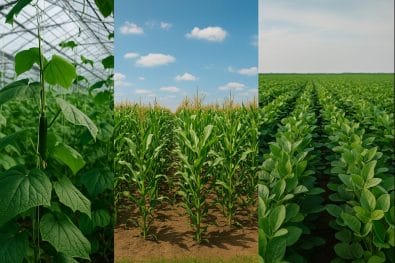
Choosing the right crop measurement instruments is one of the most important decisions researchers make before beginning a new project. Each crop type presents its own structural, physiological, and environmental challenges. Leaf size, canopy density, growth habit, and pigment composition all influence what tools will deliver accurate and repeatable data. CID Bio-Science designs instruments that… Continue reading…

What to Ask Your Supplier Before Buying a Plant Measurement Tool
Buying a plant measurement tool is rarely a casual purchase. These instruments sit at the center of data collection, and the quality of your results often depends on how well the tool matches your research goals. Whether you are measuring leaf area, photosynthesis, canopy structure, roots, or spectral properties, asking the right questions upfront can… Continue reading…

Lab Manager’s Guide: Integrating CID Instruments into Your Workflow
Running a modern plant science lab means balancing data quality, staff efficiency, and instrument reliability. For lab managers, integrating CID instruments into your workflow is often about removing friction from daily measurement tasks while improving consistency across projects. CID Bio-Science instruments are designed to work together across physiology, morphology, and spectral analysis, making it easier… Continue reading…