Latest metric

Importance and Measurement of Leaf Area Index in Vertical Greening Systems
Leaf Area Index (LAI) can be used to quantify the benefits of vertical greening systems, such as thermal cooling, energy savings, air pollution control, and noise pollution control. LAI for vertical greening systems needs to be measured along the vertical plane. Three methods, including direct and indirect estimation, are used to measure LAI. The choice… Continue reading…



Additional reading

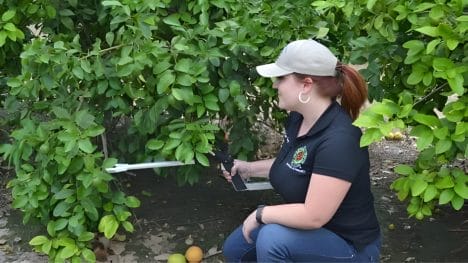
CI‑202 vs CI‑203: Which Leaf Area Meter Fits Your Field Work?
Choosing the right leaf area meter can make or break the efficiency of your plant research. For field scientists, agronomists, and ecologists, CID Bio-Science’s CI-202 Portable Laser Leaf Area Meter and CI-203 Handheld Laser Leaf Area Meter both deliver accurate, non-destructive measurements of leaf area, shape, and morphology. But which tool best suits your work… Continue reading…
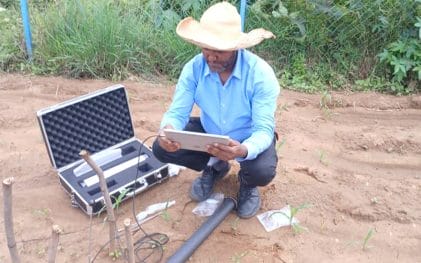
Seeing the Hidden Half: How CI‑600 Root Imaging Powers Ethiopia’s First Mulch‑SPAC Model
When drought takes hold in the Horn of Africa, the warning signs start below ground, out of sight and, until recently, out of reach. At Haramaya University’s Africa Center of Excellence for Climate‑Smart Agriculture & Biodiversity Conservation, PhD candidate and Assistant Professor Ephrem Mamo Weledekidane set out to change that. His goal: to watch roots…

How Do Organic Fertilizers and Photosynthetic Rate Work Together?
Most research findings show that organic fertilizers improve the crop’s photosynthetic rate. The improvement occurs through increased photosynthetic efficiency, increased leaf number and area, and enhanced leaf chlorophyll content. Organic fertilizers enhance the soil’s nutrient status to support better plant growth and health, which increases crop photosynthetic rate. In many cases, organic fertilizers were more… Continue reading…

What is Root Architecture?
The root system architecture is defined using root morphological, topological, and geometric parameters. Two classification systems developed by Yen et al. (1987) and Fitter et al. (1991) are widely used. Several other classifications for root architecture also exist. Root system forms vary between and within species and are based on the plant’s soil conditions at… Continue reading…

How Does Plant Architecture and Water Use Efficiency Impact Crop Yields?
The effects of different plant architectures on population-level evapotranspiration are not well-known. Plant architecture influences population structure, thereby altering the microclimate. Soil water use can be reduced through shading to minimize evaporation and by reducing canopy temperature. Around 97-99% of the water absorbed by plants is lost as transpiration. As water shortages are increasing and… Continue reading…
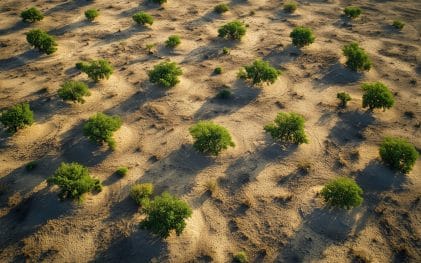
How Does Canopy Cover in Deserts Impact Soil, Biodiversity, and Urban Climates?
Vegetation in deserts is patchy and acts as islands of resources. Plant canopy can increase soil fertility, moisture, and microbial diversity. The tree canopy has several benefits for urban settlements in deserts, such as reducing temperatures, air pollutants, and carbon emissions. Deserts make up 33% of terrestrial ecosystems and are present on nearly every continent. They… Continue reading…