CI‑340 vs Lab Bench Photosynthesis Systems: When Portability Beats Bench Work


Scott Trimble

January 7, 2026 at 7:14 pm | Updated January 7, 2026 at 7:14 pm | 5 min read
Researchers who measure gas exchange often compare the flexibility of a portable photosynthesis system against the precision of a bench-top instrument. Both options have their place in plant physiology, yet the question keeps returning: at what point does portability beat bench work?
The Ci-340 Handheld Photosynthesis System sits at the center of this discussion because it brings lab-grade measurement capabilities into the field without compromising data quality. As field studies become more complex and environmental conditions more unpredictable, a portable photosynthesis system is proving to be not just convenient but strategically superior.
This article looks at the strengths and limitations of each approach and outlines when a portable photosynthesis system like the Ci-340 outperforms traditional lab bench systems.
Subscribe to the CID Bio-Science Weekly article series.
By submitting this form, you are consenting to receive marketing emails from: . You can revoke your consent to receive emails at any time by using the SafeUnsubscribe® link, found at the bottom of every email. Emails are serviced by Constant Contact
What Lab Bench Photosynthesis Systems Do Well
Bench-top gas exchange systems have been used for decades. They are powerful, stable and often packed with advanced control capabilities. When the research question depends on extremely fine adjustments or long-term monitoring within a controlled space, bench systems are hard to beat.
Their main strengths include:
-
Highly controlled environmental settings
-
Stable temperature, humidity and CO₂ supply
-
Precise long-duration measurements
-
Integration with laboratory monitoring systems
-
Ability to perform detailed calibration routines
For studies in molecular physiology, transgenic comparisons or experiments requiring strict environmental uniformity, the bench approach remains valid. However, these advantages only matter if the study can be realistically confined to the laboratory environment. Many cannot.
Where Bench Systems Become Limiting
Despite their precision, bench systems introduce several constraints that influence both experimental design and ecological relevance.
Key limitations include:
-
Plants must be transported, which adds stress and alters physiology
-
Measurements represent artificial environmental conditions
-
Limited capacity to capture rapid environmental fluctuations
-
Slow throughput when large sample sizes are needed
-
Space and energy requirements
-
Less representative of real-world plant behavior
When working with species that respond strongly to environmental gradients, or when evaluating crop performance across field plots, bench systems create more challenges than they solve.
These limitations highlight why interest in portable photosynthesis systems has grown sharply, especially for researchers studying climate stress, genotype performance, drought response and seasonal physiology.
The Case for Portability in Gas Exchange Research
Portability is not just a convenience. It changes what can be measured, how quickly measurements can be taken and how accurately real-world plant responses can be captured. A portable photosynthesis system allows the researcher to bring the instrument to the plant rather than the plant to the instrument.
Field measurements taken under natural conditions tell a story that laboratory readings simply cannot reproduce. Sunlight variability, transient shade, natural temperature cycles and real soil moisture all matter when quantifying photosynthetic performance.
The Ci-340 is designed precisely for these environments. It is small, lightweight and optimized for single-handed operation, which is rare in gas exchange instrumentation. This portability is the foundation for faster sampling and more representative datasets.
What Sets the Ci-340 Apart from Other Portable Systems
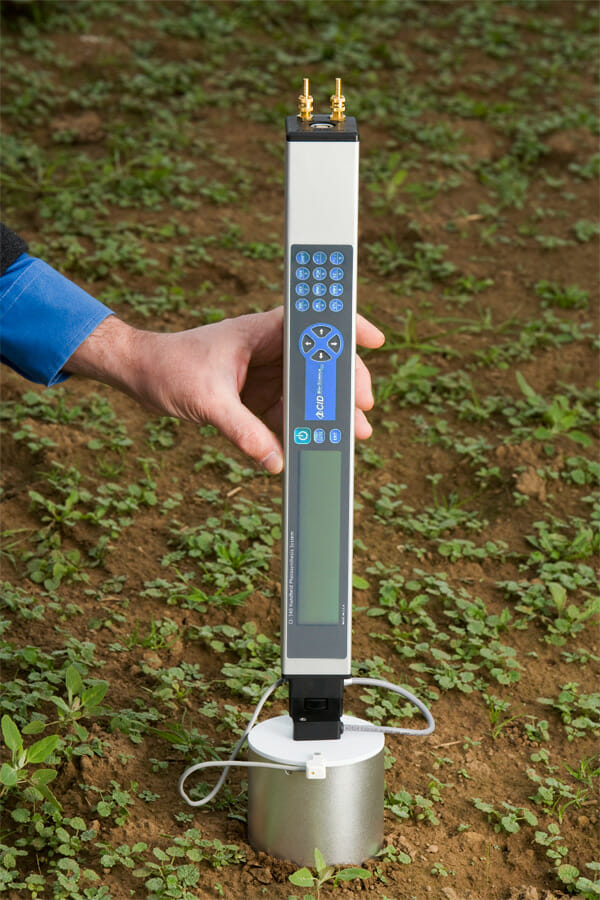
CID Bio-Science engineered the Ci-340 to behave like a flexible toolkit rather than a single measurement device. Its modular design allows researchers to modify environmental parameters using add-on components that expand its capabilities without sacrificing portability.
Major strengths of the Ci-340 include:
-
Single-handed use
-
Lightweight and compact
-
Ten different chambers for broadleaf plants, conifers, cactus pads and large leaves
-
Direct chamber connection to the CO₂ and H₂O analyzer for fast response time
-
Stable gas analyzers for accurate CO₂ and H₂O measurements
-
Optional modules for light, temperature and CO₂/H₂O control
-
Ability to measure chlorophyll fluorescence alongside gas exchange
-
Suitable for both open and closed systems
These features give the Ci-340 the adaptability normally associated with bench systems while maintaining field efficiency.
When a Portable Photosynthesis System Outperforms Bench Systems

There are many scenarios where using a portable photosynthesis system produces better data, more realistic patterns and higher throughput than a bench unit.
1. Field Trials and Breeding Programs
Plant breeders often evaluate hundreds of genotypes, which makes transporting plants to the lab impractical. The Ci-340 allows rapid, consistent measurement across plots without disturbing plants.
2. Ecophysiology in Natural Environments
Ecologists studying seasonal changes, drought responses or temperature acclimation rely on authentic field conditions. A portable photosynthesis system lets them capture daily and seasonal rhythms that bench systems cannot simulate.
3. Stress Research
Environmental stress is dynamic. Measuring it in real time is essential. The Ci-340 detects immediate shifts in stomatal conductance, transpiration and photosynthesis right where the stress originates.
4. Large, Irregular or Delicate Leaves
The Ci-340 accommodates specialized chambers that fit large leaves, cactus pads or narrow conifer needles. Many bench systems offer fewer options.
5. Teaching and Training
Portability supports outdoor teaching, hands-on demonstrations and training sessions where students observe natural plant responses.
When Bench Systems Still Have the Advantage
A fair comparison recognizes that bench systems remain essential in certain domains. They continue to be ideal when:
-
Absolute environmental control is required
-
Long, uninterrupted measurements are needed
-
The research focuses on cellular or biochemical responses
-
The study involves seedlings or small model species
These controlled conditions are critical in early-stage discovery research or when working with sensitive materials.
Why Many Researchers Use Both Systems
More institutions are choosing to pair a bench system with a portable photosynthesis system rather than viewing them as competing technologies. The reason is simple: they answer different questions.
The bench system defines physiological potential under controlled conditions, while a portable system measures performance in real environments. Together, they provide the complete story.
The Ci-340 is especially well suited to this combined approach because its flexibility allows it to bridge lab and field work. Although it thrives in the field, it is also at home in the greenhouse or growth chamber.
Final Thoughts
When evaluating the Ci-340 against traditional lab bench photosynthesis systems, the decision ultimately depends on the research question. If control is the priority, bench systems remain valuable. If the goal is to understand how real plants behave in real environments, the Ci-340 gains a clear advantage.
A portable photosynthesis system like the Ci-340 gives researchers the freedom to measure plants where they grow, reduces the complications of plant transport and captures physiological changes that only occur under natural conditions. For many modern studies, portability simply beats bench work.
Ready to See the Ci-340 in Action? Schedule a demo of the Ci-340 Handheld Photosynthesis System to see how it can elevate your field and lab research.
FAQs
When is a portable photosynthesis system more useful than a bench system?
A portable photosynthesis system is more useful when measurements need to reflect natural environmental conditions. Field trials, drought studies, seasonal physiology and genotype comparisons all benefit from collecting data directly on plants in their native setting rather than under controlled lab conditions.
Can the Ci-340 achieve the same accuracy as a bench-top system?
Yes. The Ci-340 uses stable CO₂ and H₂O analyzers and connects the sample chamber directly to the gas analyzer for rapid response time. Researchers consistently achieve lab-quality accuracy while measuring in the field, greenhouse or growth chamber.
What environmental conditions can the Ci-340 control in the field?
With optional modules, the Ci-340 can control light intensity, leaf chamber temperature and incoming CO₂ and H₂O levels. This gives researchers the flexibility to perform standardized response curves or controlled stress tests outside the laboratory.
Does the Ci-340 work on large or difficult plant species?
Yes. The system includes ten interchangeable chambers designed for broadleaf plants, conifers, cactus pads and very large leaves. This flexibility allows accurate gas exchange measurements across a wide range of species and growth forms.
Can the Ci-340 measure chlorophyll fluorescence?
Yes. With the chlorophyll fluorescence module, the Ci-340 measures fluorescence simultaneously with gas exchange. This helps link energy dissipation and photochemical efficiency to CO₂ assimilation in a single workflow.
Related Products
Most Popular Articles
- Transpiration in Plants: Its Importance and Applications
- Leaf Area – How & Why Measuring Leaf Area…
- How to Analyze Photosynthesis in Plants: Methods and Tools
- Plant Respiration: Its Importance and Applications
- The Forest Canopy: Structure, Roles & Measurement
- Stomatal Conductance: Functions, Measurement, and…
- Forest & Plant Canopy Analysis – Tools…
- Root Respiration: Importance and Applications
- The Importance of Leaf Area Index (LAI) in…
- 50 Best Universities for Plant Science